

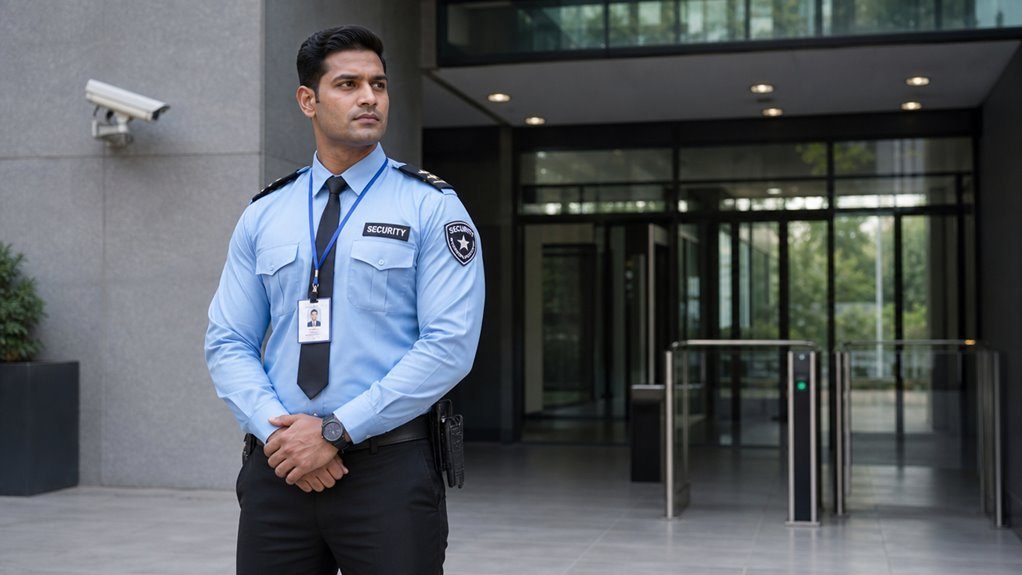
Security guards may carry guns if authorized by law and employer policies, but strict regulations control who can do so, requiring proper licensing and training. Different roles, such as armed security personnel, have specific legal allowances, while unarmed guards generally do not carry firearms. Regulations often distinguish between on-duty and off-duty conduct, with strict limits on firearm carriage when off-duty. Discharging a firearm improperly can result in legal and professional consequences, making understanding these rules essential for security personnel.
Key Takeaways
- Only licensed and trained security personnel are legally permitted to carry firearms.
- On-duty guards with proper licensing and authorization can carry guns; off-duty carry is generally restricted.
- Non-commissioned security staff typically cannot carry firearms unless authorized by law.
- Discharging a firearm improperly can lead to legal, professional, and licensing consequences.
- Firearm regulations for security guards vary by jurisdiction and organizational policies.
Can Security Guards Legally Carry Guns?

Security guards are generally only permitted to carry firearms if they meet specific licensing and training requirements set by state laws. Only licensed, armed security personnel with proper authorization can carry guns, since regulations specify qualifications and compliance. Private security officers, similar to law enforcement, need to adhere to jurisdictional standards, ensuring safety and legal adherence in their firearm use. Additionally, effective perimeter security strategies often involve ensuring that security personnel are properly trained and authorized to handle firearms if their role requires it.
Which Security Roles Are Allowed to Carry Firearms?
Within the range of roles designated for security personnel, only certain positions are authorized to carry firearms, depending on legal regulations and organizational policies. Typically, only licensed commissioned security officers and armed security guards with permits and specific training requirements are allowed, as per law enforcement agencies and licensing standards. Non-commissioned staff generally cannot carry guns during their shifts. Additionally, understanding the specific security guard duties that involve firearm access is essential for both legal compliance and safety.
Are On-Duty and Off-Duty Carry Rules Different?
Rules governing firearm use differ significantly between on-duty and off-duty periods for security personnel. On-duty, security guards can carry firearms if properly licensed, within regulations, and while wearing their uniform, ensuring authorized use. Off duty, carry firearms generally violates regulations unless permitted by specific laws, with legal compliance strictly requiring proper licensing and adherence to restrictions. It’s important to note that certain jurisdictions may have specific laws that allow off-duty security guards to carry weapons under particular circumstances.
What Training and Licensing Do Security Guards Need?
To legally carry firearms on duty, security personnel must complete specialized training, which covers legal authority, use of force, and emergency response procedures. Licensing requires extensive background checks, fingerprinting, and psychological evaluations. Armed guards undergo additional firearms training, often requalification or refresher courses, and must obtain licenses from regulatory agencies to ensure ongoing competence and safety. Additionally, training requirements may vary depending on local regulations and the specific security scope.
What Are the Consequences of Discharging a Security Guard’s Firearm?
Discharging a security guard’s firearm can have serious legal and professional consequences, often leading to criminal charges, investigations, and license revocation. Such incidents trigger thorough reviews by law enforcement, licensing boards, and the security firm. Civil liability may result from damages or injuries, and improper use of force can lead to employment termination, fines, or imprisonment.
Frequently Asked Questions
Can Security Guards Carry Guns in Private Properties?
Security guards may carry guns on private properties if authorized by security policies, comprehensive guard training, and strict firearm maintenance, addressing liability issues, proper weapon storage, legal responsibilities, and security protocols to ensure effective emergency response and positive public perception.
Are There Age Restrictions for Armed Security Guards?
Age restrictions for armed security guards vary by jurisdiction, typically requiring candidates to meet minimum age, complete training standards, adhere to licensing procedures, follow firearm maintenance and storage laws, and demonstrate competence in escalation protocols and safety standards.
Do Security Guards Need Background Checks to Carry Guns?
Security guards must pass mandatory background checks, complete training on use of force and security protocols, and maintain ongoing certification, ensuring proper firearm maintenance and adherence to licensing procedures, which collectively mitigate legal liabilities and uphold safety standards.
Can Security Guards Carry Concealed Weapons off Duty?
Security guards typically cannot carry concealed weapons off duty without proper firearm licensing, adherence to duty restrictions, and strict legal compliance. Training in use of force, safety protocols, and firearm storage ensures effective response training and patrol procedures for public safety.
What Types of Firearms Are Typically Authorized for Security Guards?
Authorized firearms for security guards typically include handguns in calibers such as 9mm or .40, requiring proper firearm licensing, rigorous training, and adherence to legal restrictions, safety precautions, maintenance, and patrol protocols for effective security and public safety.
Final Takeaways
In summary, comprehensive, consistent, and cautious conduct is critical for security guards carrying guns. Proper training, lawful licensing, and adherence to legislation safeguard both security personnel and the public. Responsibilities demand disciplined decisions, diligent documentation, and decisive depictions of duty. Violations, volatile verdicts, and vicarious violations underscore the vital importance of vigilance and legal adherence. Vigilance, legality, and responsibility form the backbone of trustworthy security practices, ensuring safety and safeguarding standards remain steadfast and secure.


 English
  Arabic