

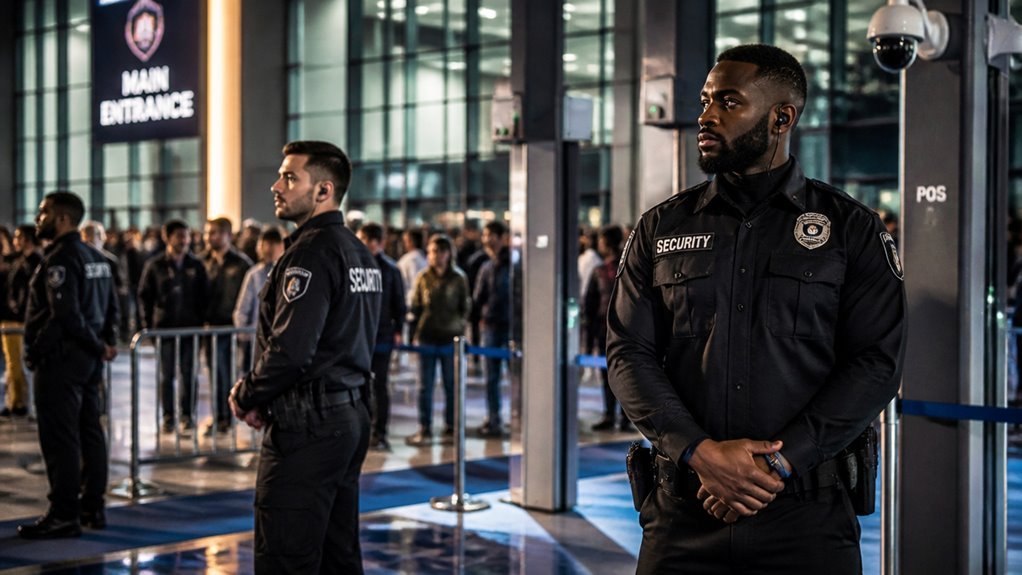
Determining the appropriate number of security guards for a 500-person event depends on factors such as risk level, venue layout, and crowd management needs. Typical guard-to-attendee ratios range from one guard per 50-100 guests for moderate risks, to one per 30-50 for higher risks. Understanding these ratios helps in planning coverage, but specific circumstances often require adjustments. Factors like high-profile guests or open spaces can influence staffing numbers and warrant further evaluation.
Key Takeaways
- For a standard event, allocate approximately 1 guard per 50-100 guests, so 5-10 guards for 500 attendees.
- Higher-risk or open-layout events may require closer to 1 guard per 30-50 guests, increasing guard count.
- Consider venue size and layout to determine additional guards for perimeter and access point coverage.
- Include specialized security for VIPs or high-profile guests, adding more personnel as needed.
- Use professional risk assessment tools to refine staffing needs based on event specifics and potential threats.
What Are Typical Guard-to-Attendee Ratios for Events
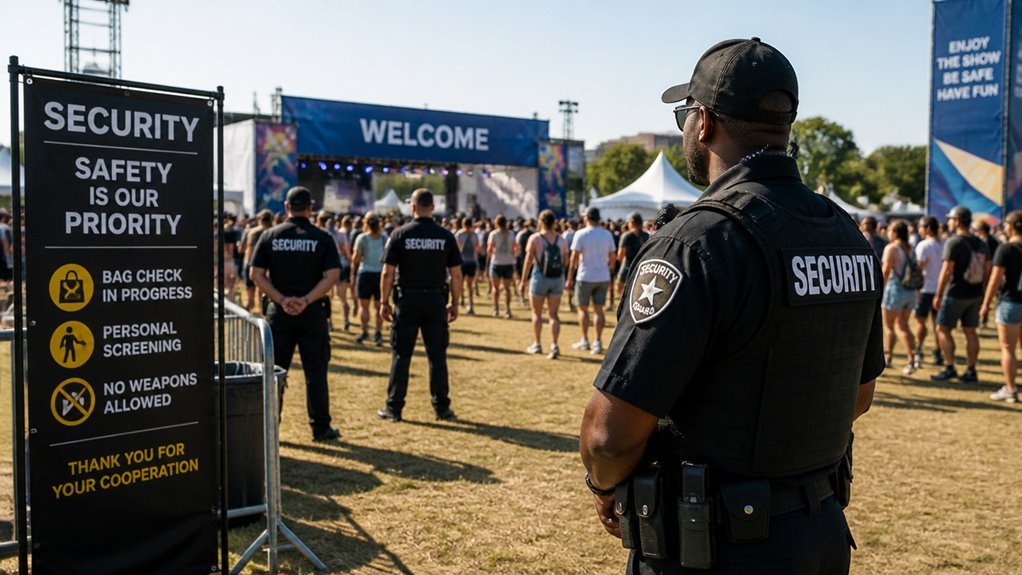
Typically, event security staffing is guided by guard-to-attendee ratios that vary based on the event’s perceived risk and layout. These ratios support attendee management, crowd control, and comprehensive event security planning. For lower-threat events, such as formal banquets, a ratio of 1 guard per 100 attendees is sufficient to maintain safety. Higher-risk or open layout events generally require a ratio closer to 1 guard per 50 guests to ensure effective security personnel deployment. Final staffing levels are determined by risk assessment, venue size, and crowd behavior, all of which are essential for maintaining event safety. Additionally, understanding security guard salaries can help organizers plan budgets accordingly.
How Event Size and Venue Layout Impact Security Staffing
The size of an event venue and its physical layout significantly influence the number of security personnel required to maintain safety and manage crowd movement effectively. Larger venues with multiple access points demand more guards to monitor each entry and prevent unauthorized entry. Open spaces versus segmented areas affect crowd management strategies, requiring strategic placement of security staff. Complex or sprawling venues need higher security staffing to ensure comprehensive surveillance and quick response. Venue layout impacts crowd flow, while event size influences the comprehensive security staffing needed. Adequate staffing ensures safe crowd management, especially at larger events or venues with numerous access points. Additionally, understanding security staffing requirements helps tailor the security plan to match the specific needs of the event.
How to Identify Risk Factors That Affect Guard Numbers
Identifying risk factors that influence the number of security guards needed for an event involves assessing various elements that could compromise safety or require increased oversight. Risk assessments consider aspects such as crowd size, which affects security needs depend on event scale, and venue layout, which determines access points and coverage requirements. High-profile guests elevate threat levels, necessitating additional security measures. Events involving alcohol, high-energy activities, or potential threats like protests further increase security requirements. Longer durations require staff rotations to maintain consistent coverage. Recognizing these factors allows for tailored security planning that aligns guard deployment with specific event risk levels. Additionally, understanding the security threat level helps in determining the appropriate number of guards to ensure comprehensive coverage and safety.
How Do Public and Private Events Differ in Security Needs?
Public and private events present distinct security requirements based on their purpose, scale, and participant expectations. Public events typically require extensive crowd management, perimeter control, and higher security staff ratios, such as one guard per 50-100 guests, to address larger, unpredictable crowds and potential unrest. Private events focus on safeguarding access points, personal safety, and confidentiality, often needing fewer security personnel with emphasis on access control and theft prevention. In summary, public events prioritize area surveillance and crowd psychology, while private events concentrate on controlling entry, protecting personal property, and maintaining an intimate security environment. Different security measures align with each event’s specific needs. Understanding patrol and static guard services can also help determine the most effective security approach tailored to each event type.
Planning Security Guard Deployment: Best Practices
Effective security guard deployment begins with a thorough assessment of the event’s specific risks and logistical layout, ensuring staffing levels are appropriate to the potential threats. A well-designed security plan considers venue layout, entry points, and crowd behavior to identify optimal positioning for security guards. Adequate security involves assigning personnel for crowd control, VIP areas, and high-traffic zones, with additional staff for alcohol management and emergency response. Professional security consultation and crowd control calculators help refine staffing estimates, ensuring visible deterrence, efficient access control, and rapid response, ultimately offering a comprehensive approach to maintaining safety for all attendees.
How to Calculate the Right Number of Guards for a 500-Person Event
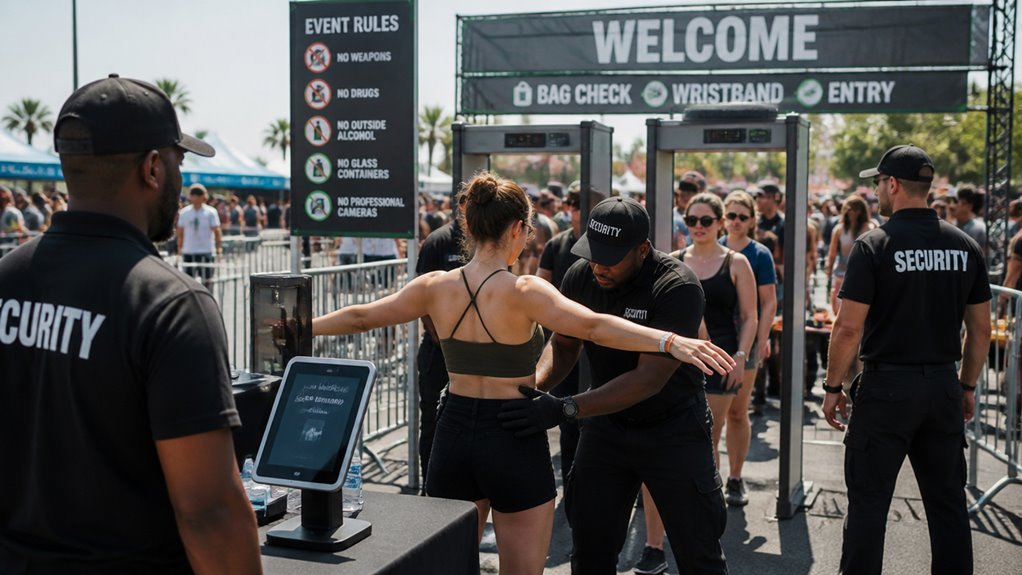
Determining the appropriate number of security guards for a 500-person event requires careful consideration of multiple factors, including attendee safety, venue layout, and potential risks. The security guard ratio typically ranges from 1 guard per 50 to 100 attendees, suggesting a need for 5 to 10 guards. The specific number of guards depends on event risk level, venue size, and crowd management needs. Adequate staffing should include additional security professionals at entry points, especially with multiple access points or VIP guests. Effective planning involves evaluating venue layout and consulting security experts to ensure comprehensive event security.
Key Tips for Managing Entry Points and Crowd Flow
Managing entry points and controlling crowd flow are vital components of comprehensive event security, especially for gatherings accommodating hundreds of attendees. Proper management involves assigning the correct number of security guards needed at access points, such as main entrances, ticket booths, and VIP entries, to monitor and control crowd flow effectively. Guard positioning should be strategic, focusing on high-volume access points to prevent congestion. Using clear signage, designated pathways, and physical barriers helps streamline event entry and maintain order. Continual monitoring and adjustment of guard positions throughout the event ensure dynamic crowd management, enhancing general safety and reducing the risk of overcrowding or confusion.
Why Working With Professional Security Firms Ensures Better Safety
Why is collaborating with professional security firms essential for ensuring safety at large events? Professional security firms employ trained, licensed personnel with experience in managing crowd control, emergency response, and conflict de-escalation. Trusted providers like Knight Security deliver comprehensive security solutions tailored to event specifics, ensuring proper staffing levels and placement. These firms prioritize compliance with local regulations, reducing legal liabilities. They invest in ongoing training and specialized equipment, enhancing their ability to handle complex security challenges. Partnering with experienced security firms guarantees reliable, vetted personnel committed to maintaining a safe environment, making them essential for effective event security management and peace of mind.
Examples of Guard Staffing Strategies for Similar Events
Effective guard staffing strategies for events with around 500 attendees typically involve a combination of staffing ratios, event-specific considerations, and designated roles. For crowd control, the number of security guards assigned depends on event risk level and layout, often ranging from five to ten staff members. Higher-profile events with alcohol service may require closer to one guard per 30-50 guests, increasing security team size accordingly. Outdoor or open-layout events benefit from additional guards at entry points and key areas to enhance security coverage. A staffing plan often includes dedicated personnel for entry management, perimeter monitoring, and VIP protection to ensure comprehensive safety.
Frequently Asked Questions
How Many Security Guards Do You Need for 500 People?
Typically, 3-5 security guards oversee crowd control, access management, and incident prevention, adhering to security protocols and risk assessments for event safety. Guard training ensures effective emergency response and comprehensive incident prevention at the 500-person event.
How Many Security Guards for 1000 People?
For 1,000 attendees, a prudent security team employs 20-40 guards, ensuring rigorous crowd control, surveillance strategies, VIP protection, and access point management through detailed security planning, risk assessment, emergency response, and clear event signage for paramount safety.
How Many Security Guards Do You Need for 100 People?
For a 100-person event, approximately 2-3 guards are recommended to ensure access control, crowd management, emergency response, surveillance setup, VIP protection, entry screening, parking security, and breach prevention, providing a safety-focused environment.
How Many Guards per 100 People?
Event security guard ratios typically range from 1 per 50 to 1 per 100, balancing crowd control, access management, and VIP protection, ensuring safety through strategic security staffing, risk assessment, and swift emergency response tailored to event risk levels.
Final Takeaways
Effective security staffing for a 500-person event depends on assessing risk factors, understanding venue layout, and applying appropriate guard-to-attendee ratios. Proper planning ensures comprehensive coverage, controls entry points, and manages crowd flow. Collaboration with professional security firms enhances safety, consistency, and response capabilities. Ultimately, thorough evaluation, precise deployment, and consistent oversight create a secure environment, safeguarding attendees and protecting event integrity—when awareness leads to preparedness, security becomes an essential part of seamless event execution.
 English
  Arabic