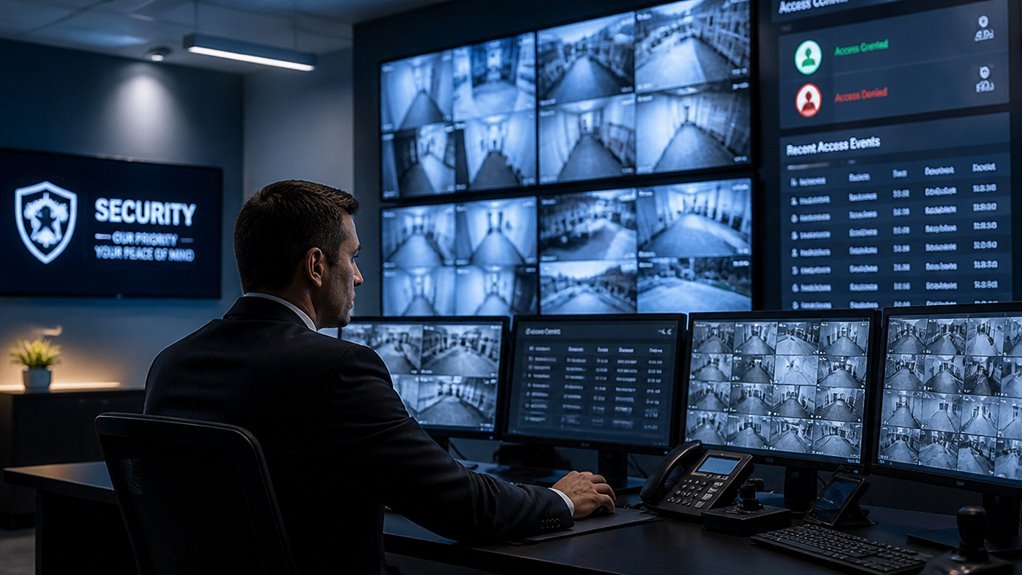
Determining the appropriate level of security for a business requires evaluating assets, industry-specific risks, and potential threats. Organizations must identify critical data, such as customer records or financial information, and consider vulnerabilities like cyberattacks or physical theft. Different sectors face distinct risks, and the security measures implemented should match these needs, balancing cost with protection. Understanding these factors is essential to designing an effective security strategy, but ongoing assessment is necessary to address evolving threats.
Key Takeaways
- Assess your business assets’ value and sensitivity to determine appropriate security measures.
- Conduct regular risk assessments to identify industry-specific and location-based threats.
- Balance basic security controls with advanced measures for vulnerable or sensitive data.
- Align security investments with your industry regulations and compliance requirements.
- Continuously update and monitor security systems to adapt to evolving threats and vulnerabilities.
How Do You Assess Your Business’s Unique Security Risks and Assets?
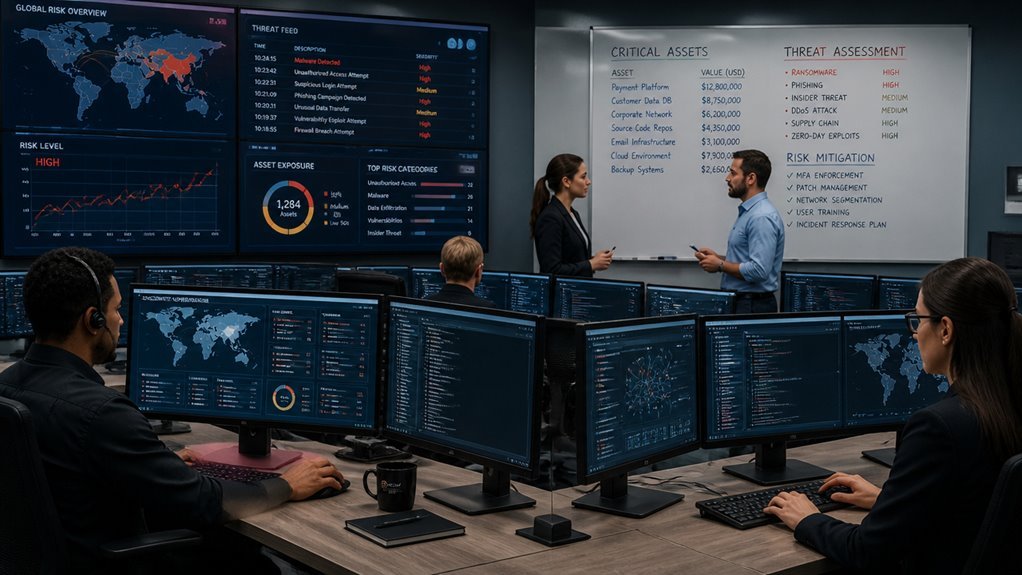
How do organizations determine their specific security needs by evaluating potential risks and assets? They conduct comprehensive risk assessments that analyze vulnerabilities across physical location and digital infrastructure. This process considers threats like cyberattacks, theft, and natural disasters, along with internal factors such as employee negligence and system weaknesses. Assets, including intellectual property, customer data, and inventory, are prioritized based on their value. Security measures are then tailored to address these vulnerabilities. Regular reviews update the security policy, ensuring it adapts to changing threats. Assessing geographic, industry-specific risks, and operational challenges helps organizations develop an effective security foundation. Incorporating a comprehensive security risk assessment guide ensures no critical aspect is overlooked.
What Are the Common Threats to Small and Medium Businesses?
Small and medium-sized businesses face a variety of common threats that can compromise their operations, data, and reputation. Cybersecurity threats such as data breaches and unauthorized access are frequent due to limited security systems or weak access control. Human factors, including negligent employees or contractors, contribute to over half of data breaches, exposing sensitive information. Many businesses lack sufficient employee training, increasing vulnerability. Potential threats include targeted malware, phishing attacks, and security challenges related to resource constraints. A security breach can lead to loss of customer trust and operational disruption, emphasizing the importance of understanding and addressing these threats to ensure safety. Additionally, understanding the security guard duties and leveraging expert guidance can help businesses develop effective protective measures.
Should You Use Basic or Advanced Security Measures? How to Decide
Determining whether to implement basic or advanced security measures depends on several factors, including the size of the small business, data sensitivity, and regulatory compliance. Basic security measures, such as employee training and firewalls, can prevent around 54% of breaches caused by negligence. For businesses handling sensitive data or industry threats, advanced security—like multi-factor authentication and encrypted storage—is recommended. Regular security assessments and audits identify vulnerabilities and guide security policies. Small businesses must evaluate their security needs and risk exposure to decide whether foundational or comprehensive security measures are appropriate for effectively safeguarding assets and complying with industry standards.
How Can You Tailor Security Strategies for Your Industry and Location?
Because security needs are strongly influenced by industry and geographic factors, businesses must customize their security strategies to address specific risks, regulations, and threats associated with their location and operational sector. Conducting a thorough risk assessment helps identify local threats, such as cyberattacks or vandalism, and guides threat mitigation efforts. Tailored security considers industry-specific vulnerabilities, like HIPAA compliance for healthcare or theft prevention in retail. Understanding local regulations, like GDPR or PCI DSS, ensures compliance and optimizes security investments. Incorporating cost-effective security solutions can help organizations achieve optimal security without overspending. By aligning security strategies with industry requirements and geographic location, organizations can more effectively manage vulnerabilities and allocate resources for optimal threat mitigation.
How Do You Keep Your Business Security Up to Date and Continuous?
Maintaining a current and effective security posture requires ongoing effort and regular updates across multiple areas of a business. Regularly updating security systems and cybersecurity measures addresses new vulnerabilities and counteracts emerging threats. Conducting periodic security audits and risk assessments helps identify gaps, guiding necessary security upgrades. Employee training ensures staff stays informed about current threats and security protocols. Monitoring and reviewing security policies, incorporating lessons learned from incidents, strengthens defenses. Integrating the latest security technology and standards supports continuous improvement. This process ensures businesses adapt to evolving risks and maintain a reliable, up-to-date security strategy.
Frequently Asked Questions
What Are the 5 D’s of Security?
The 5 D’s of security are Deterrence, Detection, Delay, Response, and Recovery, involving strategies like surveillance systems, security protocols, employee training, threat assessments, and data encryption to prevent insider threats, cyber vulnerabilities, and unauthorized physical access.
What Are the 7 P’s of Security?
The 7 P’s of security encompass cybersecurity protocols, employee training, physical barriers, access control, surveillance systems, threat assessment, and incident response, ensuring comprehensive safety through continuous security audits, data encryption, and emergency planning for resilient protection.
What Is the #1 Security Risk for Any Business?
A stitch in time saves nine; employee negligence leads over half of breaches, making human error the top security risk. Proper staff training, access control, surveillance, and rigorous threat assessments are vital for comprehensive security and safety.
At What Net Worth Do You Need Private Security?
Private security becomes essential for businesses with a net worth exceeding five million dollars, safeguarding luxury assets, sensitive data, valuable inventory, and high net worth clients’s personal privacy, executive travel, celebrity protection, and protection at exclusive events.
Final Takeaways
Research indicates that 60% of small businesses experience a cybersecurity incident within a year, emphasizing the importance of appropriate security. By systematically assessing assets, understanding industry-specific threats, and implementing tailored strategies, organizations can effectively mitigate risks. Regular updates and ongoing training ensure defenses remain robust against emerging threats. Applying the right level of security based on these factors helps balance cost and protection, reducing vulnerability and safeguarding critical business information.





 English
  Arabic