
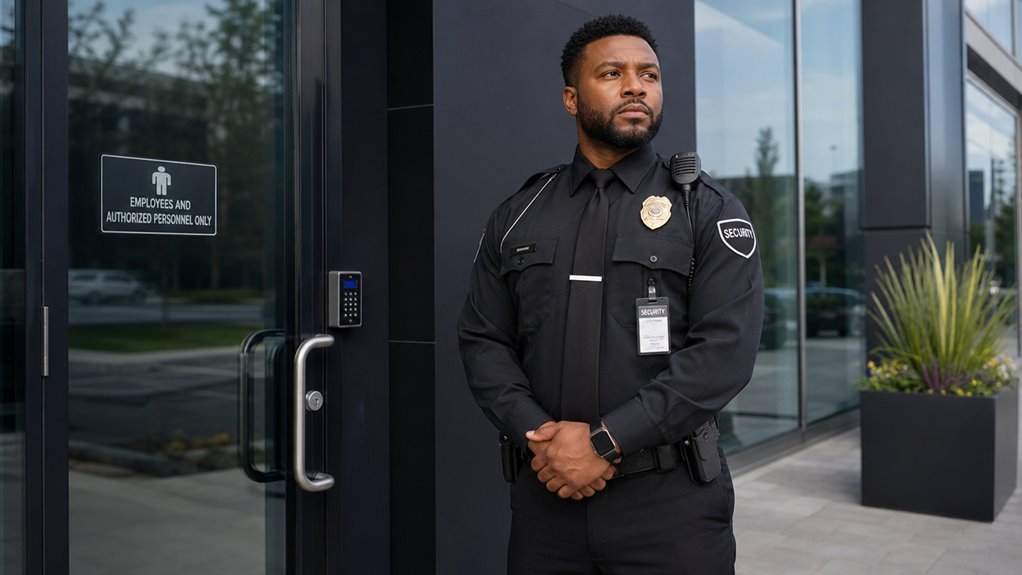
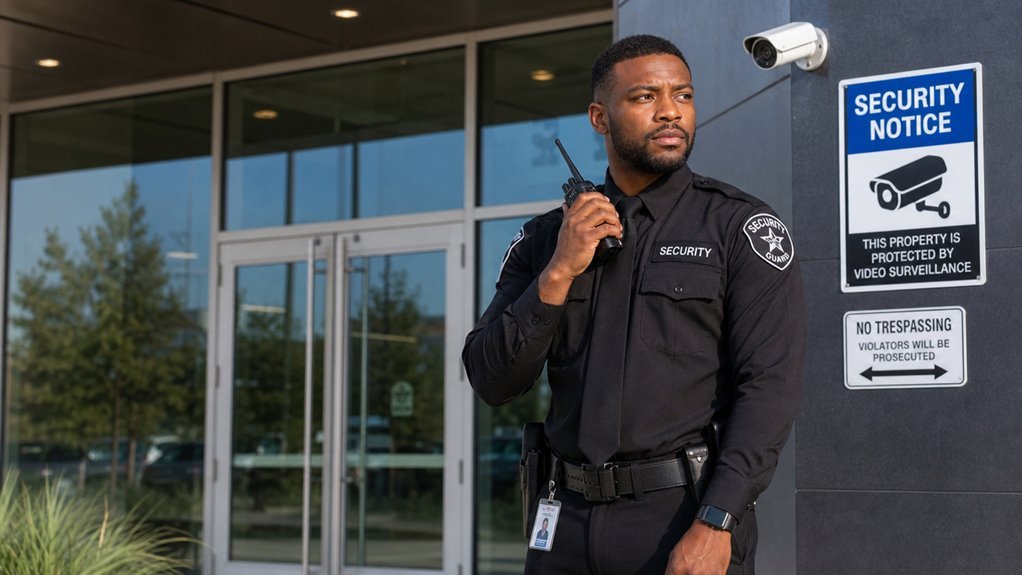
Security guards perform critical daily functions, such as patrolling properties, monitoring surveillance systems, and controlling access points to prevent unauthorized entry. They act as visible deterrents to crime, respond swiftly to emergencies like medical incidents or breaches, and document incidents through detailed reports. Their effectiveness depends on specific skills and certifications, while their roles vary across environments, from commercial to public spaces. Recent advancements in technology and training continue to shape their responsibilities, highlighting the importance of understanding their full scope.
Key Takeaways
- Security guards perform patrols and monitor surveillance to detect and prevent criminal activity or hazards.
- They control access points and verify identities to ensure only authorized individuals enter premises.
- Guards respond promptly to emergencies, providing first aid and coordinating with emergency services.
- Their visible presence deters offenders and enhances overall safety and security.
- Accurate incident documentation supports investigations and legal proceedings, maintaining accountability.
What Do Security Guards Do Every Day?
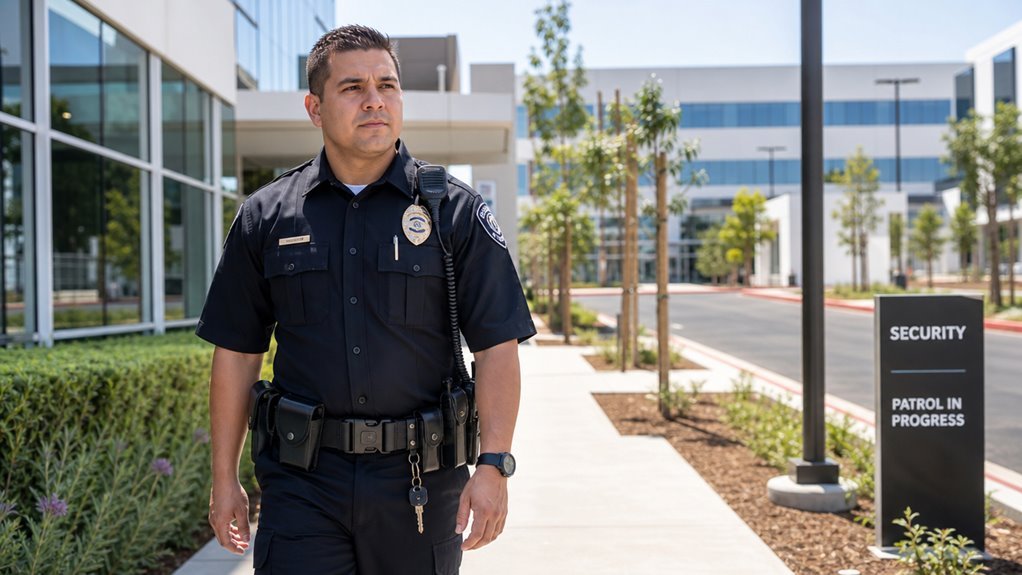
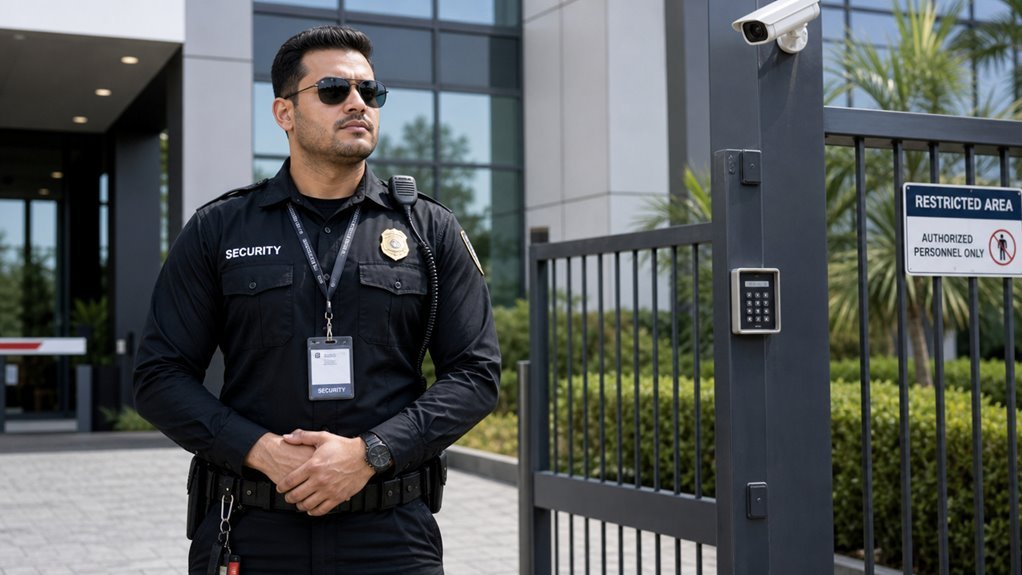
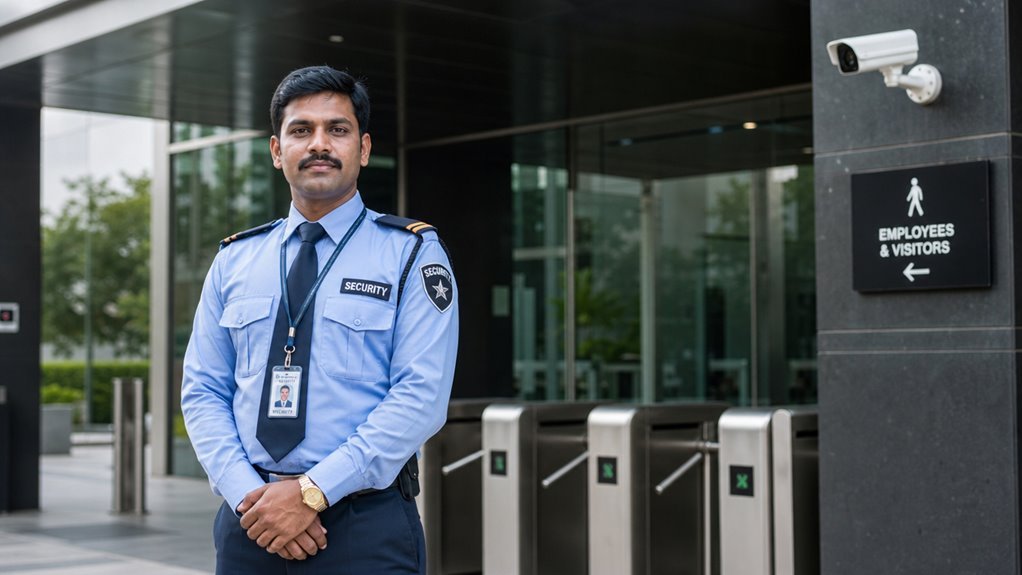
Security guards perform a variety of essential tasks daily to maintain safety and security within their assigned premises. They conduct regular security patrols, checking for suspicious activity or safety hazards, and monitor surveillance systems to detect potential threats. Access control involves verifying identities and managing visitor logs to prevent unauthorized access. Guards respond promptly to emergencies, including fires, medical incidents, or security breaches, by following established safety protocols. They maintain detailed incident reporting to document unusual activities or events. Sustaining property protection, assisting law enforcement with surveillance footage, and observing safety procedures ensure a secure environment for all occupants. Additionally, they often coordinate with emergency services to ensure swift responses during critical situations.
How Do Security Guards Prevent Crime and Keep People Safe?
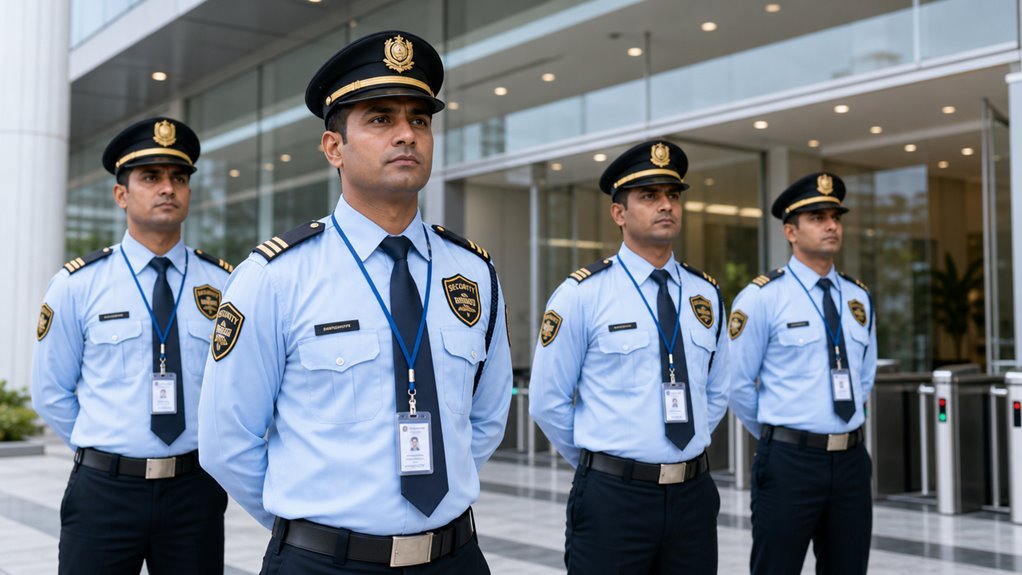
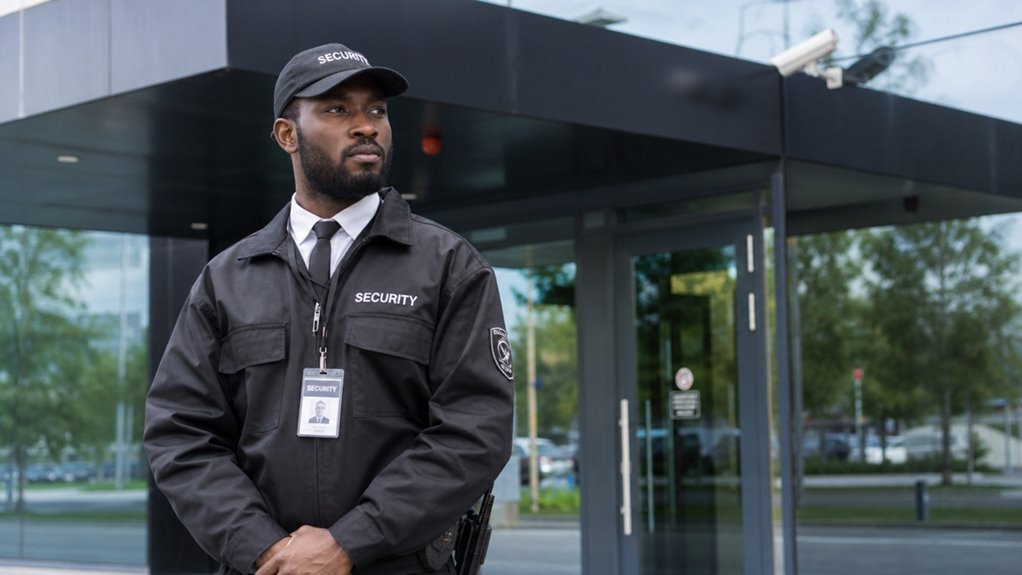
A security guard’s presence acts as a visible deterrent to potential offenders, reducing the likelihood of criminal activities within monitored areas. Security guards prevent crime through security measures such as monitoring surveillance, patrolling, and targeting suspicious activity. They enforce access control and verify identities to prevent unauthorized entry and protect property. Their quick emergency response helps contain threats, including medical incidents or intrusions. Proper documentation of incidents and patrols provides valuable evidence of proactive security efforts. Additionally, security guard prices vary based on factors like expertise, location, and the level of service needed. In general, security guards play a key role in maintaining safety, discouraging crime before it occurs, and ensuring the protection of individuals and property.
How Do Guards Patrol and Use Surveillance Equipment?
Guards use a combination of patrol routines and surveillance equipment to monitor environments effectively. During patrols, they walk or drive to check access points, security alarms, and safety hazards while documenting findings in incident reports. They utilize surveillance tools such as CCTV cameras and remote monitoring systems like VirtuGuard for continuous oversight of large areas. These systems enable guards to verify incidents remotely, improve response times, and provide real-time updates to law enforcement. Communication devices like radios or mobile phones facilitate quick coordination. This integrated approach enhances security, minimizes breaches, and ensures rapid intervention during suspicious activities or security breaches. Additionally, understanding the differences between mobile and static security setups can help in selecting the most effective security solutions for different environments.
What Happens During Emergency Response and Incident Reports?
What procedures are followed when responding to emergencies in security situations? Security guards conduct a swift assessment, implement evacuation procedures if necessary, and provide first aid for medical emergencies. They coordinate with emergency services like police and paramedics, ensuring a prompt response. Detailed incident reports record all incident details, actions taken, and times, serving as legal documentation. These reports help protect security personnel and support investigations. Accurate documentation includes observations, responses, and any medical assistance provided. Proper response and thorough incident reports minimize damage, assist in legal matters, and ensure safety for everyone involved. Additionally, understanding the comprehensive security risk assessment process can help prepare security personnel for various scenarios and improve overall safety measures.
What Skills and Certifications Do You Need as a Security Guard?
To work effectively as a security guard, individuals must acquire specific skills and certifications that meet industry standards and legal requirements. Security guards need a high school diploma, along with training to become licensed security personnel. Certifications such as First Aid, CPR, and specialized training in access control or surveillance are recommended or required for career advancement. Ongoing professional development through seminars, online courses, and additional training ensures guards stay current. Armed security guards require extra training and permitting for firearms, involving rigorous licensing and safety standards. Industry regulations vary, but most security personnel must meet specific training hours and background checks.
How Do Security Guards Fit Into Different Work Environments?
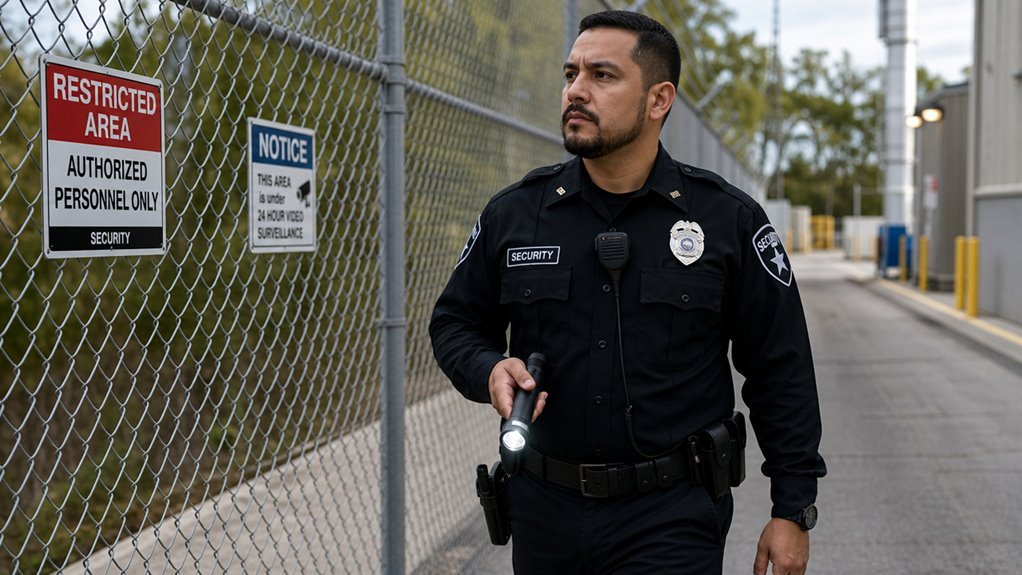
Security guards adjust their strategies and tools depending on the specific environment in which they operate, ensuring they effectively meet unique safety challenges. Security roles vary by setting, involving environment-specific security measures such as on-site security, access control, patrols, and surveillance cameras. In high-traffic areas like transportation hubs, they manage crowd control and emergency responses, often collaborating with law enforcement. Guards in diverse environments receive specialized training to recognize industry-specific threats, whether managing visitor logs at residential complexes or responding to medical emergencies in healthcare facilities. Environment adaptation is essential to maintaining safety and security across different work environments.
What Are the Latest Trends in Security Guard Training and Technology?
Advancements in security technology and evolving threats have significantly influenced training programs for security guards, leading to a focus on both technical competencies and traditional skills. Modern training now emphasizes security technology such as facial recognition, biometric systems, drones, and security systems. Training programs include certifications and regular refreshers in remote monitoring and cyber security, equipping guards with technological proficiency. Additionally, specialized instruction covers emergency response and crisis management, ensuring guards can operate security systems effectively in various scenarios. This integration of advanced tools with foundational skills enhances safety, enabling guards to detect threats more efficiently and respond swiftly to emerging risks.
Frequently Asked Questions
What Are the 5 C’s of Security Guards?
The 5 C’s are Communication, Coordination, Coverage, Custody, and Courage, integral to security protocols involving access control, patrol routines, emergency responses, risk assessments, surveillance, visitor monitoring, incident reporting, security training, and alarm systems for effective safety management.
What Are the 5 Duties of a Security Guard?
Security guards perform access verification, execute patrol procedures, monitor surveillance, conduct safety inspections, respond to emergencies via protocol, manage crowds, assess threats, enforce safety rules, and complete reporting duties, ensuring a secure environment for all.
What Are the 4 P’s in Security Guard?
The 4 P’s—Prevention, Protection, Performance, and Professionalism—are vital for security protocol. Like a vigilant lighthouse guiding ships, they ensure effective patrol procedures, incident reporting, and access control, enhancing safety through risk assessment, surveillance, and safety training.
What Are the 5 C’s in Security?
The 5 C’s in security—Compliance, Communication, Coordination, Control, and Coverage—ensure security protocols, emergency procedures, patrol routines, access control, incident reporting, surveillance, threat assessment, and legal responsibilities are effectively managed for safety, professionalism, and responsive incident handling.
Final Takeaways
In summary, security guards serve as physical and behavioral barriers against threats, ensuring safety across various environments. Their proactive presence, combined with effective communication and swift responses, reduces risks significantly. As the saying goes, “A stitch in time saves nine,” highlighting the importance of prevention and timely action. Maintaining thorough training and adopting emerging technologies further enhances their effectiveness, safeguarding assets and promoting peace of mind for all communities and businesses.
 English
  Arabic