

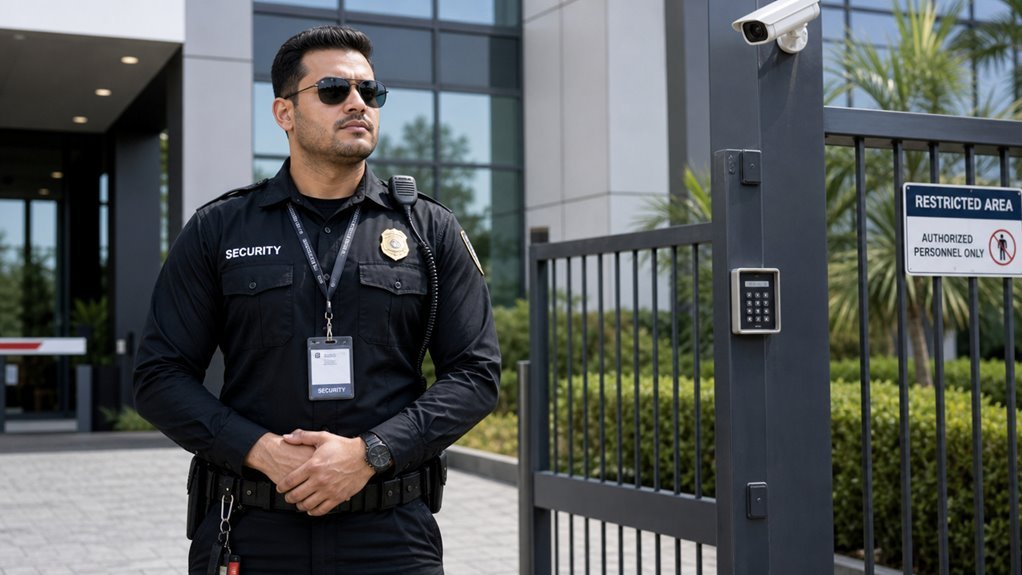
The duties of a security guard include maintaining safety by monitoring environments through patrols and surveillance, controlling access via credential verification, and managing visitor logs. They respond promptly to emergencies, providing first aid when necessary and executing evacuation procedures. Accurate incident documentation and reporting breaches are essential, and their presence helps deter unauthorized activities, ensuring the security of people and property. Understanding these core responsibilities reveals the vital role guards play in security operations.
Key Takeaways
- Ensure safety and order by conducting regular patrols and inspections of the premises.
- Control access by verifying credentials and managing visitor logs.
- Monitor surveillance systems to detect and prevent unauthorized activities.
- Respond promptly to emergencies, providing first aid and following evacuation procedures.
- Document incidents accurately to support investigations and improve security protocols.
What Are the Core Roles of a Security Guard?
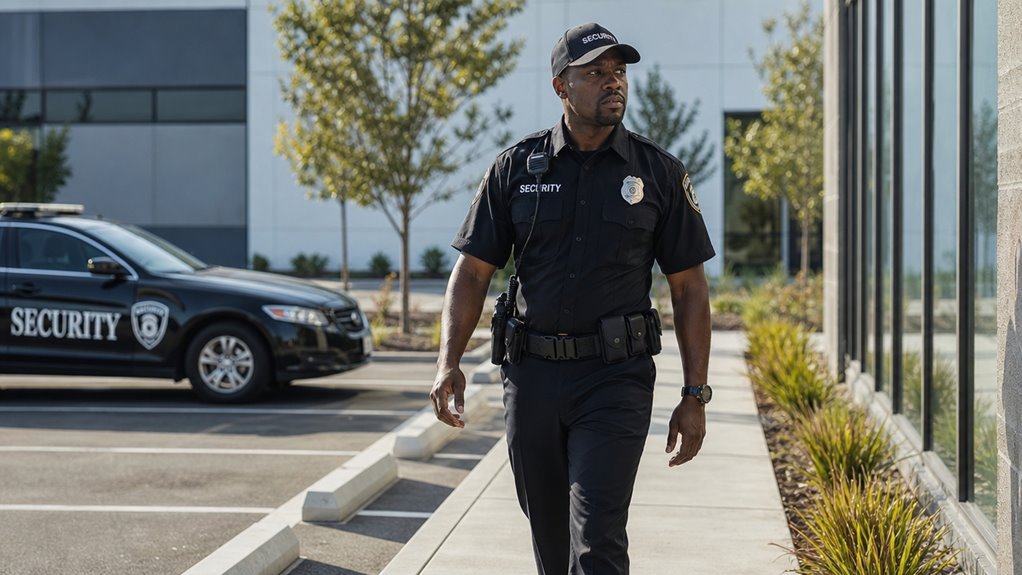
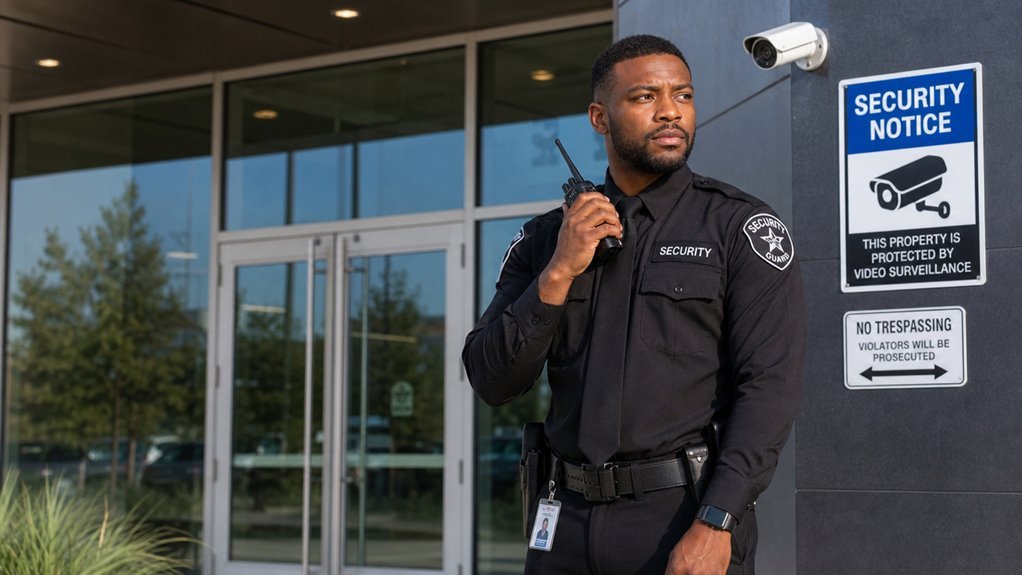
Security guards serve essential roles in maintaining safety and order within various environments. Security officers are responsible for access control, conducting patrols and inspections, and monitoring surveillance systems to prevent unauthorized access, theft, or vandalism. They respond promptly to emergencies, document incidents, and maintain order to ensure ongoing safety and security. Additionally, they are trained to understand security guards’ legal roles to ensure their actions are within lawful boundaries.
How Do Security Guards Monitor and Manage Access?
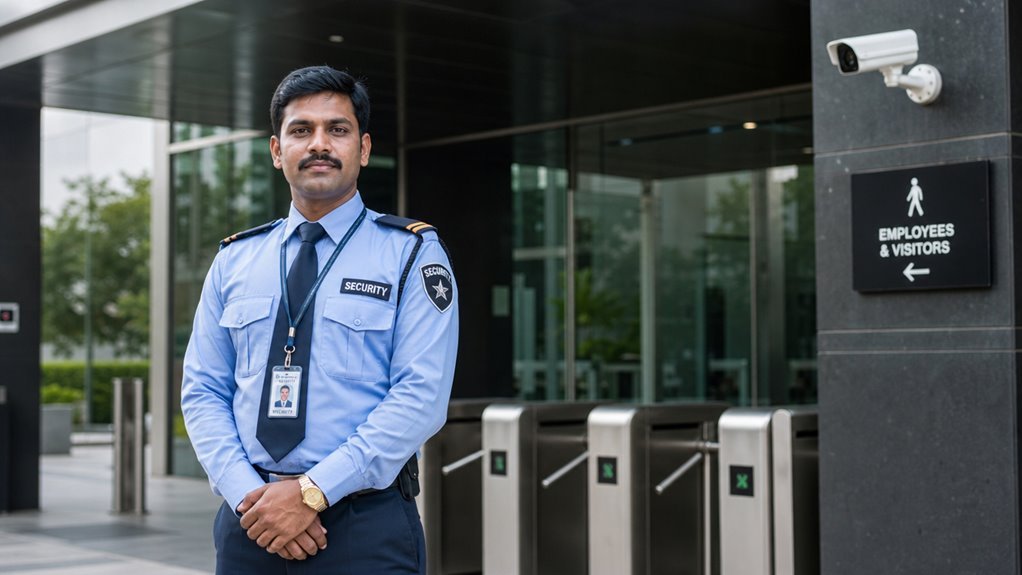
Monitoring and managing access involves a combination of procedures, equipment, and vigilant oversight to ensure only authorized individuals enter secure areas. Security personnel perform access control by verifying credentials at entry points, managing visitor logs, inspecting deliveries, and monitoring activity through surveillance equipment. They also respond promptly to suspicious behaviors, preventing unauthorized access and maintaining the integrity of restricted areas. Additionally, understanding whether guards carry guns is important for assessing security measures and response strategies.
What Are the Essential Steps in Emergency Response?
When an emergency situation arises, the initial response must focus on quickly assessing emergency severity, scene safety, and hazards. Key steps include calling emergency services promptly, providing first aid to injured individuals, evacuating people following protocols, and documenting the incident thoroughly. Adhering to response protocols ensures immediate assistance, effective management, and accurate reporting for future review. Understanding perimeter security strategies can also help in establishing clear boundaries to control access during emergencies.
How Do Guards Conduct Effective Patrols and Inspections?
Regular patrols and inspections are vital components of a security guard’s responsibilities, serving both preventative and detective functions. Guards systematically conduct patrols and inspections to identify security risks, vulnerabilities, and compliance issues. They monitor for irregularities, document findings, and maintain situational awareness, ensuring safety protocols are followed, serving as a deterrent, and minimizing dangers from hazards or unauthorized activity. Efficient patrols also help determine the appropriate number of security personnel needed for an event based on security guard responsibilities.
Why Is Accurate Incident Reporting Important?
Accurate incident reporting is essential for documenting security events thoroughly, which supports investigations and legal proceedings. Incident reports create detailed incident records that help security personnel identify trends, enhance security protocols, and ensure accountability. Precise incident documentation is necessary for effective investigations, legal compliance, insurance claims, and improving the comprehensive effectiveness of security measures.
How Can Guards Maintain a Visible and Approachable Presence?
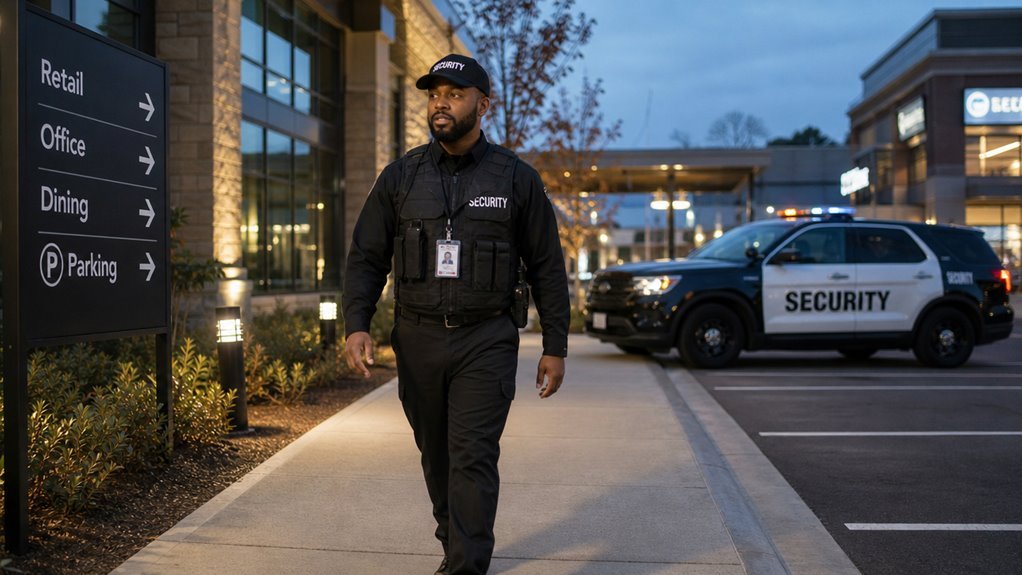
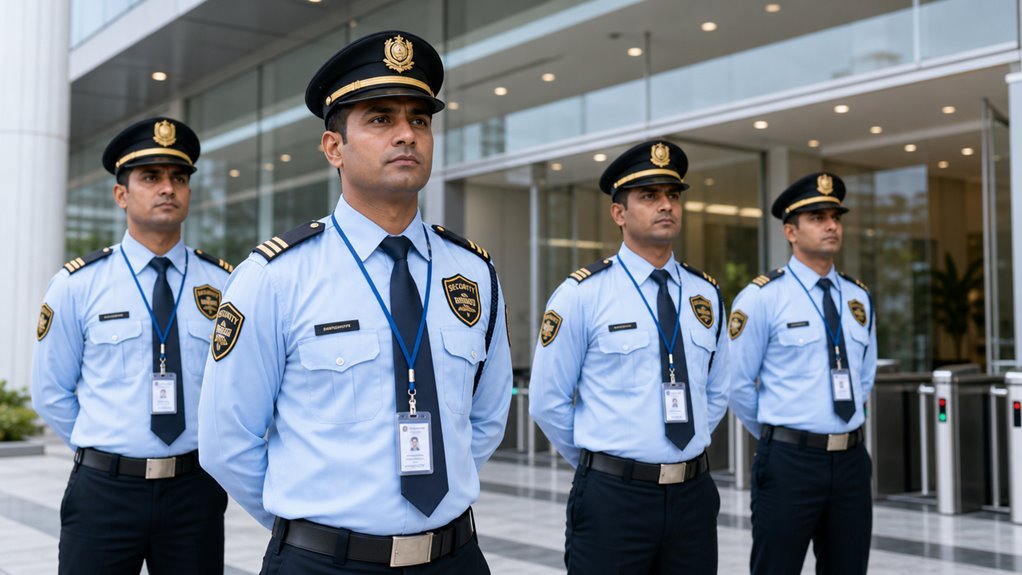
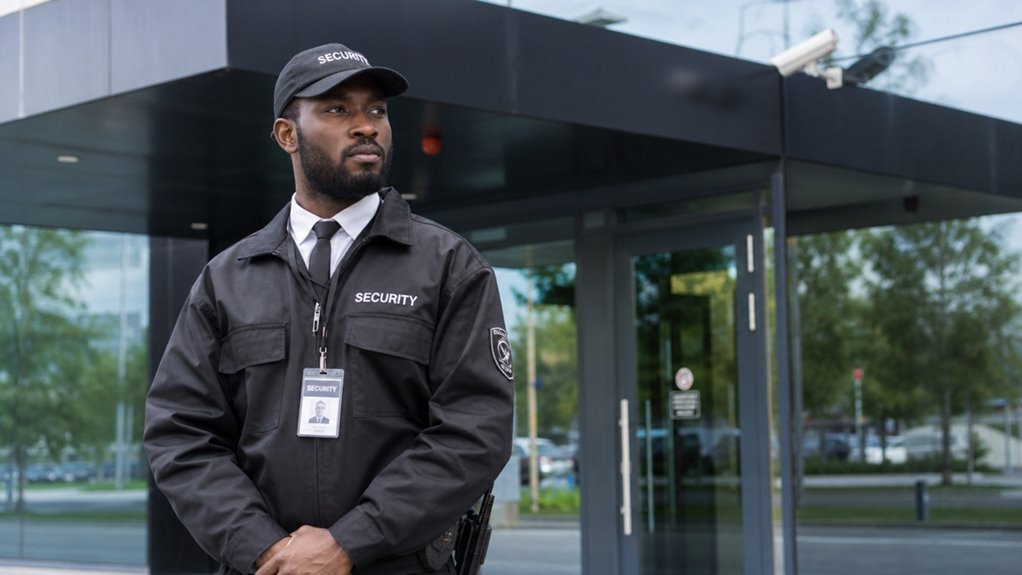
Maintaining a visible and approachable presence is essential for effective security guarding, as it deters threats and promotes safety. Professional security guards achieve this through consistent patrols and key access points, wearing identifiable uniforms, and adopting open body language. Clear communication and proactive engagement foster trust, creating a secure environment and strengthening the community’s sense of safety.
What Are Best Practices for Enforcing Security Policies?
Effective enforcement of security policies requires guards to follow structured procedures that ensure consistent application and compliance. These include verifying access control through identification checks, documenting security violations in incident reports, and maintaining communication with relevant authorities. Collaboration and adherence to security regulations help prevent breaches, enforce protocols, and address security breaches promptly, ensuring a secure environment for all individuals.
Frequently Asked Questions
What Training or Certifications Are Required to Become a Security Guard?
Becoming a security guard requires security licenses, completion of training courses covering safety protocols, emergency procedures, and legal requirements, along with background checks, physical fitness, specialized certifications, and ongoing education to ensure preparedness and compliance.
How Do Security Guards Handle Difficult or Unruly Individuals?
Security guards address difficult individuals through conflict de-escalation, verbal negotiation, and behavioral cues. They utilize crowd control, threat assessment, and situational awareness, applying physical restraint and protocol enforcement to achieve peaceful resolution, ensuring safety and emergency response readiness.
What Specific Security Equipment Do Guards Typically Use?
Security guards typically use surveillance cameras, communication devices, badge identification, flashlights, metal detectors, alarm systems, body cameras, security barriers, access control systems, and first aid kits to ensure safety and effective security protocols.
How Do Security Guards Coordinate With Law Enforcement Agencies?
Security guards coordinate with law enforcement by implementing community patrols, utilizing surveillance techniques, enforcing access control, and executing crisis management protocols. They facilitate incident reporting, engage in team communication, and uphold badge authority during safety drills, conflict resolution, and emergency responses.
What Are the Common Challenges Faced by Security Guards Daily?
Security guards face challenges like crowd management, alarm response, access control, surveillance, emergency procedures, risk assessment, incident reporting, patrolling tactics, conflict de-escalation, and personal safety, all requiring vigilance, quick decision-making, and effective communication to ensure safety.
Final Takeaways
Certainly. Here is a concise, alliterative conclusion for the article:
“Security staff serve with steadfast vigilance, fostering safety, and fostering trust. Their diligent dedication drives deterrence, detects danger, and defends property effectively. Precision in patrols, promptness in response, and professionalism in policy enforcement underpin their purpose. Proper preparation and proactive practices promote peace, preventing peril and protecting people and property. Ultimately, consistent commitment creates a confident, secure environment where everyone can operate safely and securely.”
 English
  Arabic