

Private security guards operate within defined legal boundaries, balancing responsibilities such as monitoring properties and managing risks without exceeding authority. They must understand when and how to use force, communicate effectively, and document incidents accurately. Proper training ensures compliance with regulations and ethical standards. Adherence to these rules minimizes liabilities and helps maintain safety. By following established procedures, guards can handle conflicts and prevent threats while preserving legal integrity. The specific guidelines are vital for effective security management.
Key Takeaways
- Security guards can detain individuals through citizens’ arrests but must act within legal boundaries and hand over suspects to law enforcement.
- Use reasonable force only when necessary, ensuring actions are proportional and compliant with legal standards.
- Maintain clear communication, calm demeanor, and respectful body language to prevent conflicts and de-escalate tense situations.
- Always document incidents accurately, including details, witnesses, and evidence, following standardized reporting procedures.
- Protect property through high visibility, vigilance, and access control, while recognizing suspicious behaviors early.
What Are a Security Guard’s Legal Limits and Responsibilities
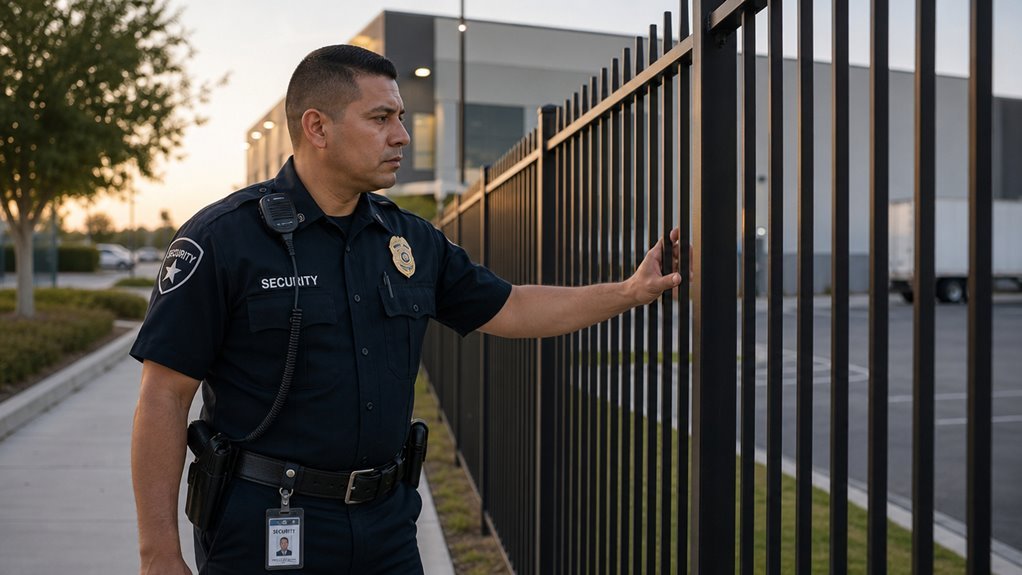
A security guard’s legal limits and responsibilities are defined by laws and regulations that govern their authority and conduct. They can detain an individual through citizens’ arrests but must hand them over to law enforcement promptly. Using reasonable force is permitted to handle threats, but excessive force and unlawful searches can lead to liability issues and legal consequences. Proper training ensures adherence to detention rights and appropriate use of force.
How to Communicate Clearly and De-Escalate Conflicts Effectively
Effective communication and conflict de-escalation are vital skills for security guards to maintain safety and order. Using a calm voice and clear instructions helps prevent escalation, while active listening builds rapport and reduces hostility. Maintaining appropriate body language, respecting individuals, and clearly defining authority through respectful communication are essential. De-escalation techniques ensure conflict resolution without confrontation. Additionally, understanding security guard duties and responsibilities enables guards to respond appropriately in various situations.
How Visibility and Vigilance Help Prevent Threats
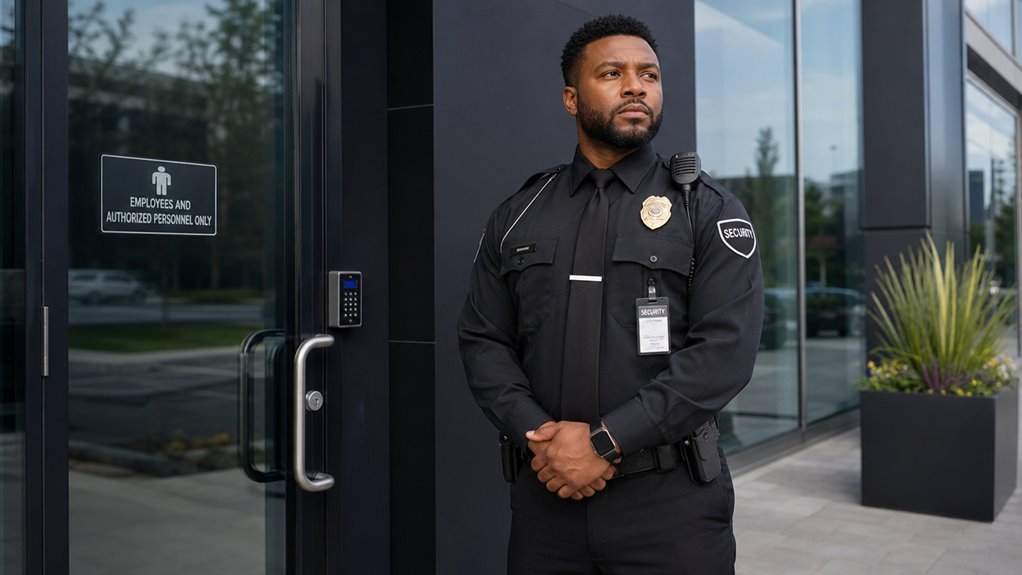
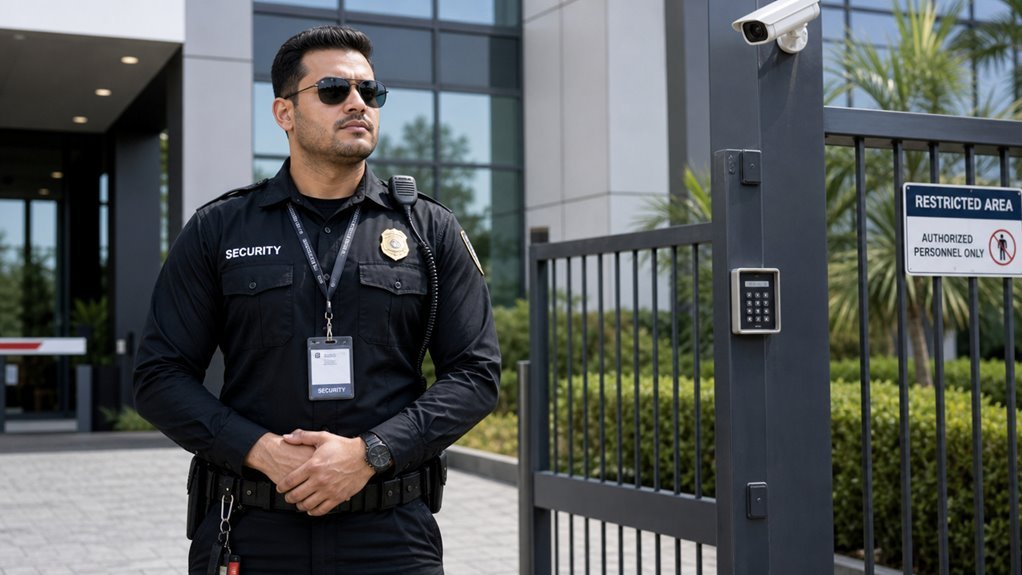
Visibility and vigilance are key elements in preventing threats within security operations. A strong security presence acts as a deterrent, discouraging illegal activity through alertness and watchfulness. By recognizing suspicious behaviors early, security personnel enable threat prevention through attentiveness and early detection. Visible guards and consistent surveillance reinforce safety, ensuring rapid response and discouraging rule-breaking individuals. Incorporating access control systems can further enhance security by managing and monitoring entry points efficiently.
When and How to Use Force Responsibly: Non-Lethal and Lethal Options
Use of force by security personnel must always be proportional to the threat faced, with clear guidelines outlining when and how it is appropriate. Proper training helps determine the level of force needed, such as non-lethal options like pepper spray or tasers, or lethal force during imminent threats. Document incidents thoroughly to ensure legal compliance, support conflict resolution, and avoid legal liabilities. Understanding the legal limits for security guards ensures that decision-making remains within the bounds of the law.
How to Document Incidents Accurately for Legal and Reporting Purposes
Proper incident documentation is essential for ensuring legal compliance and accurate reporting, especially in situations involving security personnel. Effective incident reports must include incident details such as date, time, location, individuals involved, and a factual description. Use objective language, collect evidence like witness statements, follow report templates, and proofread reports thoroughly to maintain documentation accuracy and clarity. Having knowledge of security guard licensing regulations can also help ensure reports meet all legal standards.
How to Continually Improve Skills and Stay Compliant With Regulations

Maintaining up-to-date skills and ensuring compliance with regulations are ongoing responsibilities for security personnel. Regularly completing mandated training, pursuing ongoing education, and obtaining relevant certifications support professional development. Familiarity with site-specific policies, legal boundaries, and regulatory updates is essential. Practice scenario-based drills to enhance response capabilities and stay aligned with industry standards and legal compliance.
Frequently Asked Questions
Can Security Guards Carry Weapons in Louisiana Without a License?
Security guards in Louisiana cannot carry weapons without proper licensing and meeting specific license requirements. State regulations restrict firearm and weapon types, enforce permit exemptions and concealed carry rules, and require licensing jurisdiction adherence for lawful weapon carrying during security duties.
What Are the Penalties for Exceeding Legal Authority as a Private Security Guard?
Exceeding authority limits in use of force or arrest procedures invites legal repercussions and liability issues, including misconduct penalties. Adhering to ethical boundaries helps prevent excessive force accusations, safeguarding security personnel against legal challenges and maintaining safety within lawful scope.
Are Security Guards Allowed to Make Citizen’s Arrests Outside Their Designated Property?
Security guards can perform citizen’s arrests outside property boundaries if they have probable cause, following proper arrest procedures and security protocols. However, they must respect jurisdiction limits, legal authority, and citizen rights to ensure lawful detention and enforcement actions.
How Do Privacy Laws Impact a Security Guard’s Ability to Surveil or Record?
Guided by unseen hands, security guards navigate a delicate dance of lawful observation. Privacy laws impose surveillance restrictions, demanding respecting privacy expectations, recording consent, and adhering to personal data protection, ensuring covert monitoring issues and biometric data rules remain unviolated.
What Training Is Required for Security Guards to Stay Compliant With State Regulations?
Security guards in Louisiana must complete ongoing training certifications covering legal compliance, firearm licensing, emergency procedures, communication protocols, conflict resolution, surveillance techniques, and ethical guidelines, along with health standards and inspection routines, to maintain their licensure and ensure safety.
Final Takeaways
Adhering to legal boundaries and following proper procedures ensures security guards act ethically and avoid liabilities. Proper communication, vigilance, and responsible use of force minimize risks and promote safety. Maintaining accurate incident documentation supports legal compliance and effective reporting. Continuous training and awareness of regulations help guards stay current and effective in their roles. While challenges may arise, strict adherence to these rules provides a clear framework for maintaining security and professionalism in any situation.


 English
  Arabic