


Security guards have limited authority to detain or arrest individuals. They can only act if they witness a crime or have reasonable suspicion of a serious misdemeanor or felony. Their power to arrest is constrained; they cannot detain someone based solely on suspicion. Instead, they may detain temporarily and call law enforcement. Understanding these legal boundaries helps ensure your rights are protected. Specific rules govern when and how security guards can use force or hand individuals over to police, which are critical aspects to consider.
Key Takeaways
- Security guards can only perform a citizen’s arrest if witnessing a felony or serious misdemeanor.
- They cannot arrest someone based solely on suspicion; they must see the crime occur.
- Use of force must be reasonable and proportionate; excessive force is unlawful.
- Guards can detain temporarily but must notify law enforcement promptly and cannot hold indefinitely.
- They can only transfer custody to police when detention was lawful and procedures are properly followed.
What Authority Do Security Guards Have to Arrest or Detain You?
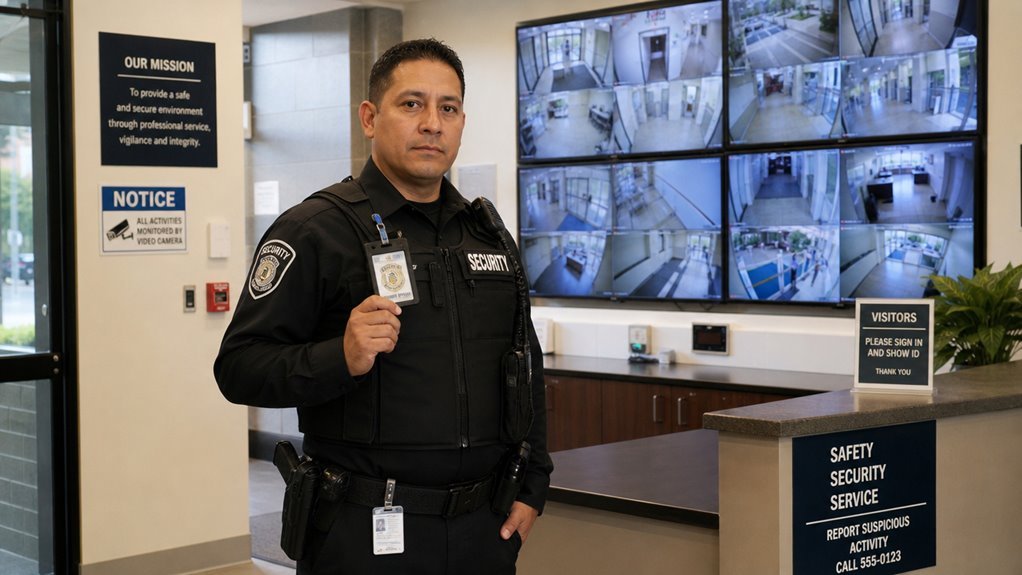
Have security guards overstepped their authority when detaining or arresting individuals? Security guards operate within limited legal authority, primarily to detain individuals when they observe criminal activity or have reasonable suspicion. They may execute a citizen’s arrest for felonies or serious misdemeanors only if the crime is directly witnessed. Proper training guides their actions, emphasizing brief, proportionate detention and immediate contact with law enforcement. Security guards cannot arrest for crimes they suspect but have not seen. Excessive use of force during detention can result in legal penalties or civil liability, reinforcing the importance of adhering to legal boundaries. Understanding security guard codes can help clarify the scope of their authority and responsibilities.
Can Security Guards Hold You Without an Arrest? Understanding Citizen’s Arrest Limits
Security guards can hold individuals temporarily without making an arrest only under specific circumstances defined by law, primarily when they observe a crime being committed or have reasonable suspicion based on evidence. They are permitted to detain someone briefly under citizen’s arrest laws if they witness a felony or serious misdemeanor. However, detention without an arrest must be proportionate and limited in time, with law enforcement notified promptly. If a security guard holds someone unlawfully, it may be considered unlawful detention. Legal rights protect individuals from indefinite detention, and exceeding detention limits can lead to legal consequences. Additionally, security guards must adhere to security guard duties and legal boundaries to avoid liability.
How Do Security Guards Use Force During Detention or Arrest : and What’s Legal?
When security guards detain or arrest individuals, they are authorized to use only reasonable force, which must be appropriate to the perceived threat or offense. The scope of training and legal boundaries limit guards from using excessive force, which may cause unnecessary injury or violate legal standards. During detention or arrest, force should be minimal, aimed at ensuring safety and preventing escape until law enforcement arrives. Armed security personnel can disarm individuals if necessary but must stay within legal limits. After a lawful arrest, guards are required to contact police promptly; using force beyond these boundaries can lead to legal consequences. Additionally, security guards’ use of force is governed by strict regulations to protect individuals’ rights and ensure legal compliance.
When Can Security Guards Lawfully Hand You Over to Police?
The lawful transfer of a detained individual to law enforcement occurs only after a security guard has appropriately exercised their authority through a valid citizen’s arrest or detention based on reasonable suspicion. They must call law enforcement immediately after detaining someone, clearly state the precise reason for detention, and transfer custody without delay. The guard’s authority ends once police are notified and determine the legality of the lawful arrest. Handing over to police is lawful only when detainment was within legal boundaries, ensuring proper procedures were followed, including informing the individual and ensuring lawful arrest standards are met before transfer. Additionally, security guards may carry handcuffs as a non-lethal restraint tool to safely detain individuals within their legal authority.
What Are Your Rights If You Believe You’ve Been Unlawfully Detained or Harmed?
Individuals who believe they have been unlawfully detained or harmed by a security guard possess specific rights aimed at protecting their legal interests and ensuring proper accountability. If someone experiences unlawful detention or physical harm, they can document injuries, such as photos or videos, while remaining respectful and cautious. They have the right to request the reason for detention and refuse to answer questions beyond identifying themselves. Filing a complaint with the security company or licensing agency is permissible for rights violations or excessive force. In cases of physical harm or unlawful detention, seeking legal advice or taking legal action can help address violations of rights and hold responsible parties accountable.
Frequently Asked Questions
Can a Security Guard Read You Your Rights?
Like shadows in the night, security guards lack the legal authority to read your rights; their role is limited by search and detention laws, protecting personal privacy and ensuring lawful detention, yet they cannot perform citizen arrests or conduct searches beyond trespassing rules.
What Is a Security Guard Not Allowed to Do?
Security guards cannot exceed surveillance limitations, infringe on employee privacy, misuse use of force, overstep patrolling boundaries, access property improperly, or conduct unauthorized detention procedures. They must follow strict communication protocols, respect equipment restrictions, and adhere to incident reporting standards.
What Level of Proof Is Needed to Make an Arrest?
The proof needed is clear as daylight—probable cause or reasonable suspicion forms the arrest threshold, embodying the legal standard and evidence requirement; it ensures lawful detention and arrest justification, safeguarding safety while meeting investigative criteria’s burden of proof.
Do Security Guards Have the Authority to Arrest?
Security guards can make citizen arrests within jurisdiction limits, respecting trespassing laws and private property rights, while adhering to detention procedures, restraint methods, and use of force guidelines, to prevent false arrest and liability issues, ensuring safety and proper employee conduct.
Final Takeaways
Understanding the legal boundaries of security guards’ authority is essential, as their power is limited and specific. When they operate within these limits, they serve as a shield rather than a threat, like a steady lighthouse guiding safe passage. Recognizing your rights helps protect your autonomy, ensuring that law enforcement actions remain lawful and justified. Being informed allows individuals to navigate encounters confidently, maintaining the balance between security and personal freedom in each interaction.



 English
  Arabic