
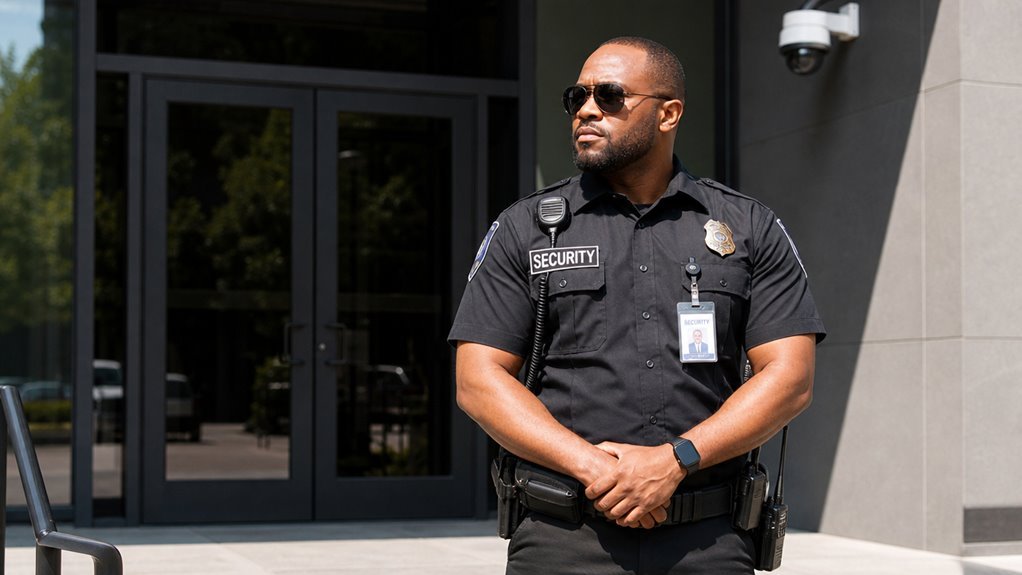
Security guards wear specific uniforms and gear to ensure safety, establish authority, and facilitate quick identification. Each item serves a purpose, from visibility-enhancing clothing to protective equipment, which collectively supports operational effectiveness. Understanding the variety of uniform styles, protective gear, and accessories highlights how they meet various security needs. Further insights into the rules governing uniform standards and maintenance reveal how professionalism is maintained across different environments.
Key Takeaways
- Uniforms enable quick identification, establishing authority and professionalism in critical situations.
- Clothing items like tactical shirts and durable trousers promote durability and ease of movement.
- Reflective gear enhances visibility during night shifts, ensuring safety and legal compliance.
- Protective equipment such as vests and gloves safeguard guards from physical harm.
- Accessories like duty belts and flashlights improve operational efficiency and quick access to essential tools.
Why Uniforms Are Essential for Security Guards
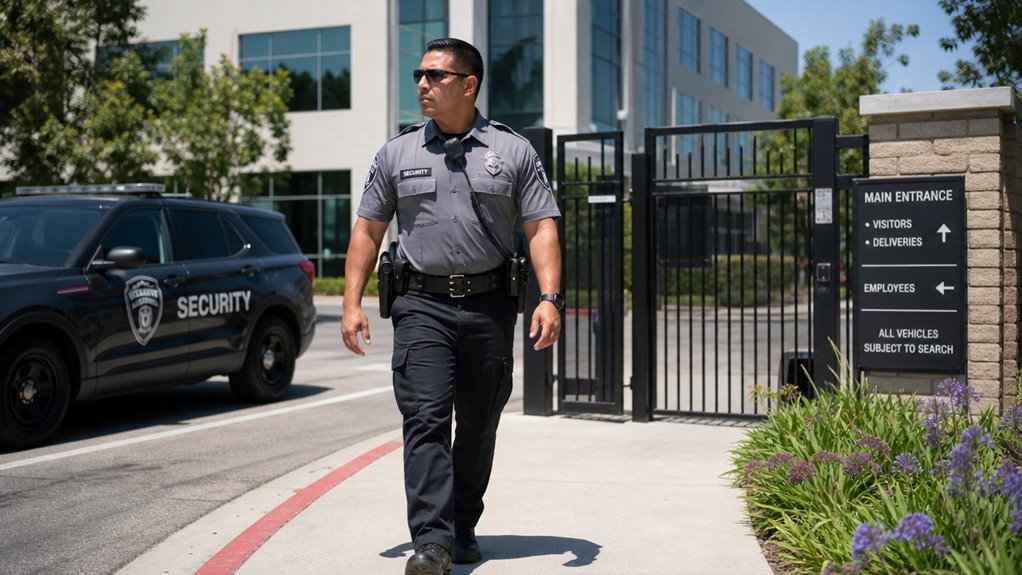
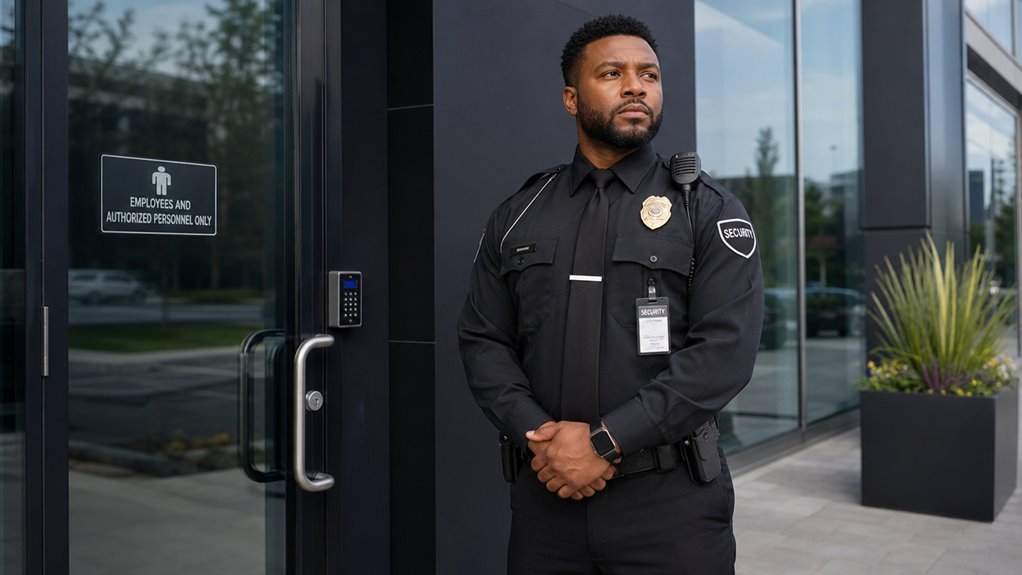
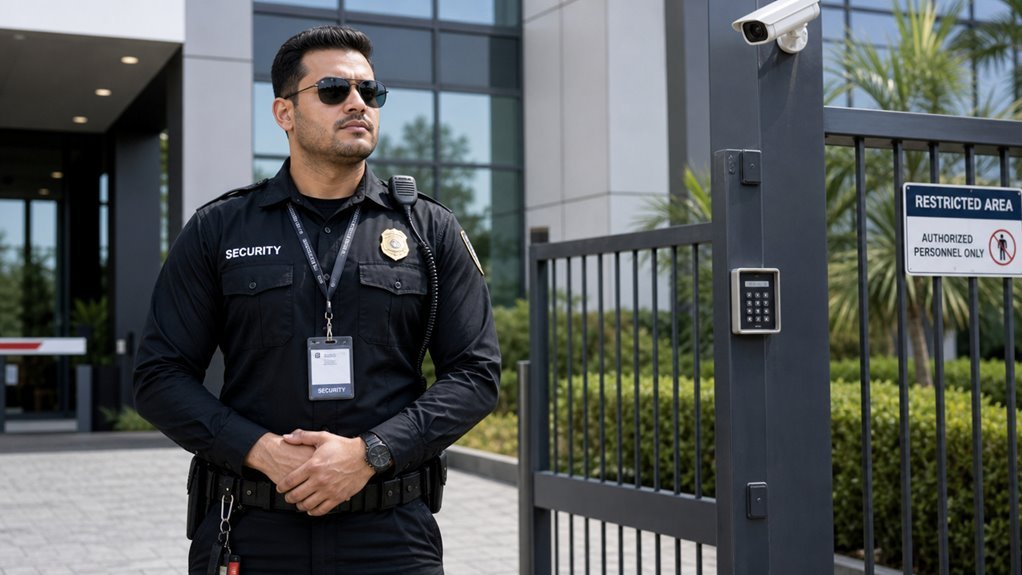
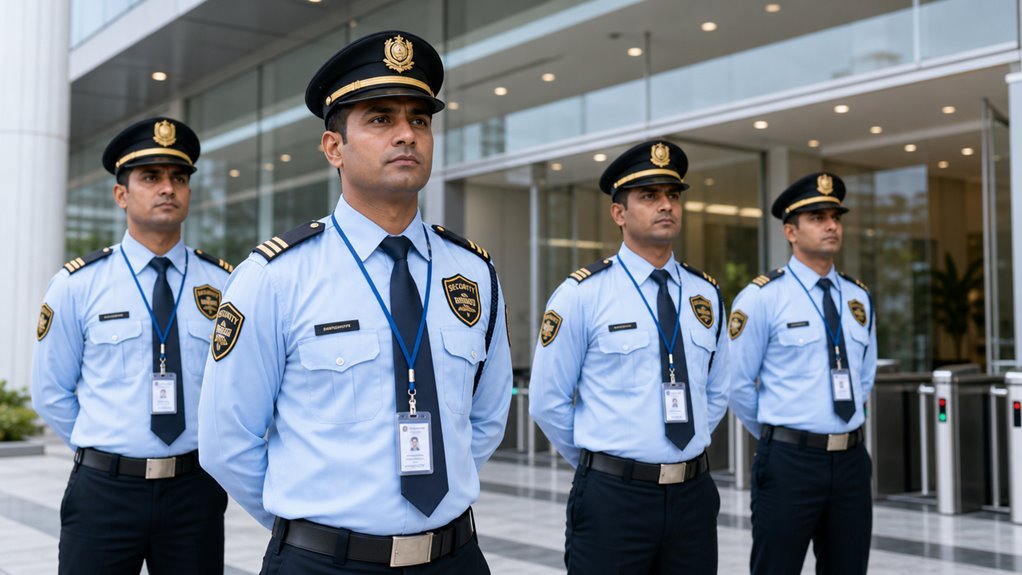
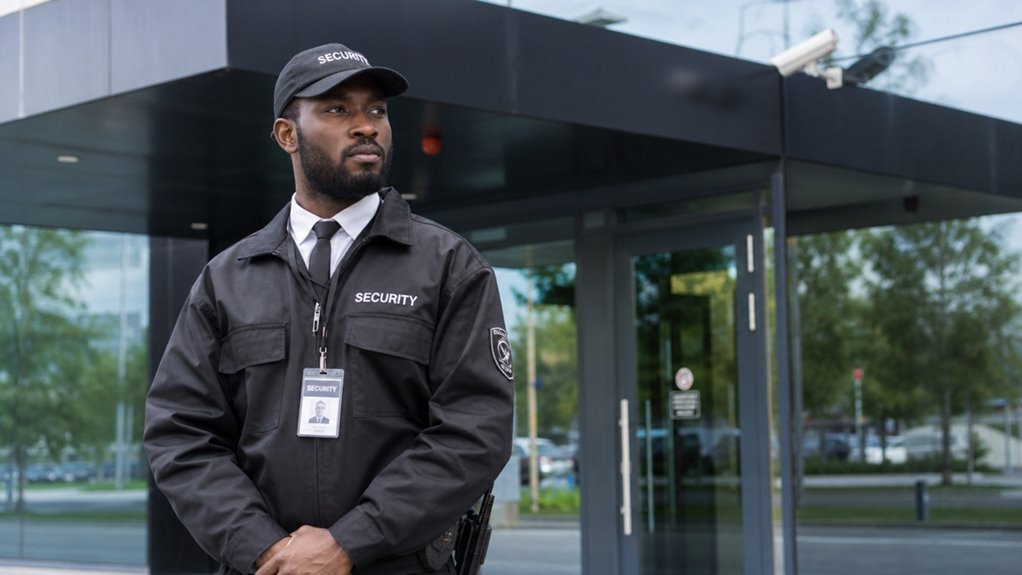
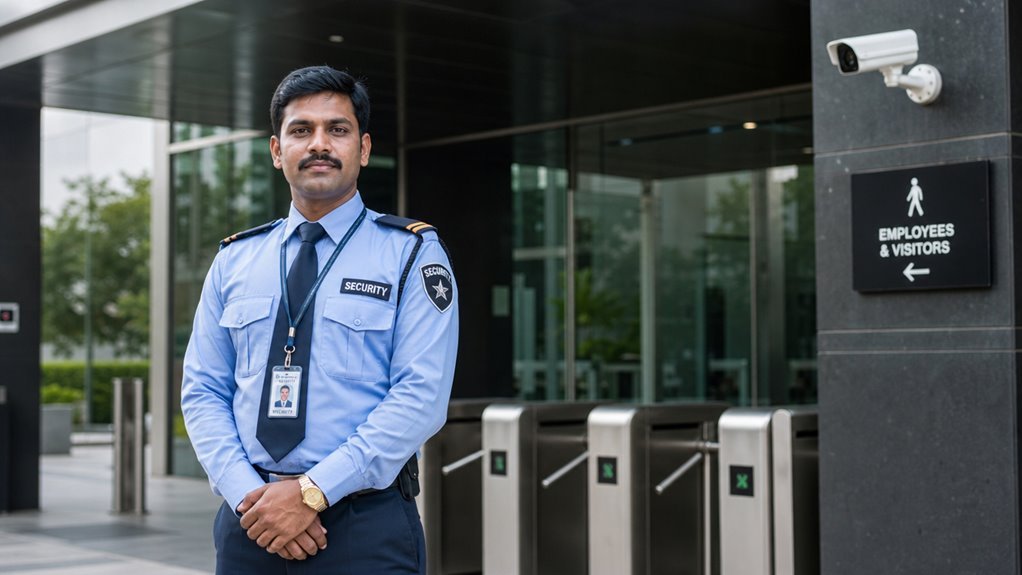
Uniforms are essential for security guards because they enable quick identification by visitors, employees, and law enforcement during critical situations. Well-designed uniforms enhance the trustworthiness of security personnel, projecting authority and professionalism. This fosters a sense of safety, discourages potential offenders, and helps distinguish guards from civilians, ensuring clear roles and responsibilities are maintained within the environment. Additionally, security uniforms contribute to creating a cohesive team appearance, which can improve communication and coordination in emergency situations.
Key Clothing Items for Professional Security Uniforms
What are the essential clothing items that constitute a professional security guard uniform? Security guards typically wear polo or dress shirts, tactical shirts, and durable trousers. Uniform colors reflect authority and environment, while materials like organic cotton and recycled polyester balance durability and maintenance needs. Customization with logos, badges, and reflective elements enhances visibility, professionalism, and safety. Incorporating security services into uniform design can also deter shoplifting and reinforce the presence of authority.
Different Security Uniform Styles for Various Environments
Different environments demand varied security uniform styles to ensure both effectiveness and safety. Security uniform styles are adapted to specific settings, such as polo shirts for tech firms or suits for corporate buildings. Hazardous sites require fire-retardant uniforms, while outdoor patrols use rugged attire like waterproof jackets, ensuring protection and recognition tailored to each environment’s safety needs. Understanding security uniform variation helps in choosing the right attire for optimal security performance.
Why Visibility Gear and Reflective Clothing Are Critical
Visibility gear and reflective clothing play a vital role in maintaining safety for security guards, especially when operating in low-light or nighttime environments. Reflective clothing enhances visibility, allowing guards to be seen from a distance, which helps prevent accidents. Proper use of visibility gear signals security presence, deters offenders, and ensures adherence to safety standards in hazardous or crowded areas. Additionally, wearing the correct *safety attire* ensures guards are operating within the bounds of their legal roles and responsibilities.
Protective Vests, Gloves, and Footwear for Security Staff
Protective vests, gloves, and footwear are essential components of security staff uniforms, created to enhance safety and operational effectiveness. Protective vests provide ballistic and impact resistance, safeguarding personnel during confrontations. Tactical gloves shield hands from cuts, improve grip, and assist in handling equipment. Durable footwear with strong soles and ankle support reduce fatigue and prevent injuries during long patrols.
The Role of Communication Devices in Security Operations
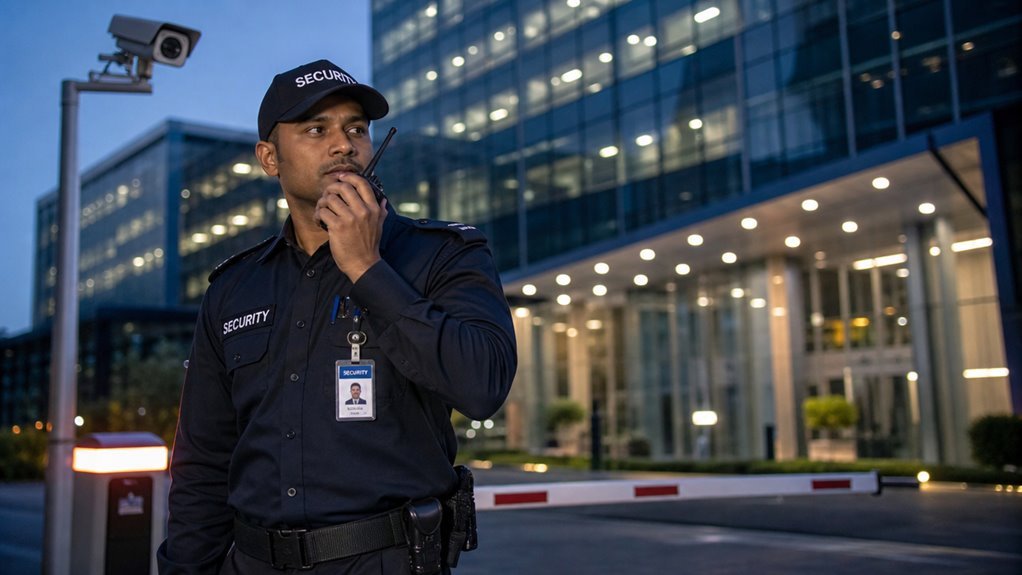
Communication devices play an essential role in security operations by facilitating instant, real-time information exchange among team members. Two-way radios enable quick responses during incidents, supporting seamless coordination across large areas or complex environments. Modern radios often feature encrypted channels for secure communication, while rugged, weather-resistant devices ensure consistent connectivity, promoting safety and effective incident management.
ID Badges and Branding to Enhance Recognition and Authority
ID badges and uniform branding serve as important tools for security personnel to establish their identity and authority within various environments. Clear ID badges with photographs and credentials enable quick verification, while branding such as company logos on uniforms reinforces professionalism. Legally required and visible branding helps differentiate security staff from civilians, fostering trust, accountability, and security awareness among employees and visitors.
Essential Accessories: Duty Belts, Flashlights, and Detention Tools
Why are essential accessories like duty belts, flashlights, and detention tools vital for security personnel? A comprehensive security gear checklist ensures quick access to equipment, including radios, handcuffs, and pepper spray. Properly organized duty belts enhance response times, safety, and professionalism. Durable, well-designed accessories support efficient, safe security operations and effective suspect restraint.
Legal and Company Rules for Security Uniforms and Equipment
Security uniforms and equipment are governed by legal and company regulations intended to ensure clear identification, safety, and professionalism. Regulations emphasize recognizability, preventing resemblance to police or government attire. Uniform standards prohibit camouflage, unauthorized insignia, and certain reflective items, ensuring legal compliance. Employers must oversee that uniforms meet safety standards and facilitate easy identification to maintain public trust and security effectiveness.
Tips for Maintaining a Professional and Recognizable Security Look
Maintaining a professional and recognizable appearance is essential for security personnel, as it directly influences public perception and trust. Proper upkeep of uniforms ensures a neat, authoritative look, with consistent branding such as logos and badges enhancing recognition. Incorporating high-visibility features and matching uniforms to specific roles contribute to a professional appearance that fosters confidence and safety.
Frequently Asked Questions
How Do Security Uniforms Differ Between Private Security Firms and Public Agencies?
Private security uniforms emphasize uniform customization and branding consistency, often focusing on professional appearance without official insignia. Conversely, public agencies prioritize standardized attire with official insignias and safety features, ensuring clear authority and safety compliance.
What Are the Latest Advancements in Security Gear Technology?
Latest security gear features wearable tech such as biometric sensors and smart uniforms, alongside advanced body armor like lightweight, ballistic-resistant materials, all enhancing officer safety, communication, and accountability in diverse environments through innovative, reliable technology.
How Often Should Security Staff Replace or Update Their Equipment?
Regular equipment maintenance and uniform longevity are essential; updates are recommended every 1-2 years for radios and flashlights, every 3-5 years for uniforms and protective gear, ensuring optimal safety and operational reliability in security roles.
Are There Specific Regulations Governing Security Uniform Colors and Styles?
Regulations on security uniform colors and styles vary by jurisdiction, emphasizing uniform customization standards and color code standards that prioritize safety, visibility, and identity, ensuring guards are easily recognizable while preventing impersonation or confusion among security personnel.
How Do Security Accessories Enhance Overall Operational Effectiveness?
Security accessories, with their durable design and ergonomic features, bolster operational effectiveness by ensuring reliability, quick access, and ease of use. They promote safety, accountability, and swift response, vital qualities in maintaining secure, efficient environments.
Final Takeaways
In summary, the uniform and gear choices of security guards serve both functional and authoritative purposes, ensuring safety and professionalism. While protective equipment shields from harm, identification markers establish recognition and command respect. This balance between safety and authority reflects the importance of proper attire, which influences public trust and effective security operations—reminding us that appearance and preparedness are vital in safeguarding individuals and property, especially in environments where safety cannot be compromised.
 English
  Arabic