


The distinction between a bouncer and a security guard stems from their specific roles, environments, and training. Bouncers typically work at nightlife venues, focusing on controlling access and managing unruly patrons using physical presence, often with limited formal training. Security guards serve in diverse settings such as offices and events, with broader responsibilities like patrolling, surveillance, and emergency response, supported by comprehensive legal and conflict resolution training. Understanding their differences is essential to determine the appropriate personnel for each situation.
Key Takeaways
- Bouncers mainly control entry and crowd behavior at nightlife venues, while security guards have broader responsibilities across various environments.
- Security guards undergo formal training and legal certification; bouncers often rely on physical presence without structured instruction.
- Security guards focus on conflict de-escalation and legal compliance; bouncers primarily use physical strength and intimidation.
- Security guards wear professional uniforms and maintain calm, organized conduct; bouncers may dress casually with a more aggressive stance.
- Security guards operate in diverse settings, both indoors and outdoors; bouncers typically work inside clubs or bars.
What’s the Difference Between a Bouncer and a Security Guard?
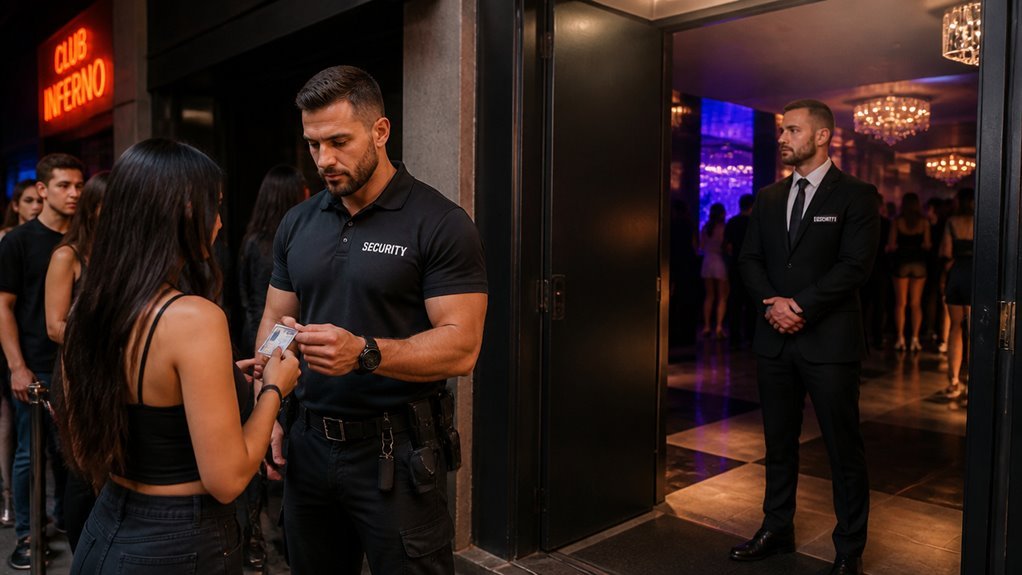
Have you ever wondered how bouncers differ from security guards in their roles and responsibilities? Bouncers primarily manage entry and control unruly patrons at entertainment venues, relying heavily on physical presence and strength. Security guards have a broader scope, including patrolling, monitoring premises, and responding to emergencies in various environments. Bouncers often focus on crowd and entry control with limited formal training, while security guards typically undergo professional training that includes conflict resolution, first aid, and legal compliance. The key distinction lies in their core functions: bouncers enforce venue access physically, whereas security guards provide comprehensive safety and surveillance services. Additionally, security guards are often responsible for understanding legal regulations, which ensure their actions remain within the bounds of the law.
Where Do Bouncers and Security Guards Typically Work?
Bouncers and security guards typically work in settings aligned with their specific roles and responsibilities, although some environments may overlap. Bouncers, also known as door supervisors, primarily operate at nightlife venues such as nightclubs, bars, and entertainment facilities where crowd control and entry management are essential. Security guards are employed in a broader range of locations within the security industry, including office buildings, shopping centers, construction sites, and public events. Both roles may work indoors or outdoors, but bouncers are most associated with nightlife environments, while security guards serve diverse environments requiring surveillance, patrolling, and emergency response.
How Do Their Training and Legal Responsibilities Compare?
The training and legal responsibilities of security personnel and bouncers differ significantly, primarily because their roles involve distinct levels of authority and risk. Security guards typically undergo formal training, covering conflict resolution, use of force, emergency procedures, and legal responsibilities, often requiring certification such as an SIA license. They are trained to act within legal boundaries, emphasizing de-escalation to reduce liability risks. In contrast, bouncers may lack structured training and rely on physical presence and intimidation. Their understanding of legal responsibilities varies, increasing potential legal risks. Proper training helps security guards maintain safer environments, whereas inadequate training for bouncers can elevate legal and safety concerns. Legal boundaries and responsible conduct are central to effective security operations.
How Do They Handle Conflicts and Use Force?
Handling conflicts and the appropriate use of force are critical aspects that distinguish security guards from bouncers, largely due to their differing levels of training and authority. Security guards are trained in conflict management techniques and policies on use of force, enabling them to de-escalate situations effectively and legally. They apply force only when necessary, following strict standards *intended for* to minimize liability. Conversely, bouncers often rely more on physical strength and intimidation, with limited conflict management training, which can lead to excessive or misapplied use of force. Proper training enhances safety by promoting communication, restraint, and adherence to legal standards during confrontations. Additionally, understanding legal authority is essential for both professionals to operate within the boundaries of the law.
How Do They Present Themselves: Appearance and Behavior?
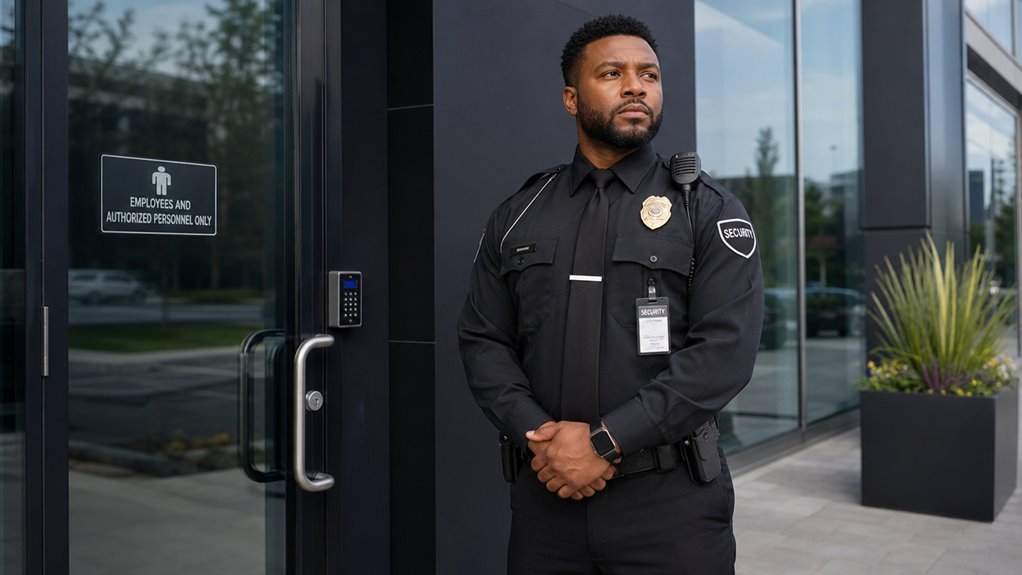
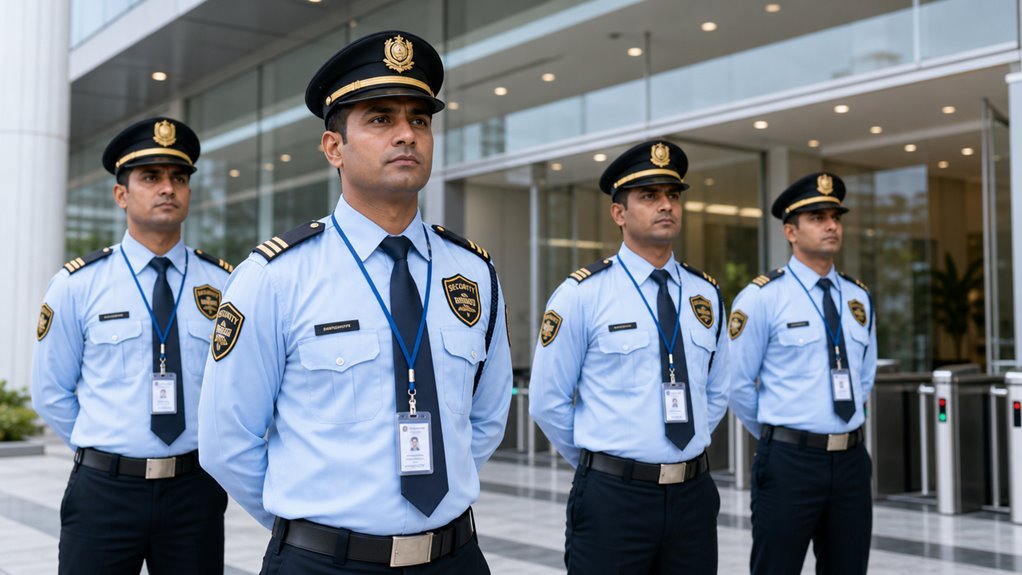
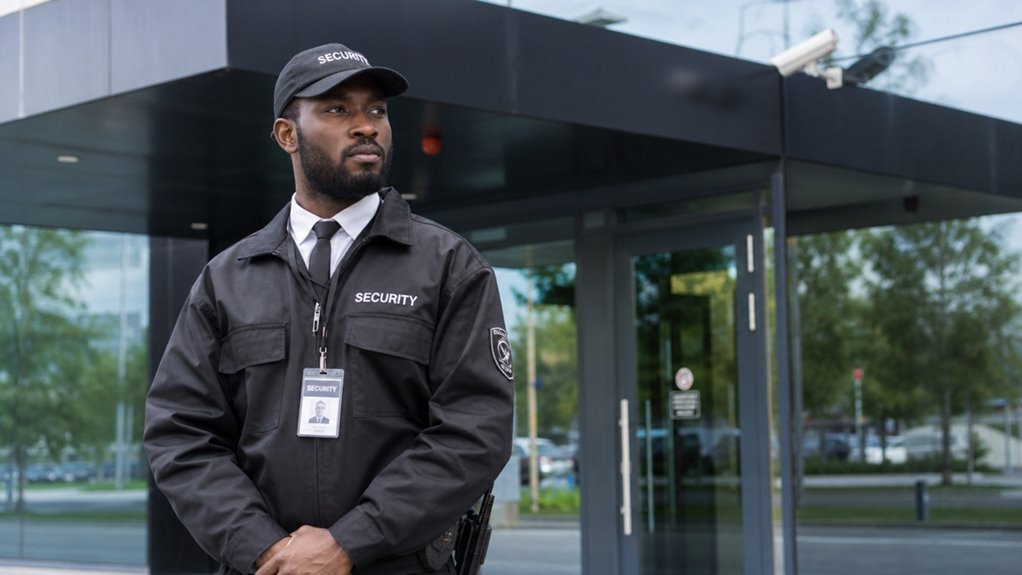
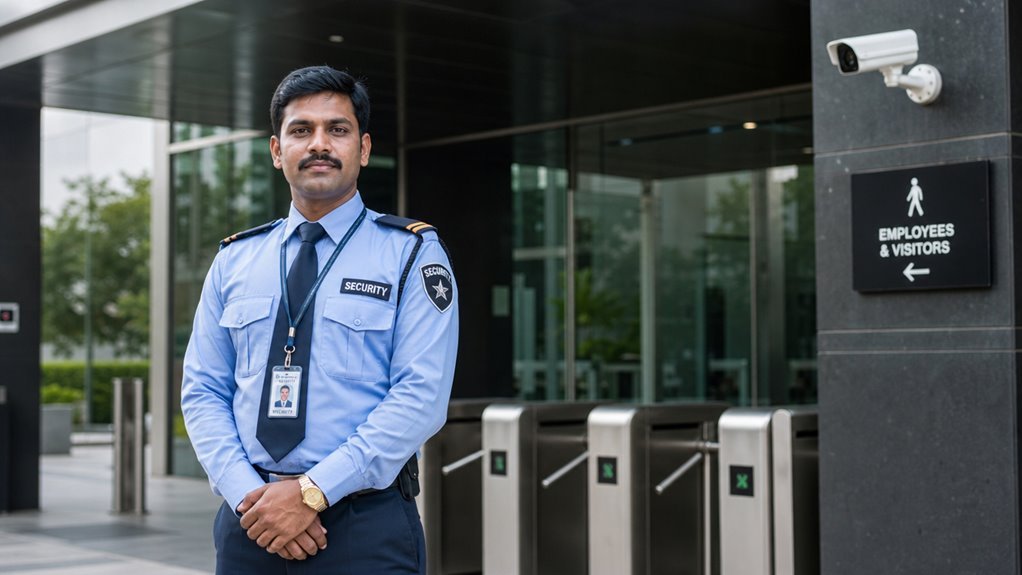
Presentation, including appearance and behavior, plays a significant role in differentiating security personnel from bouncers. Security guards typically wear professional uniforms such as suits or blazers, emphasizing a clean, disciplined, and approachable demeanor. Their behavior is controlled and calm, often involving organized interactions and the use of communication devices like radios. Conversely, bouncers frequently dress casually or in less formal attire, with their appearance sometimes mismatched or informal. Their stance may be intimidating or aggressive, relying on physical presence and quick responses. These visual cues and conduct help patrons recognize the roles and expectations of each type of security. Additionally, security guards often display a professional demeanor, which further distinguishes them from bouncers.
When Should You Use a Bouncer Versus a Security Guard?

Deciding whether to employ a bouncer or a security guard depends on the specific security needs and environment of the venue. A bouncer is suitable when managing entry, controlling crowd flow, and handling unruly patrons at nightlife venues like bars and clubs. They focus on physical barrier enforcement and conflict de-escalation, primarily at entrances and inside. Conversely, a security guard provides broader safety responsibilities, such as patrolling larger areas, monitoring premises, and responding to emergencies beyond entry control. They typically have more extensive training to handle complex situations legally and professionally. The choice depends on the venue’s requirements for immediate versus comprehensive security measures.
Why Does It Matter to Know the Difference?
Knowing the difference between a bouncer and a security guard is important because it directly influences hiring practices, legal responsibilities, and safety strategies. Security guards are trained to monitor, maintain order, and respond appropriately within various environments, such as malls or office buildings. Bouncers primarily focus on controlling access and managing crowds at venues like nightclubs. Understanding these roles clarifies the level of training required and potential liabilities, helping venues meet safety standards. Proper identification ensures effective security measures, reduces conflicts, and prevents legal issues by assigning the right personnel for maintaining order in specific settings.
Frequently Asked Questions
Can I Defend Myself Against a Bouncer?
Self-defense techniques and legal self-protection are vital, but defending against a bouncer is only justified if facing imminent physical harm; otherwise, compliance and seeking legal recourse ensure safety and avoid criminal liabilities or escalation.
What Is the Highest Salary of a Bouncer?
Like a fortress guarding treasure, the highest bouncer salaries soar between $50,000 and $70,000, driven by demanding bouncer job requirements and rigorous security guard training, offering safety and stability in high-end venues for those with expert skills.
What Are the 4 Types of Security Guards?
The four main security personnel classifications include static guards, patrol guards, mobile patrol personnel, and alarm response guards, each with specific license requirements, ensuring optimal safety. These roles provide diversified security coverage across various environments for maximum protection.
Is a Bouncer Considered Security?
In a nightclub scenario, a bouncer is considered security, aligning with legal distinctions and training requirements for crowd control and safety. Their specialized training ensures effective, non-violent conflict management, safeguarding patrons while meeting industry safety standards.
Final Takeaways
Understanding the differences between bouncers and security guards is essential for choosing appropriate personnel for specific environments. Clarification about their roles, training, and presentation helps ensure safety and professionalism. While some may assume skills are interchangeable, recognizing these distinctions improves security planning and responders’ effectiveness. Ultimately, selecting the right individual for the right situation enhances safety, complies with legal requirements, and maintains a secure environment for everyone involved.

 English
  Arabic