
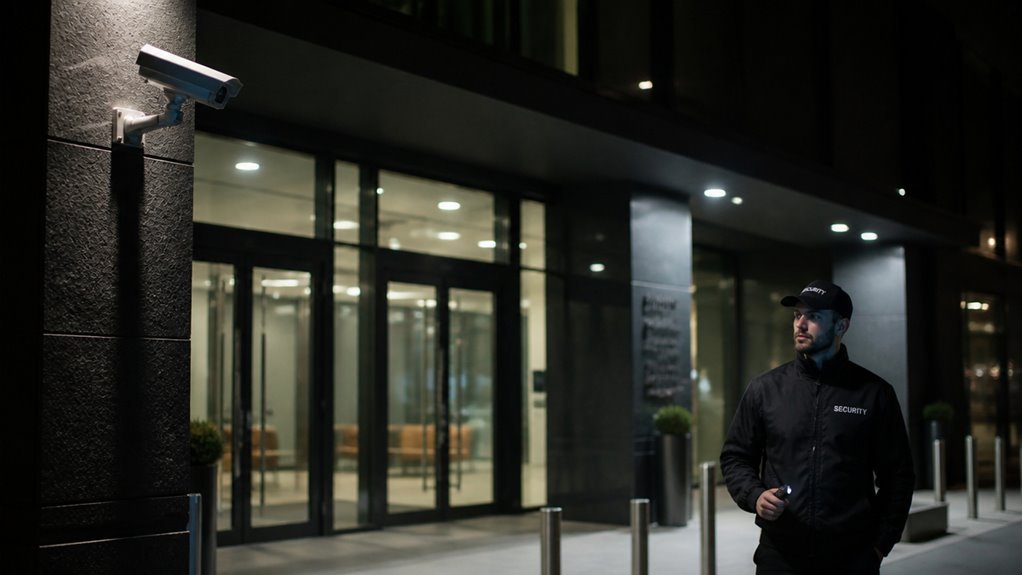
Deciding whether CCTV cameras or security guards are better suited for a business depends on multiple factors, including coverage needs, budget constraints, and the level of intervention required. Businesses must evaluate how each solution addresses risks such as theft, vandalism, or emergencies. While CCTV offers passive, continuous monitoring and evidence collection, guards provide active presence and immediate response. Weighing these options pieces together an effective security strategy, prompting a closer look at specific advantages and limitations.
Key Takeaways
- CCTV provides cost-effective, continuous monitoring, while security guards offer immediate, reactive physical presence.
- Security guards respond quickly to threats, but CCTV can alert security teams faster with automated alarms.
- CCTV offers reliable, tamper-proof evidence of incidents; guards can vary in attentiveness and response.
- CCTV is ideal for passive deterrence and broad coverage, whereas guards provide active deterrence and rapid intervention.
- Combining CCTV and security guards often delivers the most comprehensive, risk-sensitive security solution for businesses.
What Are the Main Differences Between CCTV and Security Guards?
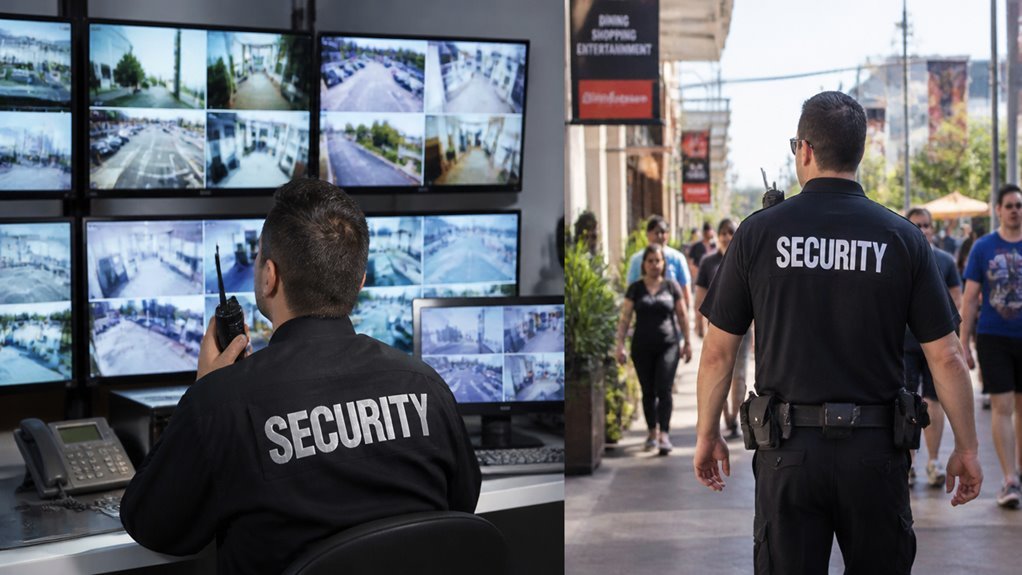
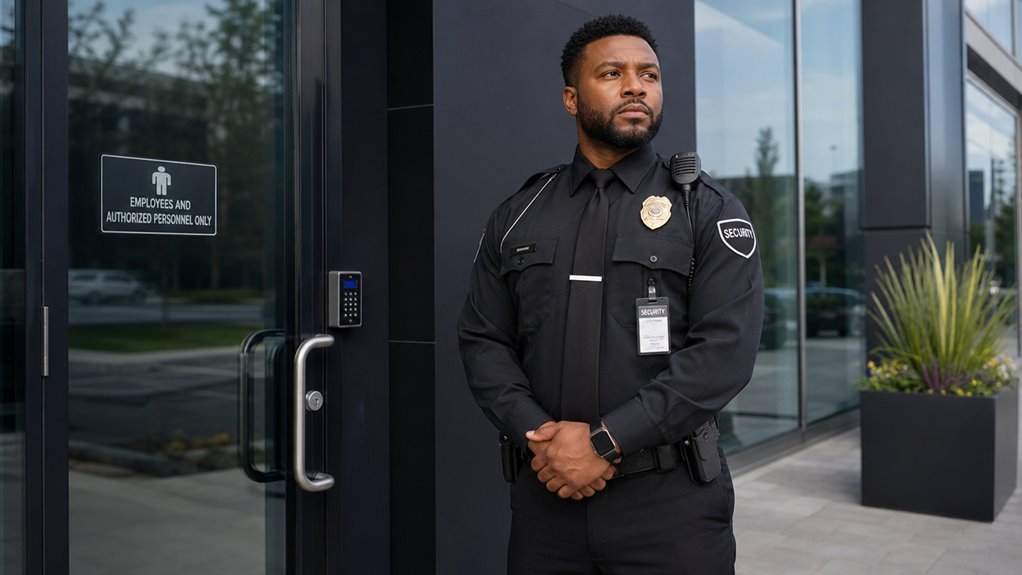
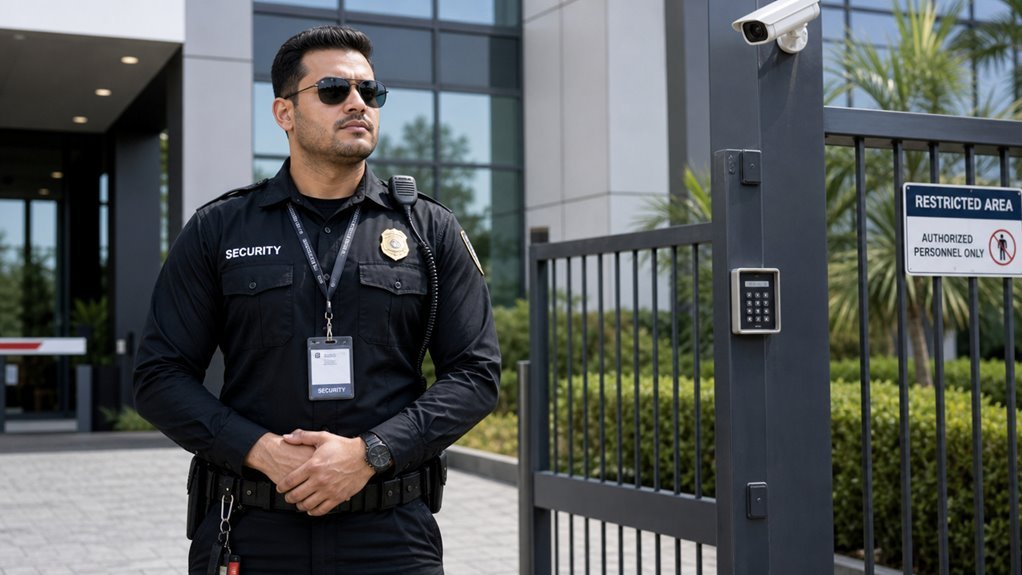
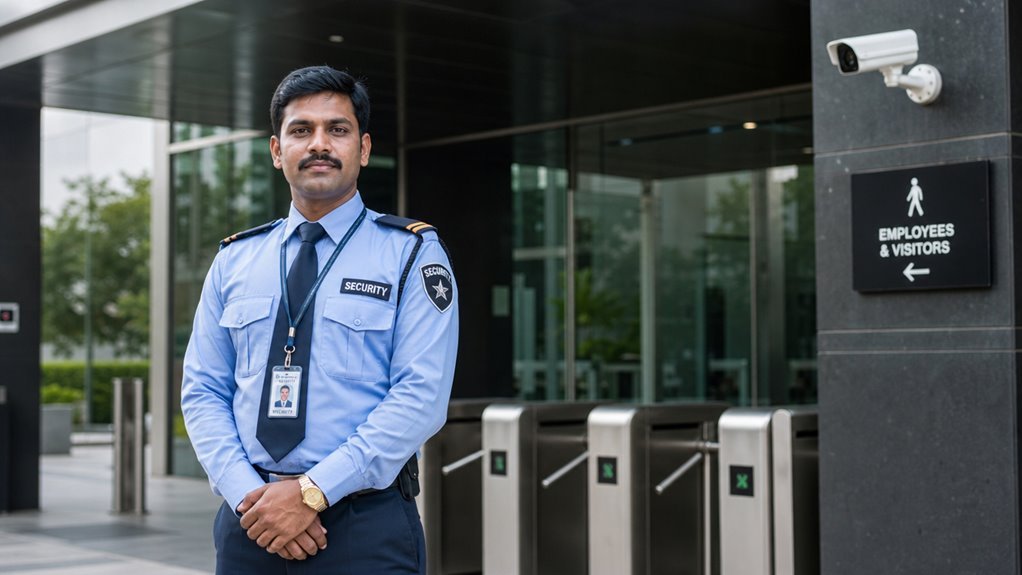
While both CCTV systems and security guards serve the purpose of maintaining safety, they perform their roles in fundamentally different ways. CCTV systems primarily function as monitoring tools, providing continuous surveillance, recording evidence, and acting as a deterrent through visual presence. They cannot physically intervene during incidents. Conversely, security guards offer real-time, physical intervention, actively responding to threats and deterring crime through their visible presence. Guards have limited patrol ranges and depend on manual detection, while CCTV can cover large areas with minimal oversight. The key difference lies in CCTV being a technological tool, whereas guards deliver immediate, human threat response. Additionally, security threats require different approaches for effective management and prevention.
Which Is More Cost-Effective for Your Business?
Deciding which security approach offers better cost efficiency depends on several factors, including the size of the business, the level of risk, and operational needs. Security Camera Systems are generally more cost-effective because they involve a lower long-term cost for monitoring, especially when combined with smart analytics that reduce the need for continuous human oversight. Security guard services, while providing personalized response, incur ongoing expenses such as wages, benefits, and shift premiums, making them more expensive over time. Small businesses benefit from CCTV for cost-effective monitoring, while larger or high-risk businesses often use a combination of both methods to optimize coverage and control costs. Additionally, cost considerations should be evaluated carefully to ensure the security solution aligns with the budget constraints and risk management priorities.
How Quickly Do CCTV and Guards Respond to Threats?
Security systems and security personnel differ significantly in their response times to threats. CCTV, especially with automated alerts and smart analytics, can detect suspicious activity and notify security teams within seconds. This rapid threat response facilitates quicker intervention compared to manual monitoring. Conversely, security patrols and guards’ reaction times depend on their location, alertness, and workload, potentially causing delays. Well-integrated CCTV systems enhance response time by automatically triggering alerts, enabling faster custom security responses. In general, automated alerts reduce delays, supporting rapid intervention, whereas human response may vary depending on situational factors. Additionally, security guard protocols influence how quickly threats are managed, emphasizing the importance of well-trained personnel.
How Reliable Are CCTV Cameras Compared to Security Guards?
CCTV cameras generally offer high reliability compared to security guards, as they provide continuous, consistent monitoring without fatigue or distraction. Security cameras, especially professional security guard systems with remote access, consistently record incidents, reducing human error. Professional-grade CCTV systems are designed for high reliability, with warranties and technical support that minimize downtime. Unlike security patrols or guards, CCTV recordings serve as objective, tamper-proof evidence, enhancing total dependability. Additionally, CCTV systems can be integrated with other security measures to create a comprehensive security solution, with real-time monitoring capabilities that improve responsiveness. While security guards may vary in attentiveness due to training and fatigue, reliable security cameras operate uninterrupted, making them preferable for long-term, around-the-clock security in large or complex environments.
How Do Coverage and Deterrence Effectiveness Compare?
Coverage and deterrence effectiveness vary significantly between CCTV cameras and security guards, primarily due to their operational differences. CCTV provides continuous coverage of large areas, enhancing passive deterrence through high-resolution footage that aids in identification. However, its effectiveness relies on visibility and awareness, with no real-time intervention possible. Security guards, on the other hand, offer active deterrence by their physical presence, capable of responding instantly to threats or suspicious activity. Both methods’ success depends on placement, visibility, and the threat’s nature. CCTV is suited for passive deterrence, while security guards excel at active prevention and immediate intervention.
Should You Integrate CCTV With Security Guards?
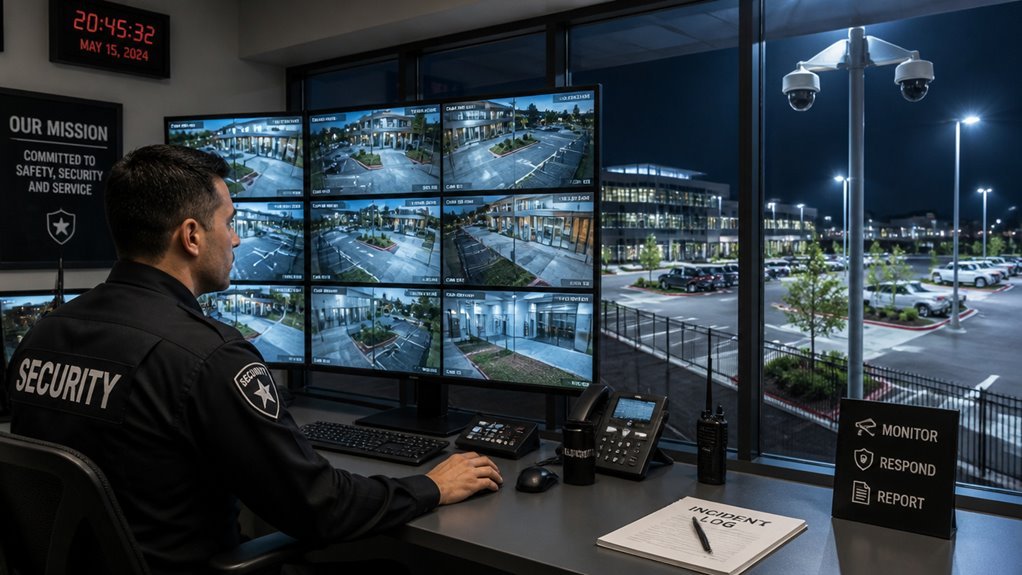
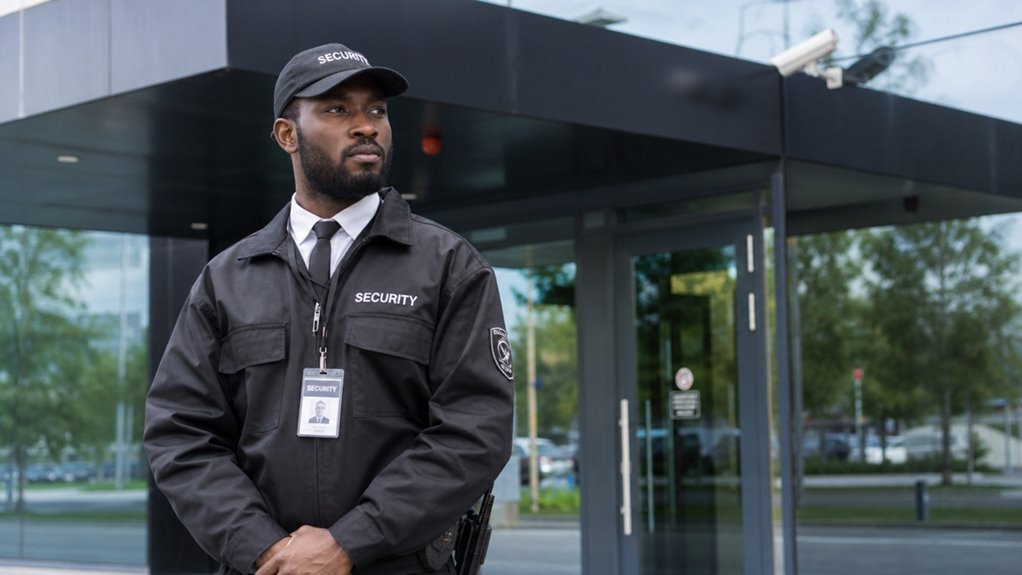
Combining technological monitoring with human oversight often results in a more comprehensive security system. Integrating CCTV with security guards enhances effectiveness by providing continuous surveillance alongside immediate response capabilities. CCTV allows remote monitoring and detailed incident recording, while security guards can physically intervene when needed. This combined approach leverages the deterrent power of visible guards with the tracking capabilities of surveillance systems. Many businesses find that integrating CCTV and security guards creates a more cost-efficient, reliable, and thorough security solution. In general, a well-planned integration ensures better coverage, quicker incident response, and increased safety for the premises.
What Practical Factors Should You Consider When Choosing Security?
When selecting security arrangements, several practical factors must be carefully evaluated to ensure effective protection tailored to specific needs. First, consider your business size and layout, as larger or complex spaces may need both security guards and surveillance to cover all areas effectively. Budget constraints influence choices, since security guards entail higher costs upfront and ongoing expenses, while CCTV systems often offer better cost-effectiveness over time. Assess the level of immediate response required; guards can physically intervene, whereas surveillance provides monitoring and alerts. Additionally, identify blind spots that cameras can address, and consider safety standards like minimal contact during health crises, favoring CCTV solutions.
How Do You Decide Which Solution Fits Your Business Best?
Deciding which security solution best fits a business depends on analyzing specific factors such as the organization’s size, risk profile, and operational requirements. Conducting a thorough risk assessment helps identify security needs, guiding the choice between technology, personnel, or a combination. Consider cost-effectiveness over time, recognizing that security guards are generally more expensive than CCTV systems. Evaluate whether immediate, real-time response is essential or if passive monitoring and record-keeping meet your security goals. Implementing a layered security strategy, integrating CCTV and security guards based on assessed risks, creates comprehensive protection tailored to your business’s unique needs.
Frequently Asked Questions
What Is the Disadvantage of CCTV?
The disadvantages of CCTV include privacy concerns, technology limitations like blind spots, maintenance costs, system complexity, and potential non-compliance with privacy regulations, which can compromise effectiveness and raise security and legal issues for businesses seeking reliable safety solutions.
How Much Does CCTV Cost Monthly?
CCTV costs fluctuate like a tide, with monthly fees covering video footage, maintenance, installation, remote monitoring, and system upgrades, ensuring safety while providing a dependable shield that minimizes ongoing expenses and maximizes protective coverage.
Are Companies Allowed to Watch You on CCTV?
Companies are permitted to monitor individuals via CCTV within legal permissions, respecting employee privacy and surveillance policies. Monitoring limitations protect data security and privacy rights, ensuring surveillance does not infringe on reasonable expectations in private areas.
Is CCTV an Outdated Term?
Historical perception shows CCTV as outdated, but technological evolution now offers advanced, AI-driven security solutions. Market trends favor “video surveillance systems,” reflecting brand terminology and consumer familiarity, emphasizing proactive safety measures over traditional methods.
Final Takeaways
Research indicates that integrating CCTV with security personnel significantly enhances security effectiveness, with studies showing a 35% reduction in theft incidents when both are combined. This dual approach offers continuous surveillance, immediate response capabilities, and stronger deterrence. Businesses aiming for comprehensive protection should consider employing both solutions, balancing cost, coverage, and specific risks. Making an informed decision based on these factors strengthens general security, enabling proactive management and environmental safety in various operational settings.
 English
  Arabic