

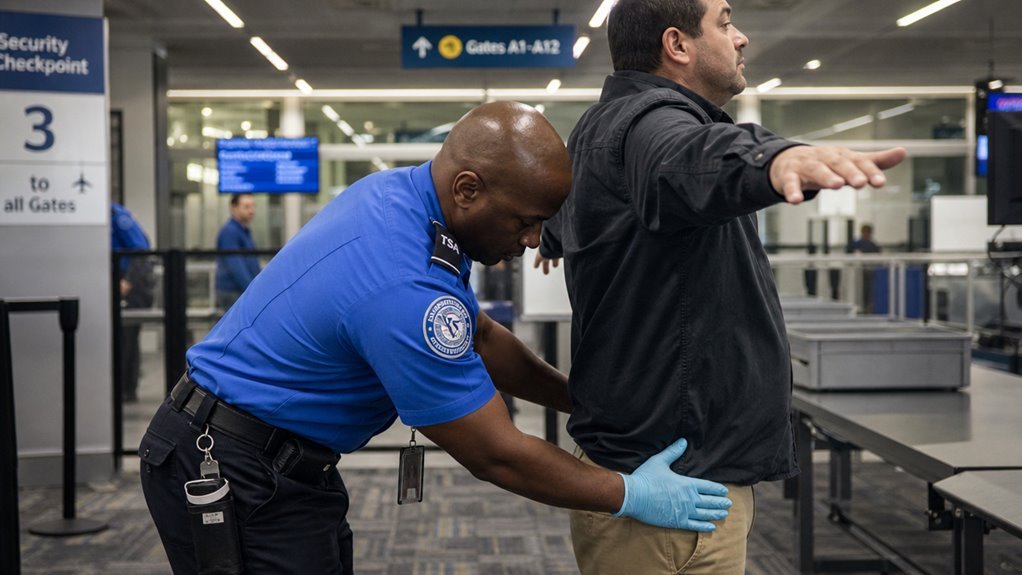
Security guards have limited authority to search individuals, and their actions depend on specific legal conditions. They generally cannot search someone without explicit, voluntary consent or owner approval. Searches beyond these boundaries, such as frisking or pocket checks, require informed agreement. Coercion or intimidation invalidates consent, and unauthorized searches can violate privacy rights. Understanding when, where, and how guards may conduct searches involves complex legal standards, which vary across jurisdictions and circumstances.
Key Takeaways
- Security guards can only conduct searches with explicit, voluntary consent from the individual.
- Physical searches require clear permission; without it, such actions may be illegal.
- Guards cannot search based solely on suspicion or probable cause; consent is essential.
- Unauthorized searches without proper consent risk violating privacy and can lead to legal claims.
- Proper documentation of the individual’s consent is important to ensure the legality of the search.
What Are the Legal Limits of Security Guard Search Authority?
The legal limits of security guard search authority are defined primarily by the nature of the security guard’s role and the rights of individuals. Security guards generally lack legal authority to conduct searches without explicit, voluntary consent. Searches must stay within the scope of this consent, respecting property rights and policies. Unauthorized searches beyond consent can lead to legal claims of invasion of privacy or assault. Physical searches, such as pat-downs or pocket checks, require clear, voluntary permission. While private security is not bound by Fourth Amendment restrictions, they must operate within legal boundaries to avoid unlawful intrusions, emphasizing the importance of respecting individual rights and property. Additionally, understanding the locally applicable laws governing security procedures helps ensure guards act within their legal limits.
When Can Security Guards Legally Search Your Person or Vehicle?
Security guards can only legally search a person’s body or vehicle if the individual voluntarily gives clear, informed consent. This consent must be explicit, not coerced, and individuals retain the right to refuse or withdraw permission at any time, respecting their privacy rights. Searches of persons, such as pat-downs or pocket checks, are lawful only with clear permission unless law enforcement is involved. Vehicle searches are permissible if the person agrees voluntarily or policies specify conditions for searches. Conducting searches without valid legal justification or consent can violate privacy rights and lead to legal consequences. Additionally, understanding the cost of security services can help determine appropriate measures for events to ensure compliance and safety.
Does Consent Come Into Play When Security Guards Search?
Consent is a fundamental factor in determining the legality of searches conducted by security guards. For a search to be lawful, it must be voluntary, meaning the individual freely agrees after understanding what areas or items are involved. Security personnel cannot compel consent or use refusal as a basis for detention or search, especially in private settings. Clear documentation that consent was given voluntarily helps prevent legal issues related to unlawful search claims. Unlawful searches—those conducted without explicit, informed, and voluntary consent—may lead to legal consequences, emphasizing the importance of understanding the role of consent in security searches. Additionally, being aware of security personnel’s authority to touch can influence whether a search is considered acceptable.
How Do Security Search Powers Compare to Police Search Authority?
Legal powers for conducting searches are significantly different between security personnel and police officers. Private security guards generally lack the authority to search individuals without explicit, voluntary consent or specific permissions from property owners. Unlike law enforcement, security guards cannot perform searches based on suspicion alone and do not have legal rights to arrest or conduct searches under probable cause. Police officers, on the other hand, have broad search powers under the Fourth Amendment, such as warrants and probable cause. Security searches are limited, usually requiring clear consent, with unauthorized searches risking legal claims for privacy violations. Understanding legal limits is essential for both security personnel and the public to ensure rights are respected.
What Are Common Mistakes That Lead to Illegal Security Searches?
Many common mistakes can compromise the legality of security searches, with errors often arising from improper procedures or misunderstandings of legal boundaries. Key issues include failing to obtain consent that is explicit and voluntary, which is essential to avoid illegal conduct. Searching beyond the scope of consent, such as probing sensitive areas or removing clothing without proper authorization, is a frequent mistake. Additionally, performing searches without adequate training can lead to violations, especially when using force or coercion. Not documenting search details or consent further increases legal risks, undermining defenses if disputes arise. Adherence to correct procedures and understanding legal limits are vital for lawful security searches.
How Can Security Guards Conduct Lawful and Proper Searches?

Lawful and proper searches by security guards depend on strict adherence to established procedures, legal boundaries, and individual rights. To conduct a search, guards must obtain explicit, voluntary consent from the individual, or rely on reasonable suspicion if permitted. For example, a pat-down for weapons is lawful if the individual agrees and understands its scope. Searches beyond outer clothing, or invasive procedures, are generally illegal without law enforcement authority or probable cause. Guards must limit searches to consented areas, avoid excessive force, and document all consent and scope details to ensure legality and protect against liability.
Do Search Laws Vary Across States?
Search laws for security guards differ considerably from state to state, reflecting varying regulations, training requirements, and legal standards. These laws influence the legal authority security personnel have to detain individuals or conduct searches, and they vary depending on jurisdiction. For example, Saudi Arabia mandates 40 hours of training on search limitations and privacy rights, while New York restricts searches and detaining without clear legal justification or consent. Florida permits limited property searches with notice, whereas Texas enforces strict standards, restricting independent searches by security guards. Understanding these state-specific regulations is essential for ensuring searches are lawful and appropriate within each jurisdiction.
Frequently Asked Questions
What Is a Security Guard Not Allowed to Do?
Security guards are not allowed to violate privacy rights or infringe on personal dignity through unauthorized searches or detentions, except within legal exceptions or contractual limitations, ensuring safety without compromising individual rights.
Can You Refuse a Probable Cause Search?
Like a shield guarding rights, individuals can refuse a probable cause search, asserting their legal rights amidst search procedures. Privacy concerns remain paramount, and law enforcement’s involvement often determines whether such searches align with legal standards and personal safety.
Do Security Guards Have the Right to Search Your Bag?
Security guards generally cannot search your bag on private property without your explicit consent, as search limitations exist unless under reasonable suspicion or specific policies; always verify consent requirements to ensure safety and respect rights.
What Are the Three Types of Security Searches?
The three types of security searches—pat-downs, pocket, and property searches—are integral to surveillance procedures, security protocols, and access control, ensuring safe equipment inspection and person screening, with legality hinging on proper consent and adherence to policies.
Final Takeaways
In summary, security guards must adhere to legal standards when conducting searches, relying solely on clear, voluntary consent within defined limits. Unauthorized searches can violate privacy laws and result in legal repercussions. Studies indicate that approximately 80% of disputes over searches involve coercion or lack of consent, emphasizing the importance of proper procedures. Understanding these legal boundaries ensures that security professionals operate ethically and within the law, safeguarding individual rights while maintaining safety and security.





 English
  Arabic