

Security guards and police officers serve different roles within safety and law enforcement. Guards focus on protecting private property, monitoring premises, and controlling access with limited authority. Police enforce laws, investigate crimes, and maintain public order, wielding legal powers under jurisdiction. Their training and responsibilities differ significantly, shaping how they respond to emergencies and interact with the community. Understanding these differences is essential to assessing security needs and choosing appropriate personnel for specific situations.
Key Takeaways
- Police have broad legal authority to enforce laws, make arrests, and investigate crimes, unlike security guards with limited, property-specific powers.
- Police undergo extensive training and licensing focused on law enforcement, while security guards receive shorter, site-specific training.
- Police communicate through encrypted radios and handle emergencies beyond property boundaries, whereas guards primarily use basic radios for on-site security.
- Police engage actively in community outreach, while security guards mostly observe and deter within private property.
- Police have the authority to use force, conduct searches, and detain suspects legally; security guards’ detention powers are limited and regulated.
Who Do Security Guards and Police Officers Really Are
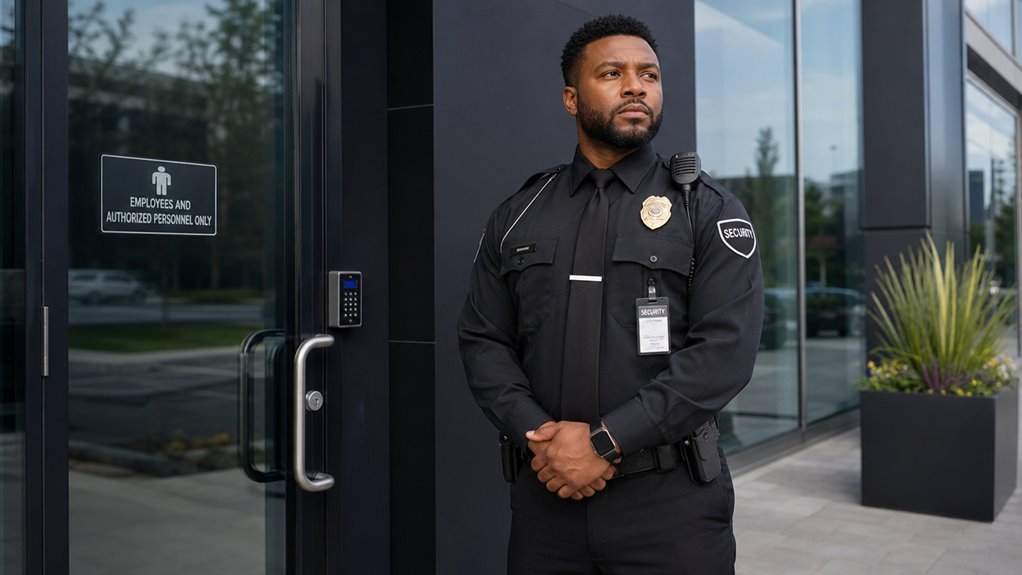
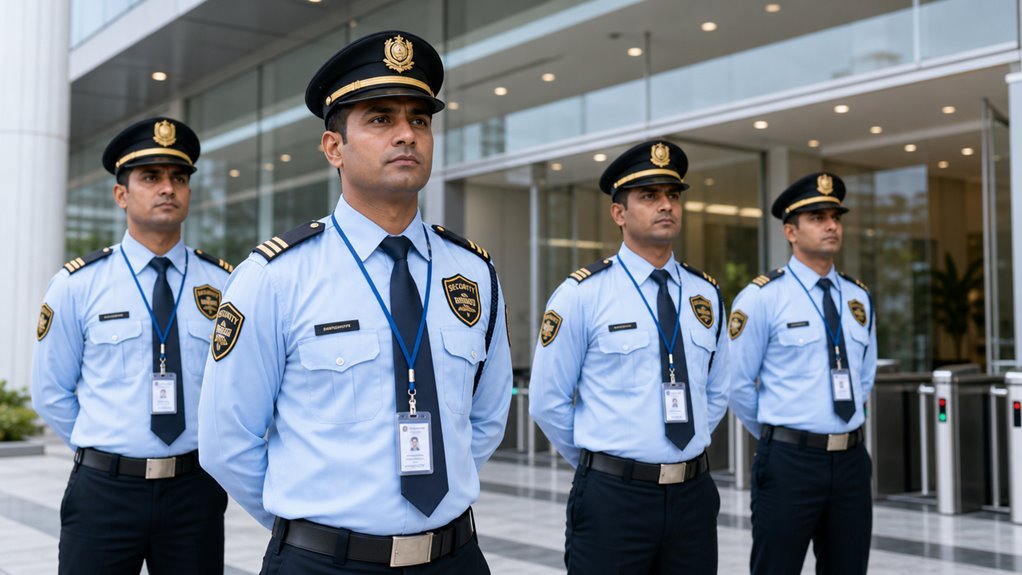
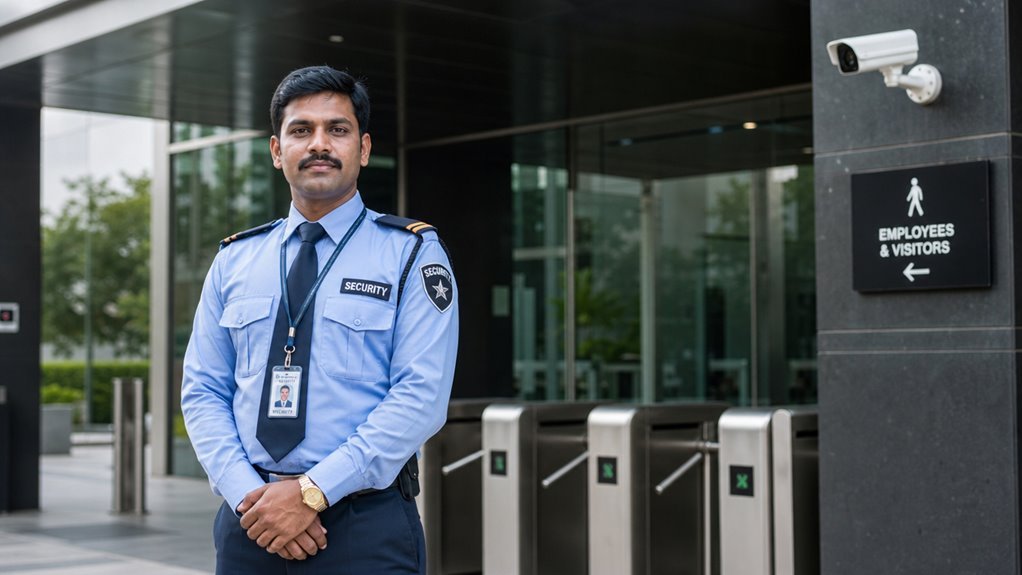
Although both security guards and police officers serve to maintain safety, their roles, authority, and training differ significantly. Security guards are employed by private entities, focusing on safeguarding property, monitoring premises, and reporting incidents within a restricted scope and limited jurisdiction. They generally undergo shorter training programs and lack the legal authority to enforce laws or make arrests. Police officers are sworn law enforcement officials with extensive training in criminal law and tactics, authorized to enforce laws, investigate crimes, and operate across broader jurisdictions. Physical fitness and ongoing law enforcement training are essential for police, supporting their broader responsibilities. Additionally, the legal authority granted to police enables them to perform a wider range of law enforcement activities than security guards.
What Are Their Main Responsibilities?
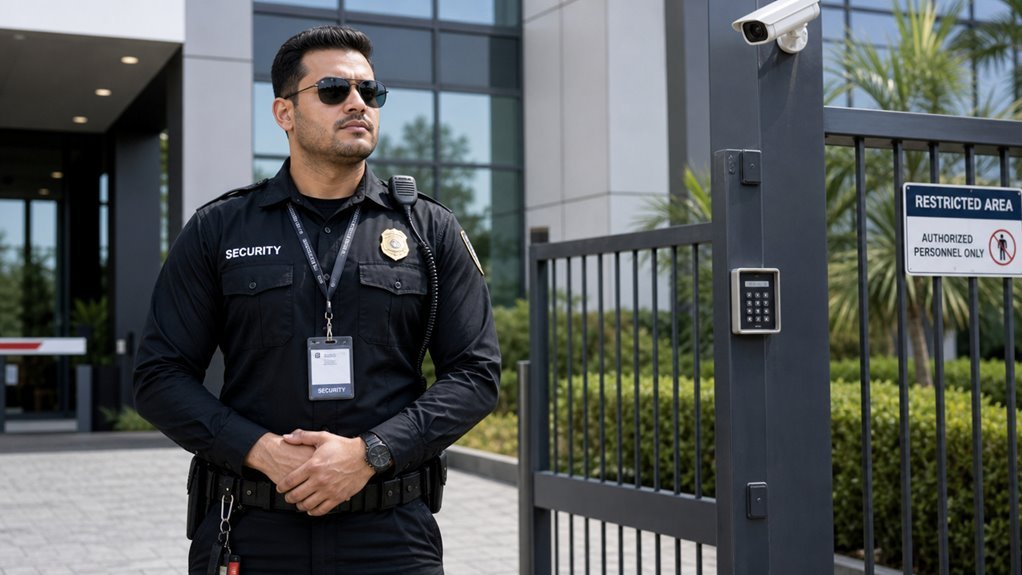
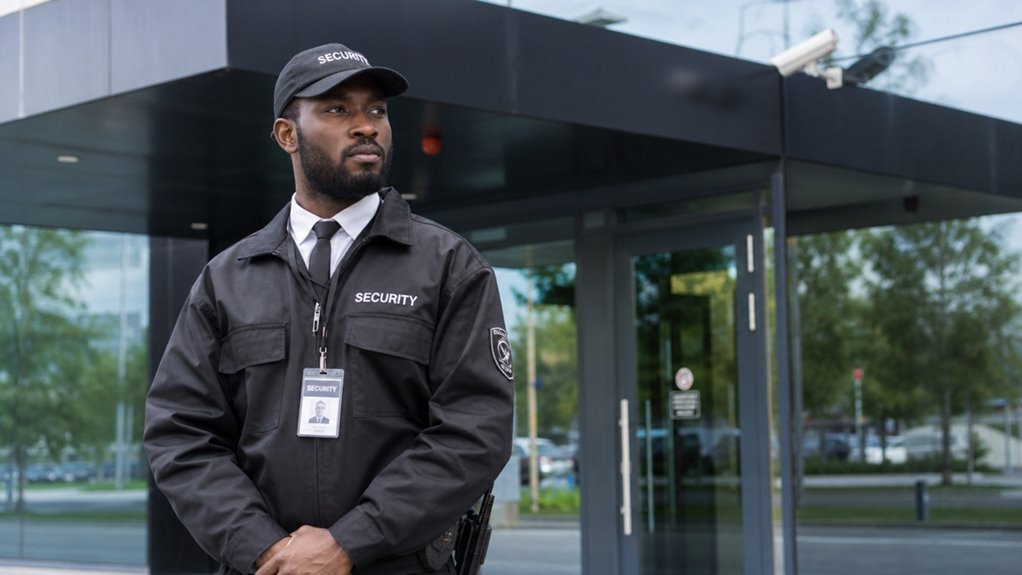
The main responsibilities of security guards and police officers reflect their distinct roles within safety management. Security guards focus on monitoring and protecting specific properties through surveillance and access control, ensuring only authorized persons enter. They report incidents and suspicious activity, contributing to crime prevention and property protection. Security guards typically carry guns in certain jurisdictions, which can be crucial for their security duties in high-risk areas. Police officers, as law enforcement authorities, have broader responsibilities that include enforcing laws, investigating crimes, responding to emergencies, and maintaining public order. Both roles aim to enhance public safety but operate within different scopes. Security guards primarily serve assigned locations, while police officers serve the entire community, handling incident reporting and law enforcement duties.
What Legal Powers Do They Have?
Police officers possess significant legal powers, which are granted and regulated by both state and federal laws. These law enforcement authorities include the ability to enforce laws, make arrests, and conduct investigations within their jurisdiction. Police can use force when necessary to maintain safety and order, and their authority extends to detention and searches, depending on legal requirements. In contrast, private security personnel have limited rights, confined to their employer’s property boundaries. Their role mainly involves detaining individuals until law enforcement arrives and reporting incidents, as they lack the authority to arrests or conduct investigations independently. However, in some circumstances, security guards may have limited authority to detain individuals under specific legal conditions.
How Are They Trained and Qualified?
Training and qualifications for police officers and security guards differ significantly due to their distinct roles and legal authorities. Police officers undergo extensive training lasting over six months, covering criminal law, firearms, conflict resolution, and physical fitness at specialized academies, including field training. Their licensing requires comprehensive background checks, psychological evaluations, and physical fitness tests. Conversely, security guards typically complete shorter courses focused on site-specific security procedures, incident reporting, and safety measures, often obtaining certifications like First Aid and CPR. Licensing for security personnel involves background checks and shorter training periods, reflecting their limited scope of authority and operational focus in safety and observation. Additionally, the training duration varies considerably, emphasizing the different levels of responsibility and authority held by each role.
How Do They Communicate and Respond During Emergencies?
How security personnel communicate and respond during emergencies is essential for ensuring swift cooperation and effective incident management. Security personnel primarily use two-way radios with security protocols to maintain radio communication within their designated areas, ensuring a rapid response. When an incident occurs, they report details via radio or cell phone, relaying suspect descriptions to police dispatch. Police units coordinate through law enforcement communication channels, utilizing encrypted radio frequencies for secure, real-time communication. These coordinated responses enable law enforcement and security personnel to manage emergencies efficiently through incident reporting, ensuring priority, clarity, and effective response to safeguard all individuals involved.
How Do They Interact With the Community?
Community interaction varies significantly between police officers and security guards, reflecting their distinct roles and responsibilities. Police officers prioritize community engagement through outreach programs, public safety education, neighborhood watch participation, and public awareness campaigns, aiming to build community relationships, trust, and crime prevention. In contrast, security guards primarily focus on monitoring property and controlling access within private sites, with limited community involvement. Security personnel often serve as approachable figures within their specific environment, but their community involvement is minimal. Effective police engagement fosters community involvement and cooperation, whereas security guards serve mainly as visible deterrents to maintain safety within designated areas.
Which Is Right for Your Security Needs?
Determining the appropriate security solution depends on understanding the specific needs of the property or area in question. For private property, access control, and monitoring within a confined area, a security guard effectively manages security needs by preventing unauthorized access and safeguarding assets. In contrast, police involvement is necessary when broader public safety concerns arise, such as investigating crimes or enforcing jurisdictional laws. Businesses or residential complexes with routine security issues typically benefit from security guards. Conversely, high-crime areas or public events often require law enforcement to ensure community safety. Selecting between a security guard or police depends on whether property protection or broader public safety is the priority.
Frequently Asked Questions
Do Police Have Authority Over Security Guards?
Police have jurisdiction authority, legal power, and arrest authority over security guards, with differences in use of force, accountability standards, training requirements, and employment law; officers also have broader surveillance rights and conflict resolution duties.
What Is the Difference Between a Policeman and a Security Guard?
A policeman, wielding legal authority and a uniform of power, patrols broad jurisdictions with extensive training, while security guards, in simple attire, focus on limited property, reporting incidents—differing in scope, responsibilities, and community perception, yet both crucial for safety.
What Actor Was a Cop in Real Life?
Dennis Farina, with real-life police experience, utilized his law enforcement career, police training, and credentials to portray police roles accurately, understanding on-duty policing challenges and law enforcement honor, enhancing public safety through authentic on-screen law enforcement representation.
Who Gets Paid More, Security Guard or Police Officer?
Police officers typically earn higher salaries than security guards, reflecting broader pay scales and income brackets. The wage differences indicate greater earning potential and compensation rates for police, resulting in notable salary disparities and a comprehensive higher income level.
Final Takeaways
Understanding the differences between security guards and police officers highlights their unique roles, responsibilities, and legal authorities. While guards focus on private property protection within limited legal bounds, police serve broader communities with investigative powers and law enforcement authority. Which security solution best suits specific needs depends on the context and required level of authority. Recognizing these distinctions ensures appropriate deployment of personnel to effectively maintain safety and order in various environments.
 English
  Arabic