
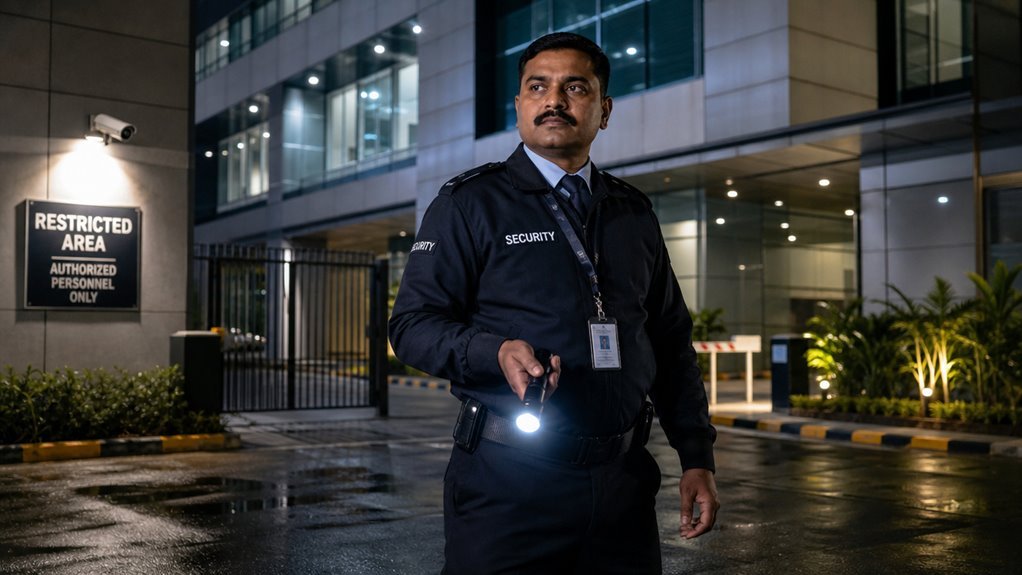
Security guards working alone at night face specific challenges governed by legal standards and safety protocols. Regulations require risk assessments, safety devices, and emergency procedures to protect their well-being. Compliance with standards like BS 8484 and licensing ensures proper oversight. Employers are responsible for implementing monitoring systems, offering support, and minimizing hazards. Understanding these rules is essential for assessing risks and ensuring employee safety, prompting further exploration of the measures safeguarding lone night guards.
Key Takeaways
- Security guards can work alone at night if proper risk assessments and safeguarding measures are in place.
- Employers must comply with legal requirements like risk evaluation and safety device provision under UK law.
- Certification standards (e.g., BS 8484, SIA licensing) ensure safety equipment and guard training meet regulatory standards.
- Protective devices such as panic buttons, GPS trackers, and remote monitoring are mandatory for lone night guards.
- Regular check-ins, emergency protocols, and mental health support are essential components of regulations for lone night shifts.
What Are the Legal Requirements for Lone Night Guards?
Lone night guards operate under various legal requirements intended to ensure their safety and the safety of others. Regulations mandate comprehensive risk assessments and appropriate safeguarding measures to protect night guards in their roles. Legal standards, such as the UK’s Health and Safety at Work Act 1974, require employers to evaluate risks and implement controls. Employers must provide safety devices like GPS trackers and emergency alert systems, along with proper training and access to emergency communication tools. Laws like RIDDOR also require reporting incidents involving lone workers. Ensuring compliance with these legal requirements promotes lone worker safety and minimizes potential hazards during overnight shifts. Additionally, security protocols are essential to establish clear procedures and guidelines for night security personnel.
How Safe Is Working Alone at Night? Common Risks for Security Guards
Working alone at night presents several inherent risks that can compromise the safety of security guards. Lone working during night shifts increases vulnerability to assaults, theft, and confrontations with hostile individuals, especially in isolated areas. Delays in emergency response can exacerbate medical emergencies, while fatigue from irregular hours impairs judgment and response times. Psychological impacts, such as stress and anxiety, are common in solitary work environments. Surveillance cameras help monitor security breaches, but personal protective equipment and mental health support remain vital. Additionally, understanding license requirements and adherence to security regulations are crucial for ensuring proper safety protocols are followed. These factors highlight the importance of comprehensive safety measures for guards working alone during night shifts, ensuring they operate in as secure a environment as possible.
What Standards and Regulations Keep Night Guards Safe?
What standards and regulations are in place to safeguard security guards operating alone at night? These include BS 8484:2022, which certifies safety devices like lone worker alarms and monitoring systems, ensuring reliable safety measures. Health and Safety regulations mandate comprehensive risk assessments, effective emergency response plans, and proper safety monitoring. Employers are required to implement communication tools such as two-way radios and regular check-ins. Certification schemes like BSIA and SIA licensing set standards for training and equipment, providing oversight. These regulations collectively promote a safer environment for lone night guards through rigorous safety procedures and ongoing evaluations. Additionally, adherence to safety device standards ensures that lone workers are protected with reliable and approved equipment.
How Should Employers Protect and Support Lone Night Guards?
Employers play a vital role in safeguarding night security personnel by implementing targeted safety measures and comprehensive support systems. For lone night guards, providing protective devices such as panic buttons, GPS trackers, and fall detection sensors ensures immediate assistance during emergencies. Regular check-ins via radio or phone, coupled with remote monitoring systems, maintain communication and supervision throughout shifts. Employers should establish clear emergency protocols and conduct risk assessments to address specific hazards faced by security personnel. Creating secure facilities with shelters or reinforced posts, along with pairing guards when possible, enhances safety. Continuous supervision, safety support, and access to mental health resources further mitigate risks associated with lone night work. Understanding security badge significance can also foster better identity verification and authority recognition in critical moments.
What Devices and Technology Enhance Night Guard Safety?
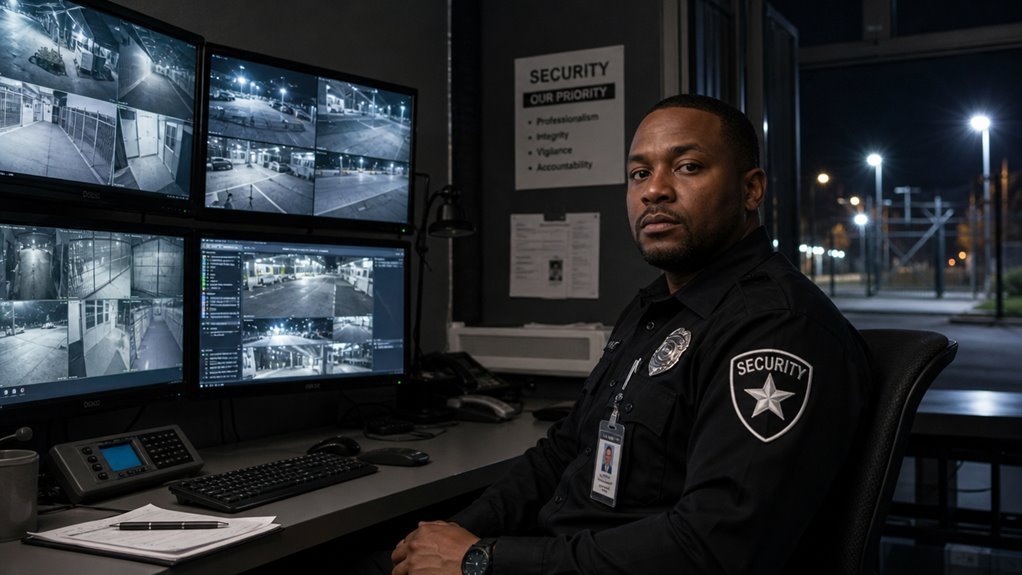
Devices and technology significantly enhance night guard safety by providing real-time communication, monitoring, and rapid response capabilities. Safety devices such as manual emergency alert buttons enable guards to quickly call for assistance during incidents or assaults. Geolocation tracking allows supervisors to monitor the exact location of guards during night patrols, ensuring quick deployment when needed. Connected cameras and intercom systems facilitate remote supervision, providing visual verification and communication. Fall detection and inactivity sensors alert supervisors if a guard is incapacitated or immobilized, improving immediate assistance. In summary, these safety devices and communication systems strengthen protection for lone night guards and facilitate more effective incident management.
Why Is Human Monitoring Essential for Lone Night Security?
Human monitoring plays a vital role in ensuring the safety of lone night security personnel by providing immediate, real-time responses to incidents. Live responders can assess complex situations, issue incident reports, and coordinate with emergency services, enabling an immediate response in high-risk situations. Real-time communication allows for ongoing support, guidance, and reassurance during emergencies. Human oversight reduces false alarms and ensures appropriate actions are taken, which enhances guard safety. By monitoring remotely, responders can quickly evaluate security breaches or medical emergencies, making informed decisions and coordinating with emergency services efficiently, ultimately improving the protection and security of lone night workers.
How to Choose a Security Provider Committed to Lone Worker Safety
Choosing a security provider dedicated to lone worker safety involves evaluating several critical factors to ensure comprehensive protection. The right provider ensures compliance with industry standards, such as BS 8484:2022, for safety devices. They conduct thorough risk assessments and develop tailored policies to address specific hazards faced by night security guards working alone. Reliable providers incorporate real-time monitoring systems, GPS tracking, and emergency alert technology. Verified response times and documented incident management processes guarantee prompt assistance during emergencies. Participation in accredited schemes like BSIA or SIA demonstrates a security provider’s commitment to maintaining high standards, crucial for safeguarding lone workers effectively.
What Practical Steps Can Guards Take to Minimize Nighttime Risks?
To reduce risks faced by security guards working alone during nighttime shifts, implementing practical safety measures is vital. Guards monitor their surroundings continuously, remaining alert to security issues and suspicious activity. Using safety devices like panic buttons, GPS trackers, and fall alarms ensures rapid response during emergencies. Regular check-ins via radio or phone maintain communication with supervisors, providing accountability and support. Training in emergency procedures and conflict de-escalation equips guards to handle dangerous situations effectively. Remote monitoring systems, such as connected cameras and real-time alerts, enhance oversight, reducing nighttime risks while ensuring the safety of guards working alone.
Frequently Asked Questions
Can a Security Guard Work Alone?
Security guards can work alone, following strict safety protocols that include surveillance technology, access control, emergency procedures, incident reporting, and clear shift responsibilities. Proper patrol scheduling and communication ensure safety during lone patrols at night.
Can You Work a Night Shift Alone?
Working a night shift alone is possible with proper measures, including surveillance technology, access control systems, risk assessments, and communication methods. Implementing emergency protocols, patrol routines, and incident documentation ensures lone worker safety effectively.
What Are the 5 C’s in Security?
The 5 C’s in security—Communication, Coordination, Competence, Courage, and Clarity—serve as guiding stars, ensuring surveillance protocols, emergency responses, and access control align seamlessly. They uphold safety through vigilant patrols, incident reporting, and skilled training.
What Does a Security Guard Do at Night?
At night, a security guard conducts patrol routines, monitors surveillance equipment, enforces access control, performs vehicle checks, manages crowds if needed, and follows emergency procedures, incident reporting, and safety protocols to ensure comprehensive protection of property and people.
Final Takeaways
Effective safeguarding of lone night guards resembles a well-maintained lighthouse guiding ships through darkness; it requires rigorous protocols, reliable technology, and continuous monitoring. By adhering to legal standards, implementing safety devices, and maintaining clear communication, employers create a safety environment that minimizes risks. Proper preparation and support transform solitary night shifts from potential hazards into manageable responsibilities. Ultimately, a structured safety framework ensures that guards remain protected, while organizations uphold their duty of care in the silent hours.
 English
  Arabic