


Selecting between armed and unarmed security depends on a business’s specific risks, assets, and environment. Higher-threat settings like banks or jewelry stores require armed guards for immediate response, while lower-risk locations may find unarmed personnel sufficient for deterrence and access control. Understanding licensing, training, costs, and emergency protocols is essential. Combining both types can optimize safety and expense management, but choosing the right approach requires careful evaluation of potential threats and operational goals.
Key Takeaways
- Assess the level of risk and potential threats to determine if armed guards are necessary for higher protection.
- Consider your budget, as armed security typically costs significantly more due to specialized training and licensing.
- Evaluate your assets’ value and sensitivity to decide if a visible armed presence is justified.
- For lower threat environments, unarmed security offers effective surveillance and conflict de-escalation at a lower cost.
- A hybrid strategy combining both types can balance safety needs and operational expenses.
Do You Know the Differences Between Armed and Unarmed Security Guards?
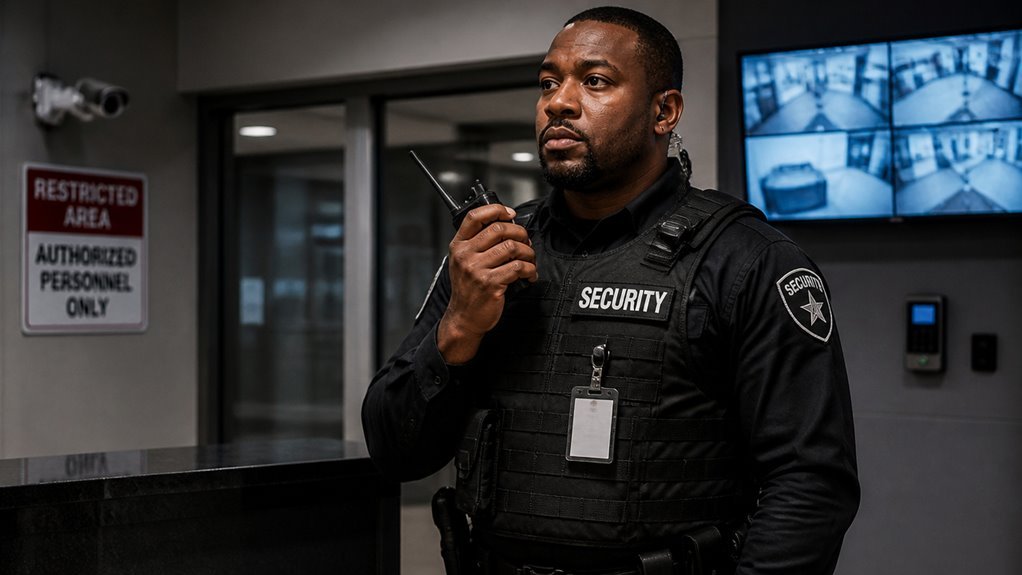
Have you ever wondered how security personnel differ depending on whether they are armed or unarmed? Armed security guards carry prescribed firearms and are licensed through state programs like Texas DPS Level III, while unarmed security personnel do not carry weapons and require basic licensing. Armed guards are trained in firearm proficiency, use of force laws, and tactical response, making them suitable for high-risk situations such as banks or valuable asset locations. Unarmed security focuses on observation, conflict de-escalation, and emergency response, ideal for customer service roles. Licensing requirements for armed guards are more extensive, impacting the protection levels they provide based on risk assessment. Understanding the security licensing process can help you determine which security option aligns with your specific safety needs.
How to Assess Your Business’s Security Risks
To accurately assess security risks for a business, a comprehensive analysis of various factors is essential. Reviewing crime statistics and incident history helps identify prevalent threats such as theft, vandalism, or trespassing. Evaluating assets’ value and sensitivity, including cash, inventory, or confidential data, informs appropriate security measures. It is important to identify vulnerabilities, such as access points, lighting, or enclosed areas, which intruders could exploit. Additionally, understanding industry regulations and insurance requirements ensures compliance and aligns security levels accordingly. This systematic approach enables businesses to develop effective security plans tailored to actual risks and asset protection needs. Incorporating security guard duties and best practices further enhances overall safety.
What Licensing and Training Do Security Guards Need?
What licensing and training do security guards require varies depending on the level of security they provide and the jurisdiction they operate within. Unarmed security guards typically need a Level II Non-Commissioned license, involving 8-40 hours of basic training and background checks. Armed security guards require a Level III Commissioned license, which includes extensive firearms training, shooting qualifications, and periodic requalification to maintain credentials. Both types of guards undergo training in emergency response, incident reporting, and access control. Regulatory agencies, such as state security bureaus, set legal requirements ensuring security guards meet specific standards, qualifications, and ongoing training to provide safe and effective security services. Additionally, security guard licensing and services are designed to standardize training and ensure competence across different security levels.
How Do Armed and Unarmed Guards Respond in Emergencies?
During emergencies, the methods and responses of security personnel differ significantly based on whether they are armed or unarmed. Armed guards, as trained professionals, provide an immediate response to violent threats by assessing risks and, if necessary, using force according to security protocols and law enforcement communication standards. They can stop an incident quickly through lethal or non-lethal means. Unarmed guards focus on conflict resolution, verbal de-escalation, and immobilization, supporting emergency response efforts and ensuring safety without weapons. Both types are responsible for accurate incident reporting, adhering to protocols, and coordinating effectively with law enforcement during crisis situations. Additionally, understanding airport security guard roles helps in clarifying their specific response procedures during various emergencies.
What Are the Costs and Insurance Considerations?
The costs and insurance considerations for armed versus unarmed security services are significant factors influencing security budgets and organizational risk management. Armed security guards incur higher costs, often 20% to 50% more per hour, due to extensive training requirements, licensing, and firearm proficiency tests. Insurance coverage for armed personnel also involves higher premiums, sometimes doubling or tripling those of unarmed guards, because of increased liability. Organizations must secure specialized liability insurance policies to cover potential firearm-related incidents. These security costs reflect the higher operational expenses, legal responsibilities, and the need for rigorous ongoing training and licensing for armed security guards.
When Is It Right to Use Armed Security Guards?

Armed security guards are appropriately deployed in environments where the risk of violence or theft is heightened, and their presence can mitigate potential threats effectively. They are necessary in high-risk environments, such as banks or jewelry stores, where threat levels demand protection without delay. In locations with high-value assets or cash handling, like casinos or armored transport, security needs justify armed personnel. These security officers hold specialized licenses and undergo extensive firearms training to ensure effective response and liability management. Armed guards provide a visible deterrent, reducing crime likelihood, especially where specific risk levels indicate a need for enhanced protection.
When Should You Opt for Unarmed Security to Keep Customers Safe?
In settings where the primary objective is prevention rather than response to immediate threats, unarmed security is frequently preferred to maintain a safe and approachable environment. Unarmed security effectively promotes customer safety in low-threat environments such as retail stores, offices, and residential complexes. These guards focus on prevention and public interaction, fostering a welcoming atmosphere while mitigating risk. Since security guards carry minimal equipment, they are suited for settings where escalation is unlikely, reducing liability and supporting budget considerations. Unarmed security provides a sufficient security layer for areas with minimal risk of violence, ensuring safety without unnecessary escalation or expense.
How Combining Armed and Unarmed Guards Can Offer Better Protection
Combining both armed and unarmed security personnel enables a comprehensive approach to safety that addresses multiple risk levels and operational needs. This hybrid approach allows security services to target different areas effectively. Armed guards deliver rapid responses and deter serious threats, especially in high-crime areas, while unarmed guards maintain approachable, daily security to promote order and safety. By tailoring the mix based on risk assessment, businesses can optimize costs—deploying armed personnel only where necessary. This strategy enhances overall safety, supports effective security plans, and offers balanced deterrence, safety, and customer interaction across various zones, ensuring thorough protection without overextending security budgets.
What Are Common Mistakes Businesses Make When Choosing Security Guards?
Many businesses make critical mistakes when selecting security guards, often due to insufficient evaluation of their specific safety needs or relying on assumptions rather than careful analysis. Common errors include choosing security guard services based solely on cost considerations, neglecting proper documentation, licensing, and certification. Failing to assess the experience and suitability of personnel can compromise the level of protection. Additionally, neglecting a thorough risk assessment may lead to inadequate security solutions and increased liability exposure. Proper training requirements and ongoing certification are essential for effective security staff, ensuring liability protection and appropriate response capability for various threats.
How to Choose the Best Security Solution for Your Business Goals
Selecting the appropriate security solution requires a clear understanding of a business’s unique safety objectives and operational environment. Businesses must evaluate their threat levels to determine whether armed or unarmed security solutions best meet their needs, considering rapid response capabilities versus approachable presence. Cost-efficiency and insurance requirements influence budget decisions, while industry standards and regulations—such as high-value asset protection—may require armed personnel. Perceptions of stakeholders can affect safety, and a hybrid approach combining both types may optimize security strategy, balancing effectiveness and costs. This assessment ensures the chosen security strategy aligns with business goals and risk profiles.
Frequently Asked Questions
Is It Better to Be Armed or Unarmed?
Choosing armed security enhances visibility deterrence, emergency preparedness, and response training but raises liability concerns, legal restrictions, and cost implications. Alternatively, unarmed guards foster public trust and lower risks, influencing perception and appropriate security personnel ratios based on threat levels.
What Are the 4 Types of Security?
The four types of security include electronic systems like surveillance cameras, access control, alarm systems, and cybersecurity; physical measures such as barriers and patrols; and procedural practices like risk assessment, incident reporting, visitor management, and security training for comprehensive safety.
What Type of Security Guard Gets Paid the Most?
Armed security guards typically earn the most, with higher security guard salaries, guard compensation rates, and security industry pay reflecting increased responsibility. Salary differences between armed and unarmed security personnel can reach 50%, especially in high-risk environments.
Which Is a Business Need for Security?
Security personnel are a business need for risk management and crime deterrence, ensuring business safety through property safeguarding, access control, and emergency preparedness, while providing employee protection and incident response, often making the difference between stability and disaster.
Final Takeaways
Selecting the appropriate security personnel aligns with your business’s unique risks and assets, much like choosing the right key opens the correct lock. Whether deploying armed guards to guard valuable assets or unarmed staff to oversee access, the decision shapes your safety framework. Combining both creates a layered shield, enhancing protection and efficiency. Fundamentally, understanding your needs ensures your security strategy functions smoothly, providing a steady guard in the complex landscape of risk management, much like a compass guides through uncertainty.



 English
  Arabic