

When considering security guard services, it is essential to evaluate several key factors to ensure appropriate protection. Questions about licensing, experience, services offered, and security technology provide foundational understanding. Additionally, verifying a company’s reputation, insurance coverage, and training protocols helps determine their reliability. These aspects influence total effectiveness and compliance. Consequently, addressing these points can clarify expectations and identify the most suitable security solutions, prompting further investigation into critical details before making a final decision.
Key Takeaways
- Verify the company’s licensing, certifications, and ongoing training to ensure compliance with industry standards.
- Ask about the company’s experience, reputation, and references for quality assurance.
- Confirm the security services offered align with your specific risks and needs.
- Ensure the provider carries adequate insurance coverage, including liability and workers’ compensation.
- Inquire about the training their guards receive on use of force, emergency response, and conflict de-escalation.
What Licensing and Certifications Do Security Guards Need in Your Province?
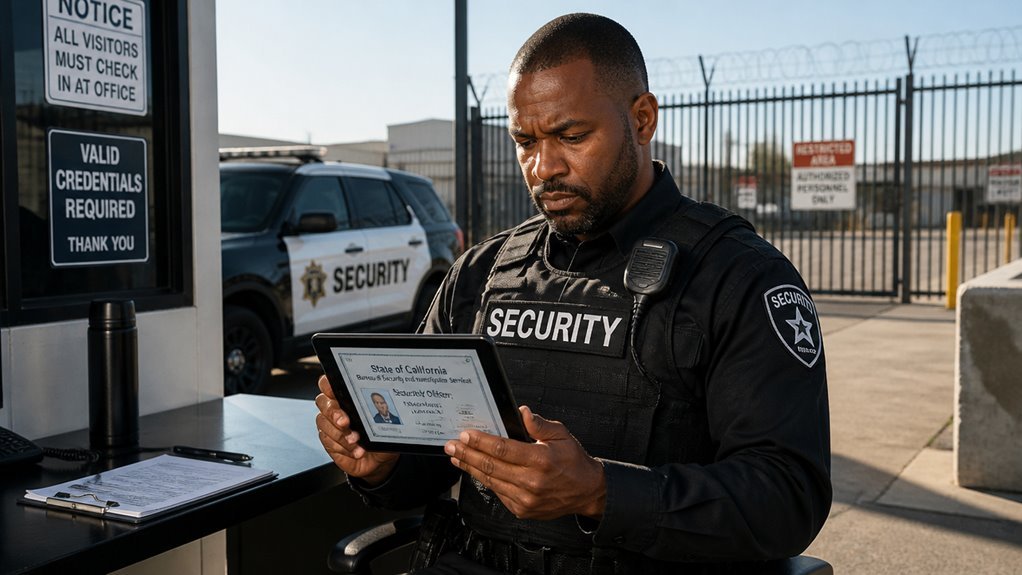
In many provinces, security guards are required to meet specific licensing and certification standards before they can legally perform their duties. Licensing ensures that security personnel qualifications comply with industry regulations, including passing criminal background checks and completing mandatory training programs. Licensed security must also hold valid certifications, such as security certifications for specialized responsibilities, or additional licenses for armed security. Industry standards often mandate ongoing certification updates and refresher courses to maintain credentials. Provincial licensing authorities, like the Department of Public Safety, oversee these requirements, ensuring that security personnel are competent, responsible, and prepared to serve the safety of the public effectively. Licensing and certification requirements are regularly updated to reflect evolving industry standards and security challenges.
How Can I Verify a Security Company’s Reputation and Experience?
Evaluating a security company’s reputation and experience is essential for ensuring reliable service and effective security. To do so, consider the following steps:
- Review online reviews, testimonials, and industry awards to gauge comprehensive reputation and reliability.
- Verify the company’s years in business and experience with similar clients or environments.
- Request references from past clients to assess professionalism and consistency of service.
- Investigate incident history, including how reported issues were addressed, to understand their handling of problems.
- Confirm credentials, such as current licensing and certifications, to ensure legitimacy and expertise. These measures help identify a reputable security provider.
- Understanding security guard duties can also provide valuable insights into the capabilities and responsibilities a security company should demonstrate.
Which Security Services Are Best Suited for My Business?
Determining the most suitable security services for a business involves assessing the specific risks, assets, and operational needs. Companies must evaluate their security needs and consider customized security solutions that incorporate the latest security technology. Factors such as security challenges, property size, layout, industry regulations, and asset value influence the choice of security personnel, whether unarmed guards or armed security. Service options include fixed security teams, mobile patrols, access control, or remote surveillance. Staying informed about the latest security technology can help improve security effectiveness and efficiency. Keeping up with industry developments ensures optimal coverage, enhances safety, and provides peace of mind. Selecting appropriate security services directly addresses vulnerabilities and strengthens comprehensive protective strategies.
What Should I Know About Insurance and Liability in Security Contracts?
Before finalizing a security contract, verifying that the security provider has valid insurance coverage is essential, as it safeguards the organization against potential financial liabilities arising from incidents or damages. Confirm proof of insurance documentation, ensuring it is current and includes general liability and workers’ compensation coverage. Understand the company’s liability protocols and insurance limits, ideally at least two million dollars, to cover damages, injuries, or legal liabilities. Avoid uninsured providers, which can expose your organization to legal penalties. Proper risk management depends on clear security contracts that specify coverage details, insurance documentation, and liability procedures to mitigate potential exposure. Ensuring the provider’s insurance coverage is comprehensive helps in managing security service risks effectively.
How Are Security Guards Trained to Handle Use of Force and Emergency Situations?
Security guards must undergo specialized training to ensure proper handling of use of force and emergency situations. Training covers legal limits and appropriate application of force, conflict de-escalation techniques, and emergency response procedures for incidents like break-ins or medical emergencies. Certification and ongoing training are essential to stay updated on legislation, emergency procedures, and new protocols. Guards receive instruction on using emergency equipment such as fire extinguishers and AEDs, and coordinate effectively with law enforcement and emergency services. This comprehensive training prepares security personnel to respond appropriately and safely, maintaining safety and lawfulness during high-stress scenarios.
What Technology and Oversight Measures Ensure Effective Security Services?
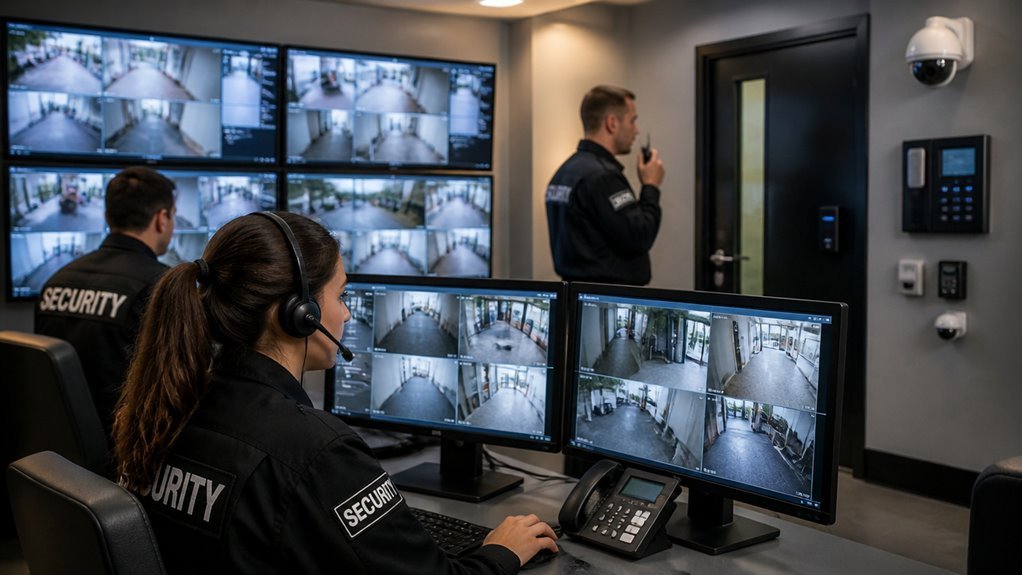
Advancements in security technology and oversight measures play a vital role in maintaining effective service delivery. Real-time monitoring, including GPS tracking and digital incident reporting, promotes accountability and swift responses. Remote monitoring and video surveillance enable continuous oversight of personnel and premises, minimizing blind spots. Supervisory oversight through shift management, activity audits, and regular performance evaluations helps uphold high standards. Effective communication systems, such as radios and mobile apps, ensure quick coordination during incidents. Additionally, analytics and alert systems provide proactive security measures, reducing response times and enhancing comprehensive safety. These measures collectively ensure reliable, transparent, and efficient security services.
Frequently Asked Questions
What Are the 5 C’s of Security Guards?
The 5 C’s encompass Coverage, Communication, Conduct, Certifications, and Confidence, emphasizing surveillance techniques, patrol strategies, access control, emergency protocols, risk assessment, communication skills, incident reporting, security technology, client interaction, and crisis management.
What Are the 4 P’s in Security Guard?
Research indicates that effective security management hinges on the 4 P’s: Personnel, Policies, Procedures, and Practices, integrating surveillance techniques, access control, emergency response, and conflict resolution to enhance risk management, incident reporting, and customer service.
What Are Good Security Questions to Ask?
Effective security questions assess risk assessment, communication skills, emergency response, background checks, observation skills, legal knowledge, customer service, technological proficiency, teamwork, and physical fitness, ensuring guards are qualified, reliable, and capable of maintaining a safe environment.
What Are the 5 Basic Principles of Security Guard?
Concerns about security effectiveness are valid; the five principles—prevention, detection, response, reporting, and deterrence—are supported by security training, guard certification, patrol routines, access control, emergency protocols, communication, weapon policies, incident reporting, technology tools, and shift scheduling to ensure safety.
Final Takeaways
Ensuring comprehensive security requires more than simple selection; it involves understanding the intricate balance of licensing, experience, and technology that forms a security approach. When these elements align, it creates a formidable shield for protected assets. However, potential gaps or overlooked details can leave vulnerabilities, making it essential to scrutinize every aspect thoroughly. The right combination of well-trained personnel, advanced tools, and precise protocols can mean the difference between safety and unforeseen risk.

 English
  Arabic