
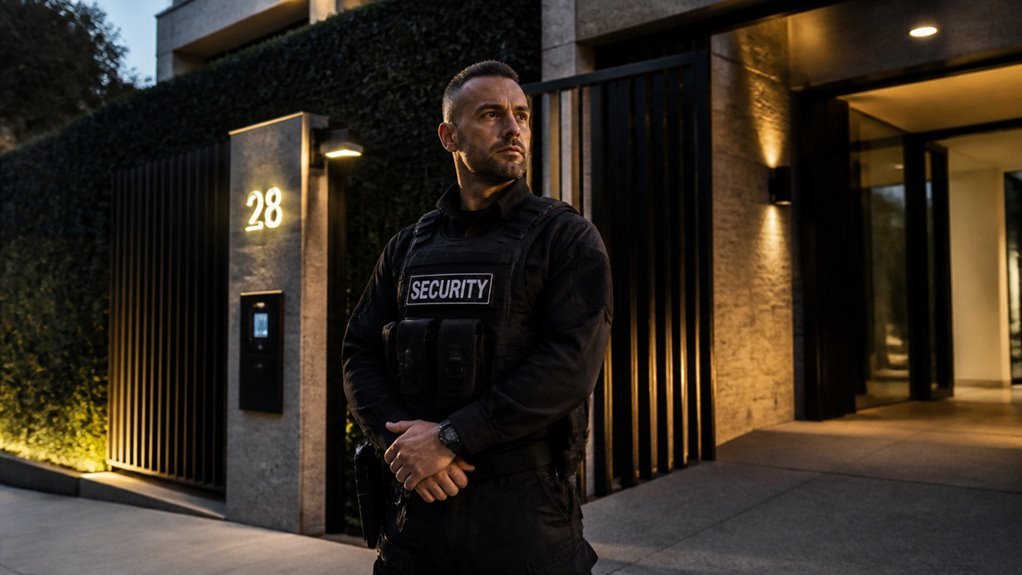
Hiring a trustworthy personal security guard requires careful evaluation of credentials, background, and reputation. It involves verifying certifications such as CPR or defensive tactics, confirming law enforcement or military experience, and assessing references and background checks. Professional security companies should be licensed, insured, and transparent about their services. Recognizing red flags and understanding service options ensures an informed decision, safeguarding the individual and the investment. Examining these factors helps identify the best fit for personal protection needs, with critical details to consider before proceeding.
Key Takeaways
- Verify certifications, licenses, and references to ensure the guard’s professionalism and legitimacy.
- Prioritize candidates with law enforcement or military backgrounds and specialized training.
- Conduct thorough background checks and review online reputation for reliability and trustworthiness.
- Ensure clear contracts, insurance, and transparent pricing to confirm accountability and professionalism.
- Watch for red flags like lack of credentials, poor online presence, or suspiciously low quotes.
What Traits Show a Personal Security Guard You Can Trust
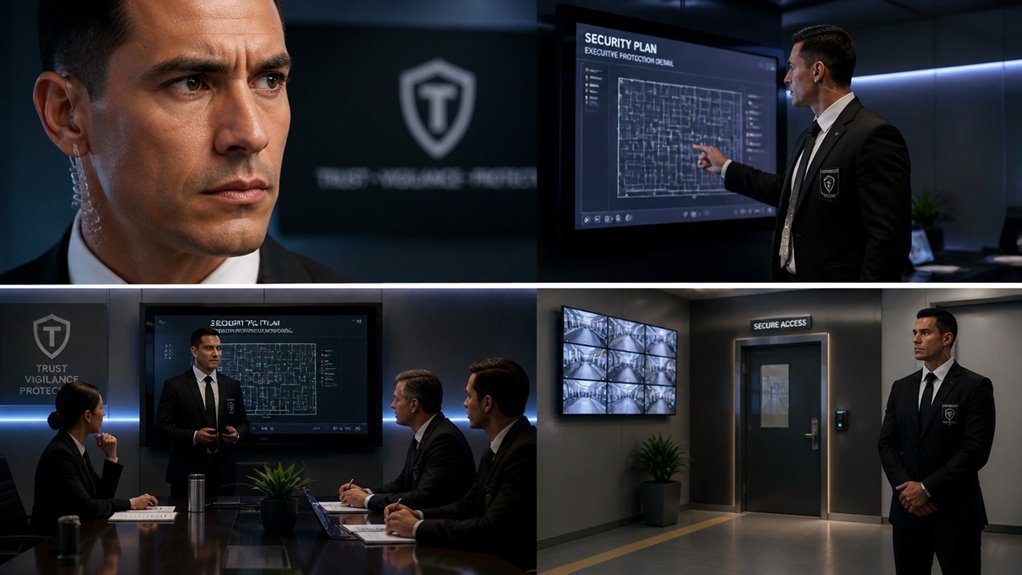
When evaluating personal security guards, certain traits reliably indicate trustworthiness. These include professionalism demonstrated through certifications such as tactical firearms, defensive tactics, and medical training like CPR and First Aid. A trustworthy guard shows reliability backed by a strong background in military or law enforcement, emphasizing discipline and integrity. Effective communication skills ensure clear, calm interactions during high-pressure situations. Discretion and confidentiality are vital, protecting client privacy and sensitive information. Additionally, a transparent work history, verified references, proper licensing, and insurance confirm legitimacy. These qualities collectively reflect experience, integrity, and a commitment to client safety, establishing a reliable and trustworthy security presence. Furthermore, a thorough understanding of security guard duties demonstrates their preparedness to handle various scenarios effectively.
Which Certifications and Experience Confirm a Guard’s Reliability
Certifications and experience serve as key indicators of a security guard’s reliability, demonstrating their level of training and practical skill. Relevant certifications include CPR, First Aid, Defensive Tactics, and Tactical Driving, which show preparedness for emergencies. Professional experience, especially in law enforcement or military backgrounds, reflects rigorous training and adherence to high standards. Licensing confirms compliance with legal requirements and industry standards. Guards with specialized training in hostage rescue, threat assessment, and digital security are more capable of handling complex situations. Referrals and a proven track record in high-risk environments further verify a guard’s dependability and suitability for protective responsibilities. Additionally, verifying security protocols training ensures that guards are familiar with industry-standard procedures for threat prevention and response.
How to Vet Security Companies and Verify Credentials
Ensuring the legitimacy and reliability of a security provider requires thorough verification of their credentials and operational practices. A reputable company should be licensed, insured, and compliant with all relevant regulations, demonstrating adherence to legal standards. Verification involves requesting documentation of certifications and assessing the staff’s experience relevant to your security needs. Checking references and reviews provides insight into their reputation and reliability. Additionally, a proper vetting process includes conducting basic background checks on personnel, ensuring they meet high trustworthiness standards. Clear contracts detailing services, costs, and liabilities are essential to confirm the company’s commitment to professionalism and accountability. Moreover, understanding a company’s licensing and certification status is crucial to ensure they operate legally and uphold industry standards.
Warning Signs and Red Flags to Watch Out for When Hiring
Identifying potential risks in hiring security guards involves recognizing certain warning signs that may indicate untrustworthy providers. Warning signs include a lack of verifiable credentials, licenses, or references, which suggest questionable legitimacy. Unprofessional security firms often display poor online presence, limited transparency, or no client testimonials, signaling inexperience. Extremely low quotes compared to industry standards may hide hidden liabilities or poor service quality. Resistance to providing detailed contracts, background checks, or proof of insurance raises suspicion. Additionally, vague descriptions of experience and training, or unsolicited security quotes, indicate untrustworthy security providers. Recognizing these red flags helps ensure the selection of reliable and competent security personnel. Understanding the distinctions in security services and how they operate can further aid in making an informed choice.
How to Choose Service Options and Value When Hiring a Guard
When selecting security guard services, it is important to evaluate the range and quality of available options to ensure they meet specific security needs. A reputable security company offers personal protection officers with verified training and certification, including specialized skills like threat mitigation or firearms licenses. Consider the scope of services, such as residential protection, transportation security, or digital threat monitoring. Transparency in pricing, including detailed proposals outlining costs and fees, is essential. Prioritize licensed security providers with industry reputation, insurance, and elite security options. Balancing cost, certifications, and customized security solutions ensures value, reliability, and effective personal security.
Frequently Asked Questions
How Much Is It to Hire a Private Bodyguard?
Hiring a private bodyguard costs $35 to $150 per hour, depending on risk, experience, and services like threat assessment, live surveillance, escort services, and access control, supported by security training, technology, emergency response, and confidentiality agreements.
What Are the 5 Types of Personal Security?
The five types of personal security—bodyguards, executive protection teams, threat response units, investigative support, and specialized services—are distinguished by risk assessment, rigorous training, licensing, background checks, communication, and emergency protocols, ensuring safety, privacy, and adherence to strict security policies.
What Is the Cost of a Personal Bodyguard?
The cost of a personal bodyguard typically ranges from $75 to $150 per hour, based on risk assessment, background checks, vetting procedures, training standards, privacy, emergency plans, communication, legal considerations, and confidentiality agreements.
How Much Is Private Security per Week?
Weekly private security costs range from $500 to over $7,500, depending on protection levels, service packages, and risk. Credential verification, background checks, insurance, communication protocols, emergency response, and surveillance ensure trustworthy, comprehensive safety tailored to clients’ needs.
Final Takeaways
In the complex world of private security, selecting a trustworthy guard is akin to finding a needle in a haystack—difficult but essential. Diligently verifying credentials, scrutinizing background information, and analyzing company reputation are vital steps to ensure safety. Ignoring these careful processes may lead to placing trust in individuals with questionable motives, which could compromise security rather than enhance it. Ultimately, thorough research and vigilance are indispensable in securing genuine protection within the often deceptive landscape of personal security.




 English
  Arabic