
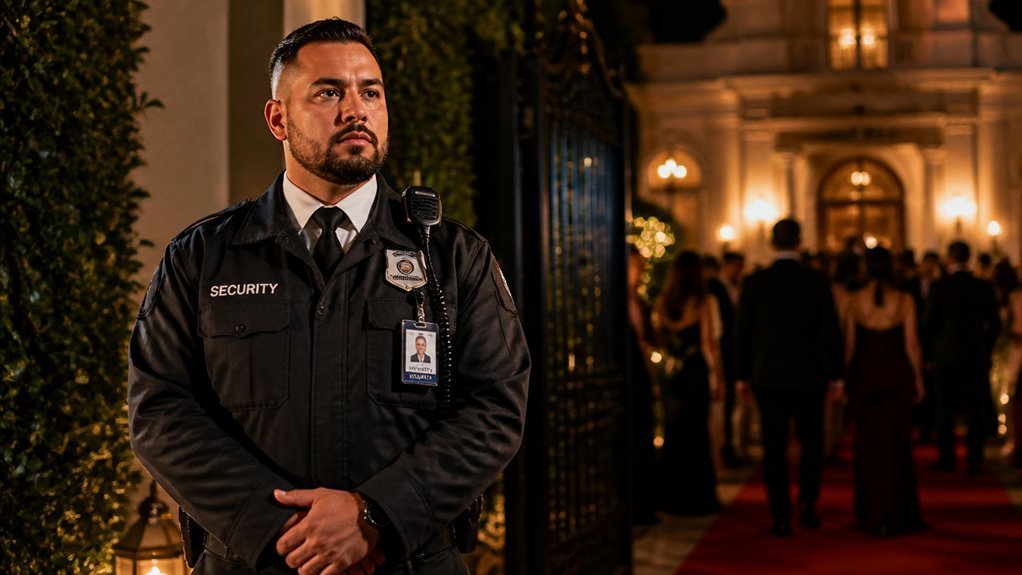
Hiring a security guard for a private event involves careful planning and evaluation. Organizers must first identify specific security needs, such as crowd control or VIP protection, based on event size and potential risks. It is essential to research licensed providers, verify their experience, and review testimonials. Clear communication of expectations, detailed contracts, and coordinated briefing are necessary steps. This process ensures coverage aligns with safety goals, but additional factors influence comprehensive security effectiveness.
Key Takeaways
- Assess the event’s security needs by evaluating risks, guest demographics, and potential threats to determine required security services.
- Research licensed, insured security providers with good reputations and experience in event security, crowd control, and VIP protection.
- Clearly communicate your event details, security expectations, and layout to the security team in advance.
- Confirm that security personnel are properly trained, uniformed, and capable of handling crowd management and emergency situations.
- Establish clear contracts outlining scope, responsibilities, communication protocols, and performance standards for the security services.
Determine Which Security Services Your Private Event Needs
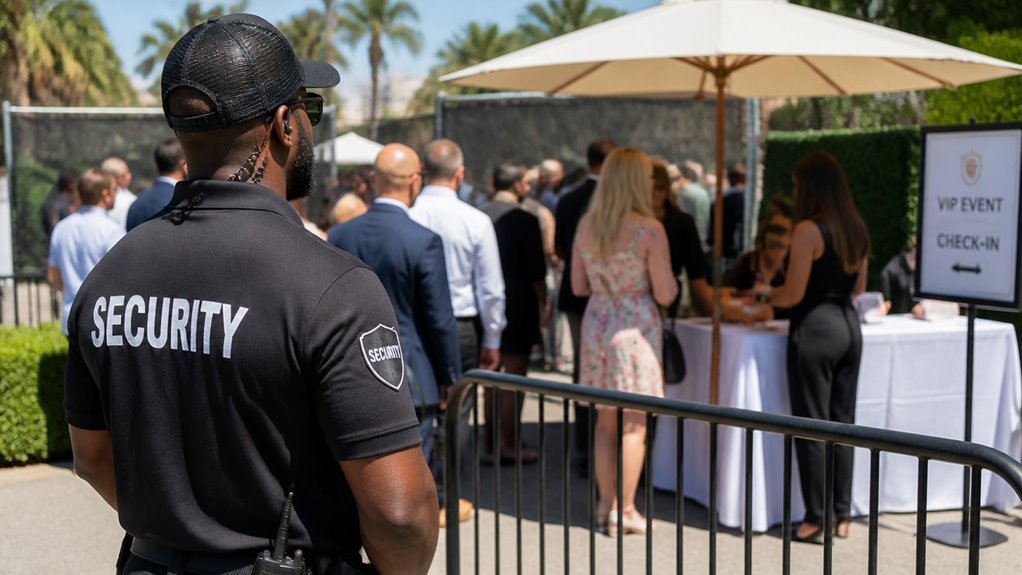
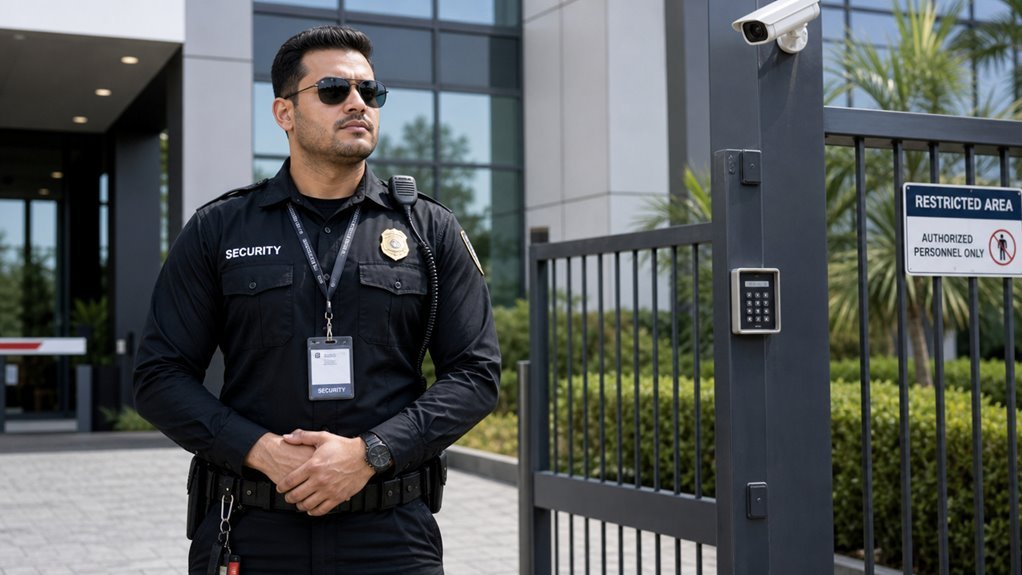
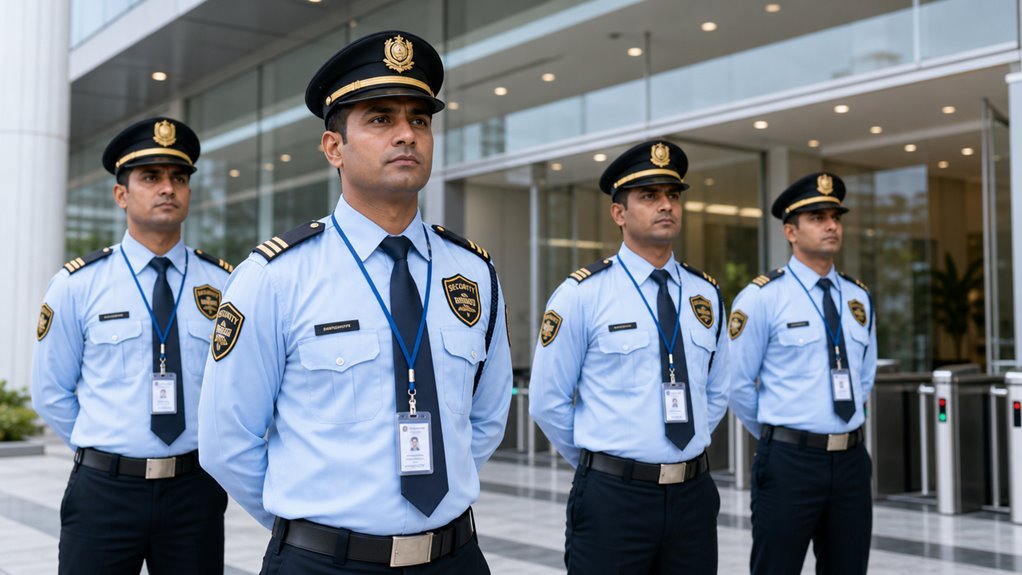
To determine which security services are appropriate for a private event, it is essential to evaluate the event’s specific characteristics and potential risks. For a private party, considerations include the guest list size, presence of high-profile individuals, and whether alcohol will be served. Event security guards can be assigned for crowd control or access management, while specialized security solutions address threats like unauthorized entry or disruptive behavior. Assessing if additional measures such as surveillance or emergency response are necessary ensures comprehensive safety. Having security personnel wear uniforms can also serve as a visible deterrent to unwanted behavior and help guests easily identify security staff. Selecting a security team that offers scalable, customized private security services enhances comprehensive safety and security, effectively safeguarding guests and property.
Assess Your Event’s Unique Security Risks and Challenges
Assessing a event’s specific security risks and challenges requires a detailed understanding of its characteristics and potential vulnerabilities. A thorough risk assessment considers factors such as event size, guest demographics, and the presence of VIPs or media, which influence necessary security measures. Security concerns like alcohol consumption and crowd density help identify possible security vulnerabilities and threats. Proper security planning involves collaborating with local authorities to prepare for issues such as vandalism, theft, or medical incidents. Tailoring security measures based on location, duration, and event features minimizes unforeseen safety challenges, ensuring event safety through effective threat assessment and proactive security measures. Additionally, understanding security guard duties helps in selecting the right personnel to address specific risks effectively.
Research Trusted Security Providers and Learn What to Look For
Researching security providers is a vital step in ensuring reliable event safety, as it helps identify organizations capable of delivering professional services tailored to specific needs. Reputable security providers should be licensed and insured, demonstrating compliance with legal and safety standards. Client reviews and testimonials offer insight into their track record and reputation with similar events. Ensure they employ trained security personnel, such as off-duty officers or military personnel, equipped with experience in crowd control and VIP protection. Look for providers offering customized security solutions and proactive risk assessment, focusing on emergency preparedness to provide comprehensive, confident security coverage. Verifying that the security provider is properly licensed and insured is essential for meeting legal requirements and ensuring accountability.
Coordinate With Your Security Team to Ensure Smooth Coverage
Effective coordination with a security team requires clear communication of all essential details related to the event’s schedule, layout, and specific security needs. Security professionals from the security company should receive comprehensive information in advance. Establish reliable communication channels, such as radios or mobile devices, for instant coordination. Assign a designated point of contact to manage security operations and address issues promptly. Conduct a pre-event briefing to ensure security personnel understand their roles, responsibilities, and emergency procedures. Schedule regular check-ins to monitor security coverage, make necessary adjustments, and maintain open, reliable communication throughout the event. Additionally, understanding how access control systems operate can help enhance security measures and prevent unauthorized access.
Set Clear Contracts and Expectations With Your Security Guards
Establishing clear contracts and expectations with security guards ensures that both parties understand their roles and responsibilities during the event. A comprehensive contract should specify the scope of work, including guest screening, crowd control, and service delivery standards. It must detail the qualifications, licensing, and experience required for personnel. Communication protocols, reporting procedures, and emergency response plans should be clearly outlined to ensure effective coordination. Additionally, performance standards and metrics are necessary to evaluate service quality. Contracts should also specify uniform, visibility, and discretion levels, aligning security presentation with the event’s safety expectations and general ambiance.
Frequently Asked Questions
What Is the Hourly Rate of a Security Guard?
Security guard rates generally range from $20 to $50 per hour, influenced by licensing requirements, security certification, guard responsibilities, training programs, and equipment provided, with higher fees for specialized services; background checks ensure reliable personnel.
How Much Is It to Hire a Private Bodyguard?
Hiring a private bodyguard for event security typically costs $25-$500+ per hour, depending on risk assessment, VIP protection needs, crowd management, security licenses, and specialized bodyguard skills, essential for effective event planning and security protocols.
How Much Do Security Guards Get Paid for a Party?
Security guards at parties typically earn $15 to $30 per hour, with specialized roles like VIP protection or event safety elevating pay to $40-$50. Their skills in guest screening, access control, and emergency response ensure safety.
How Much Does a Private Bodyguard Get Paid?
A private bodyguard’s pay varies from $20 to over $300 per hour, influenced by experience, background checks, guard training, and risk assessment, ensuring personal safety through crowd control, access management, emergency protocols, and compliance with license requirements.
Final Takeaways
Selecting the right security guard is akin to choosing a sturdy shield for fragile glass; it must be reliable and tailored to the event’s specific needs. A thorough understanding of security requirements, diligent research, and clear communication form the foundation of effective protection. Proper planning ensures safety is seamless, preventing potential issues from becoming disruptive. Ultimately, a well-prepared security team safeguards the atmosphere, allowing hosts and guests to focus solely on enjoying the occasion.
 English
  Arabic