
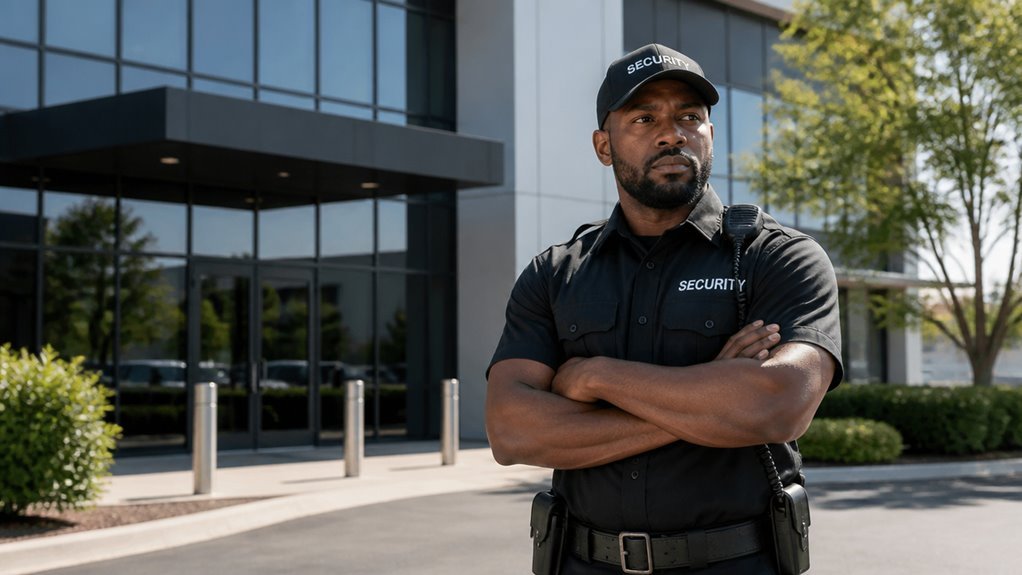
Hiring security guards requires a systematic approach that begins with understanding a business’s specific security risks, assets, and vulnerabilities. Effective recruitment involves identifying essential qualifications, developing clear job descriptions, and partnering with trusted providers to access pre-screened personnel. Ongoing training, performance monitoring, and budget considerations further refine the process. This method ensures a dependable security team tailored to operational needs and safety standards, prompting concern about the precise steps involved in assembling such a team.
Key Takeaways
- Conduct thorough risk assessments and create detailed job descriptions to identify your security needs.
- Verify necessary licenses, conduct background checks, and ensure proper training before hiring.
- Partner with trusted security providers for pre-screened, qualified personnel and ongoing supervision.
- Develop clear performance expectations, provide continuous training, and monitor guard effectiveness regularly.
- Customize security solutions based on your specific business operations and ensure administrative support for deployment.
Assess Your Business’s Specific Security Risks
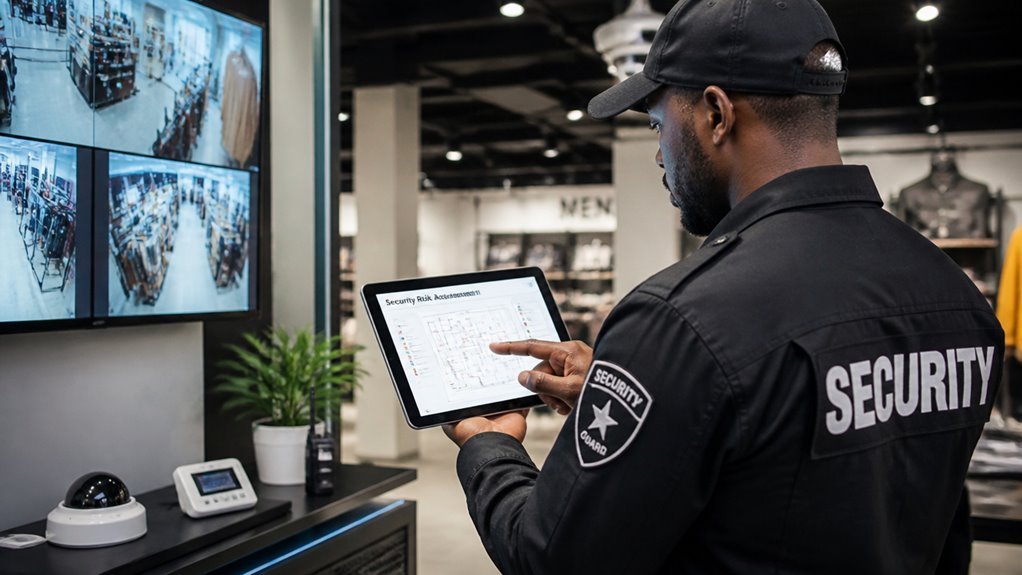
Assessing a business’s specific security risks involves a comprehensive analysis of various factors that can compromise safety and property. Reviewing incident reports and analyzing crime statistics reveal prevalent criminal activity patterns in the area. Identifying vulnerable entry points, such as unlocked doors or windows, helps pinpoint security weaknesses. High-value assets, including cash, electronics, or inventory, require prioritized protection. Evaluating operational factors like staffing levels, customer flow, and business hours identifies periods of increased risk. Additionally, industry-specific regulations may mandate specialized security measures or personnel, ensuring compliance and enhanced safety measures. This thorough approach informs effective security planning and guard deployment. Incorporating security risk assessment practices helps to anticipate potential threats and develop proactive responses.
Identify Key Qualities and Qualifications for Your Security Guards
When selecting security guards, it is essential to consider specific qualities and qualifications that ensure effective performance and safety. Candidates should possess valid qualifications, including licenses and certifications required by local authorities. Background checks are vital to verify trustworthiness and reliability. Training and experience in security procedures, conflict de-escalation, and emergency response enhance effectiveness. Soft skills such as communication, professionalism, and calmness under pressure contribute to successful operations. Personal traits like good judgment, trustworthiness, and reliability are also key. These qualities help maintain security integrity while fostering a safe environment for all. Additionally, understanding the importance of security guard qualifications can help ensure compliance with industry standards and improve the overall effectiveness of your security team.
Craft a Clear Job Description to Attract Top Security Candidates
Creating an effective job description is essential for attracting qualified security candidates, as it communicates the specific roles and expectations clearly to potential applicants. A well-crafted job description should detail duties, shift schedules, and the security environment to attract appropriate security guard candidates. Including relevant keywords such as “security,” “guard,” and “immediate hire” improves visibility. Clearly listing qualifications like licensing, certifications, and physical fitness helps filter suitable applicants. Additionally, describing soft skills such as communication and de-escalation abilities attracts candidates with strong interpersonal skills. Using clear, jargon-free language ensures the listing appeals to both experienced professionals and newcomers seeking safety roles. Understanding key facts about security services will help you craft a more comprehensive and effective job listing.
Source and Screen Security Applicants Effectively
To source and screen security applicants effectively, organizations should begin by actively reaching out to local security training schools and industry associations, which can provide access to a pool of qualified security personnel. Broadening search efforts with keywords like “security officer,” “guard,” or “night shift security” helps identify suitable candidates. It is essential to conduct background checks, including criminal record verifications across relevant jurisdictions. Employers must verify that applicants hold valid licenses and certifications required by state or industry standards. Screen applicants by assessing communication skills, professionalism, and compatibility with security needs. This approach ensures the selection of qualified security personnel dedicated to safeguarding the organization. Additionally, understanding how access control systems function can help evaluate a candidate’s familiarity with modern security technology.
Verify Credentials and Conduct Background Checks Before Hiring
Verifying credentials and conducting thorough background checks are essential steps in the security hiring process to ensure candidates are qualified and trustworthy. Employers must confirm that candidates possess valid and up-to-date licensing and certifications required by local laws and industry standards. Vetting involves comprehensive background checks across multiple jurisdictions to uncover criminal history, employment gaps, or false disclosures. Reputable screening services should be used for criminal record searches to avoid missing critical legal issues. Additionally, requiring drug screenings and reviewing references validate past performance, reliability, and professionalism. These measures help establish a secure and dependable security team for the business.
Onboard Your Security Guards With Proper Training and Expectations
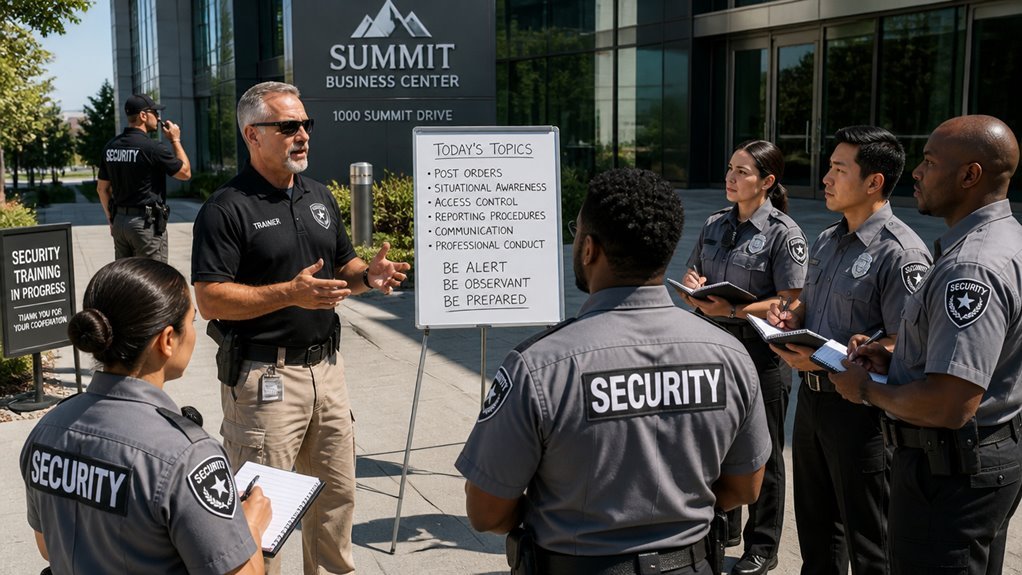
Effective onboarding is essential to ensure that security guards understand their roles, responsibilities, and the specific security needs of the site. A comprehensive onboarding process includes training on security procedures, emergency response, and site vulnerabilities. It establishes clear performance expectations through initial evaluations and accountability measures. Hands-on training, such as monitoring equipment and alarm response, prepares guards for real incidents. Scenario-based exercises during onboarding develop decision-making skills and situational awareness. Regular reinforcement of training and updates on evolving threats maintain high levels of preparedness, ensuring that security personnel effectively protect the business and its assets.
Provide Ongoing Training and Monitor Security Team Performance
Implementing ongoing training and performance monitoring is essential for maintaining a highly effective security team. Ongoing training ensures personnel stay updated on the latest protocols, threat mitigation techniques, and industry standards, often through reputable training institutions. Performance monitoring involves regular evaluations, such as audits, ride-alongs, and incident reviews, to identify areas for improvement. A structured performance evaluation system helps maintain service quality and enhances emergency response effectiveness. Using feedback systems allows management to address performance concerns promptly and recognize exemplary staff. Continuous performance monitoring and training reinforce skills, ensuring the security team can effectively protect assets, personnel, and maintain a secure environment.
Understand Security Staffing Costs and Budgeting Tips
Understanding security staffing costs and budgeting requires careful analysis of multiple factors that influence expenses. Hiring security involves considering security staffing costs, including hourly rates ranging from $15 to $50 based on experience and location. Full-time salaries, averaging between $30,000 and $50,000 annually, encompass benefits and overtime. Budgeting tips suggest accounting for additional expenses such as uniforms, licensing, insurance, and patrol equipment. Security needs assessment helps determine appropriate guard numbers and shift coverage, leading to more accurate security budget planning. Variable costs like overtime or special assignments can significantly affect comprehensive expenses. Proper planning ensures safety without exceeding financial limits.
Partner With Trusted Security Providers to Simplify Hiring
Partnering with trusted security providers can significantly streamline the hiring process for businesses seeking security personnel. These providers offer pre-screened, licensed guards who meet industry standards, reducing compliance risks. Trusted security companies ensure their personnel possess necessary certifications and experience, easing the recruitment burden. Collaborating with established firms often includes ongoing training and supervision, maintaining high service quality. Additionally, security providers can quickly supply specialized personnel, such as armed or unarmed guards, based on specific needs. This partnership simplifies onboarding, background checks, and administrative tasks, saving businesses valuable time and resources while ensuring safety through reliable, professionally trained security personnel.
Frequently Asked Questions
What Are the 5 C’s of Security Guards?
The five C’s of security guards are Character, Competence, Confidence, Communication, and Commitment, emphasizing background checks, training standards, uniform policies, communication skills, and professionalism expectations to ensure safety, reliability, and effective security operations.
What Is the Hourly Rate of a Security Guard?
Security guards’ hourly rates, like guiding stars, range from $12 to $50, shaped by surveillance technology, guard training standards, legal liability, uniform policies, and client security assessments, ensuring safety through expertise and dedicated vigilance.
How Much Is Private Security per Week?
Private security costs typically range from $300 to $1,000 weekly, encompassing corporate security needs such as access control, emergency response, surveillance equipment, and security training, tailored to business risk levels and required 24/7 coverage for safety assurance.
How Much Is It to Hire a Private Bodyguard?
Hiring a private bodyguard costs $25 to $150 hourly, influenced by experience, protection level, and location. Celebrity protection services, extensive training requirements, security guard insurance, and private security contracts ensure optimal personal safety for clients with high-profile needs.
Final Takeaways
Effective security hiring requires thorough planning, from assessing risks to partnering with reliable providers. By clearly defining qualifications, verifying credentials, and providing continuous training, organizations can build a professional security team that meets their specific needs. Maintaining high standards and monitoring performance ensures ongoing safety and operational security. Ultimately, choosing the right security personnel helps avoid costly oversights, proving that sometimes the best approach is to leave no stone unturned in safeguarding business assets.





 English
  Arabic