
Choosing a trustworthy security company requires careful evaluation of their qualifications, experience, and technology offerings. Companies should have verified licenses, certifications, and thorough personnel training programs, demonstrating compliance with industry standards. They need relevant experience with similar properties and challenges, supported by references or case studies. Advanced security technology and clear contract details also matter. Assessing client feedback and reputation provides insight into reliability. Understanding these aspects helps formulate a comprehensive approach, but the specifics may influence your final decision.
Key Takeaways
- Verify the company’s valid licenses, insurance, and compliance with industry regulations.
- Review their experience with similar security needs and check client references.
- Ensure they utilize up-to-date security technologies tailored to your environment.
- Confirm ongoing staff training, certifications, and background checks for personnel.
- Assess customer feedback and industry reputation to determine reliability and service quality.
What Qualifications and Certifications Should Your Security Company Have?
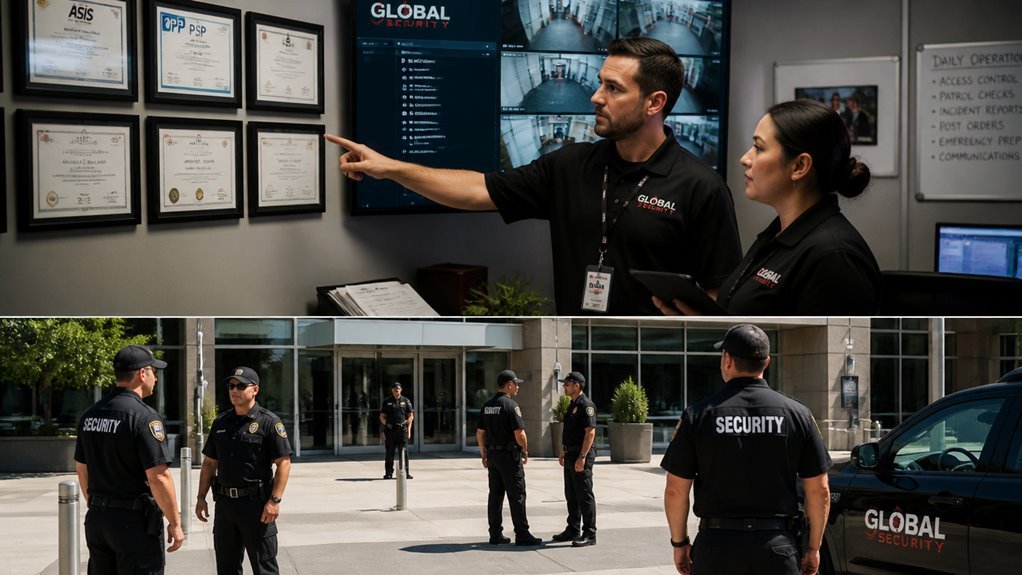
Selecting a security company requires careful evaluation of its qualifications and certifications, which indicate its competency and adherence to industry standards. Reputable firms should possess valid security licenses and industry certifications such as those from the International Foundation for Protection Officers (IFPO) or Security Industry Authority (SIA). They must ensure all personnel have completed comprehensive training covering emergency response, de-escalation, customer service, and site-specific protocols. Guards, particularly armed guards, should undergo firearm safety and use-of-force training. The company’s obligation to quality includes conducting background checks, regular supervisory evaluations, and providing ongoing training to maintain high standards through continuous professional development. Additionally, understanding security guard qualifications helps ensure the company adheres to recognized industry standards.
How Can You Assess Their Experience With Similar Security Needs?
Assessing a security company’s experience with similar needs involves examining how well their past work aligns with specific requirements. Review their portfolio for clients with comparable property types and security challenges. Request case studies or references from clients with comparable security needs to verify relevant expertise. Verify the company’s industry experience and familiarity with environment-specific security risks, regulations, and industry standards. Consider how long they have managed similar security challenges, indicating proven capability. This research helps ensure the provider’s relevant expertise in managing unique security risks while confirming their ability to address your property’s specific needs confidently. Additionally, evaluating their security personnel training ensures they are equipped with industry-standard practices tailored to similar environments.
What Security Technologies and Solutions Do They Offer?
What security technologies and solutions do reputable companies typically provide to enhance safety and operational efficiency? They often offer advanced security solutions, including surveillance systems featuring AI-powered surveillance cameras and digital access controls. Remote monitoring capabilities enable real-time site oversight, while biometric identification adds secure access methods. Smart alarms integrated with cloud-based analytics proactively identify potential threats, and automated threat alerts enable immediate responses. Many providers customize packages with thermal imaging, drone surveillance, or GPS tracking for patrols. These technologies improve incident detection rates and response times, ensuring a safer environment. Incorporating security integration allows for seamless coordination across different systems, further strengthening site security. Such comprehensive security solutions address diverse client needs, helping organizations maintain safety and operational integrity effectively.
Are They Licensed, Insured, and Compliant With Regulations?
Ensuring that a security company is properly licensed, insured, and compliant with regulations is essential before engaging their services. License verification confirms official licensing board approval, demonstrating legal authorization. Insurance coverage, including liability, workers’ compensation, and vehicle insurance, offers liability protection and risk mitigation. Compliance verification ensures adherence to local and federal regulations, safeguarding client interests. Request and review valid insurance certificates and licensing documents to confirm legitimacy. Industry certifications and accreditations illustrate commitment to professional standards and regulatory compliance. Selecting a company with proper licensing, sufficient insurance coverage, and regulatory adherence provides a foundation of trust and accountability for security services. Additionally, understanding the security guard licensing process can help you better evaluate the legitimacy of a security provider.
How Do Customer Feedback and Industry References Reflect Their Performance?
Customer feedback and industry references serve as valuable indicators of a security company’s performance and reliability. Positive reviews and testimonials reflect a strong reputation, signifying consistent service quality, responsiveness, and effective incident prevention. Industry references from reputable clients demonstrate a company’s trustworthiness and ability to meet similar security needs. Conversely, negative or vague feedback may reveal issues with training, communication, or service standards. Analyzing feedback patterns assists in identifying trustworthy providers with proven track records. In essence, these indicators help clients evaluate a company’s capacity to deliver dependable, high-quality security solutions essential for ensuring safety and peace of mind.
How Flexible Are Their Security Plans and Customization Options?
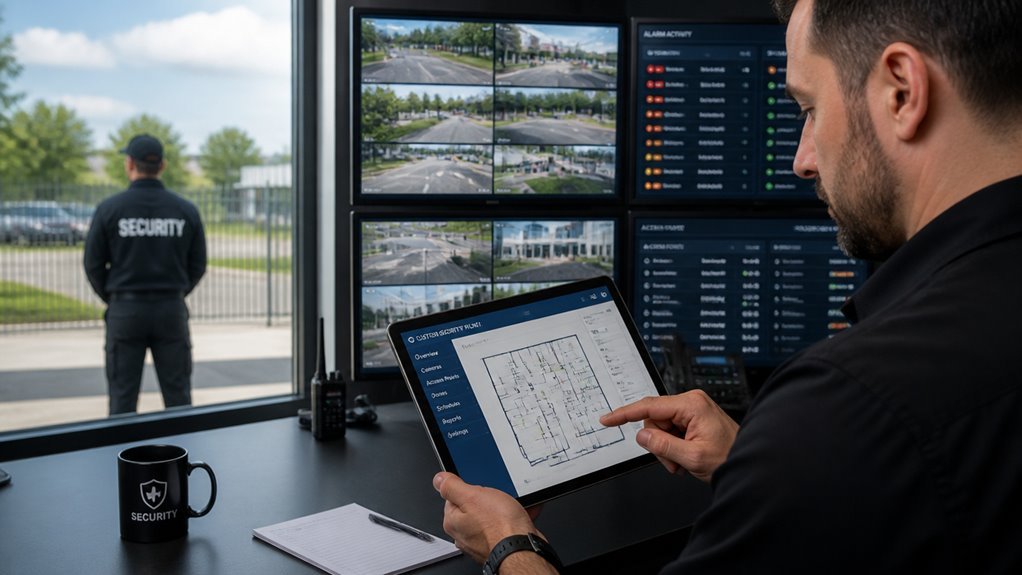
Security companies that prioritize flexibility in their service offerings acknowledge the diverse and changing needs of clients. They provide a variety of customization options and develop flexible security plans based on detailed site assessments. These assessments help tailor security strategies that address specific security needs, ensuring service flexibility. Such providers offer a range of service options, including armed or unarmed guards, mobile patrols, and remote monitoring. Transparent contract terms allow for security plan modifications and scalable coverage without penalties. Active collaboration with clients ensures ongoing adjustment of security strategies, helping maintain safety as threats or circumstances evolve.
What Are Their Pricing Structures, and How Clear Are Their Contracts?
Many reputable security providers develop transparent pricing structures and clear contractual terms to ensure clients understand the scope and costs of services. Clear agreements should detail all service fees, billing terms, and any potential hidden charges, avoiding ambiguous language. Tiered pricing options are common, based on security needs such as guard types or technology. Contracts should specify service modifications, response times, and clear penalties for non-compliance or service failures, supported by performance guarantees. Prices must align with service quality, with no hidden costs for essential features. Transparency in contracts fosters trust and ensures clients can make informed safety decisions.
Frequently Asked Questions
How to Choose the Best Security Guard Company?
Selecting a trustworthy security company involves verifying licensing requirements, evaluating training programs, conducting background checks, reviewing client references, and ensuring technology integration, emergency protocols, incident reporting, uniforms, security assessments, and service warranties for comprehensive safety assurance.
What Security Firm Does Elon Musk Use?
Elon Musk’s security firm remains undisclosed; however, industry reputation, licensing requirements, staff training, background checks, security technology, and service packages suggest he relies on top providers emphasizing security innovations, client testimonials, emergency protocols, and transparent pricing models for safety assurance.
How to Check if a Security Company Is Legit?
To verify legitimacy, conduct a thorough background check, ensure licensing compliance, review customer feedback, examine industry certifications, confirm insurance coverage, assess employee screening, and evaluate technology, emergency protocols, and service contracts—much like trusting a watchful owl.
What Are the 5 D’s of Security?
The 5 D’s of security include Detection, Deterrence, Delay, Defense, and Documentation, underpinned by security training, risk assessment, emergency response, surveillance systems, background checks, licensing, client references, insurance, service contracts, and technology integration to ensure safety.
Final Takeaways
Choosing a trustworthy security company requires careful review of their credentials, experience, technology offerings, and reputation. An industry survey indicates that 72% of clients prioritize companies with proven certifications and advanced security systems. Verifying licensing, insurance, and client feedback ensures reliability and professionalism. A thorough assessment of customization options and transparent pricing further supports informed decision-making. Most importantly, selecting a company with a demonstrated track record of dependability and compliance offers the best protection for safety needs.





 English
  Arabic